Film Name: 全城戒备 / City Under Siege / 全城戒備
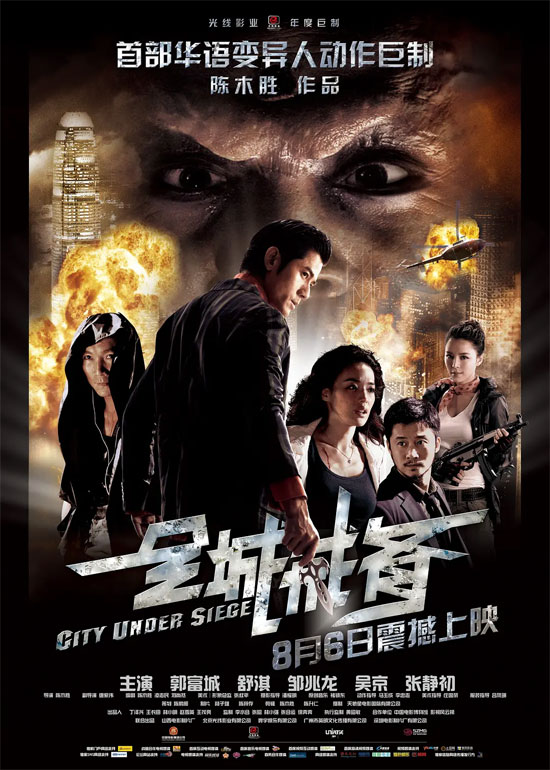
For any viewer with expectations for director Rene Chen, the film “City Under Siege” is likely unbearable. Touted as the first Chinese-language film exploring the “mutant theme,” it comes across as bizarrely unfunny and technically clumsy no matter how you categorize it. It’s hard to believe this is the work of the same director who helmed Hong Kong action classics like “Big Bullet.”
As a film that pays homage to Hollywood commercial genre films across the board, City Under Siege incorporates numerous commercial elements from Hollywood genres: mutant superpowers and special effects makeup, formulaic narratives of Hollywood screen heroes, idol actors paired with romantic love stories. Given proper execution, even if the current Chinese film industry cannot match Hollywood’s technical standards, it should at least deliver entertainment value in storytelling and cinematic craft.
Yet the film we now see disappoints profoundly on both the most fundamental narrative level and in cinematic technique. As a film set predominantly in Hong Kong, it may have faced compromises in storytelling due to the practical constraints of mainland release. However, in terms of basic narrative quality, this version of “City Under Siege” fails to establish even the most fundamental story logic. The inconsistent romantic relationship between the leads and the fated antagonism between the protagonists and antagonists both lack plausible explanations. For many viewers, this muddled narrative makes it difficult to empathize with the characters, quickly diminishing interest in the entire story due to its ambiguous storytelling.
Although “City Under Siege” borrows heavily from Hollywood genre conventions in its narrative structure, it only manages to mimic the superficial trappings of storytelling. The film’s fundamental core and essence are entirely absent. For Hollywood’s comic book action heroes—whether Spider-Man or Batman—their fundamental narrative core is rooted in the American cultural worship of “hero culture.” Among Hollywood’s mass-produced screen heroes, their ethos and imagery largely stem from the Western—that quintessential American myth: a lone hero conquering the world before retiring quietly into obscurity. While modern American cinema features heroes of diverse appearances and backgrounds, these “American heroes” essentially embody a single archetype: the American self.
Beginning with the 1970s “Star Wars,” Americans developed a passion for heroes in space adventure and sci-fi films. These screen heroes gradually evolved into superpowered heroes in animated films. Dubbed the last pioneers, these heroes embody a distinctively American brand of individual heroism through their relentless battles against dark forces. In these films, no matter where disaster strikes, the fictional American heroes ultimately save the world from evil.
Common traits of these American-style heroes often include solitude, courage, leadership qualities, a villainous adversary, and a damsel in distress requiring his rescue. Judging by these traits, Aaron Kwok’s male lead in City Under Siege undoubtedly strives to create a Chinese-style screen hero. However, due to cultural differences between China and the US, as well as between Eastern and Western cultures, this attempt at localizing a specific genre film—though it makes an effort in shaping the screen hero—can only be considered a failed attempt based on the current cinematic outcome. The fundamental reason for this failure lies in the inability to successfully localize this narrative model.
These flaws in character dynamics and plot logic inevitably cause audiences to lose interest in the story, shifting their remaining attention to the action sequences. Had the action scenes in “City Under Siege” compensated for this lack of dramatic tension, it could have still functioned as a summer blockbuster popcorn flick—at least fulfilling the basic purpose of such films: entertaining the audience. Unfortunately, none of the action sequences in “City Under Siege” measure up to Hollywood counterparts, let alone director Rene Liu’s previous work. While the film features explosions and fight sequences, today’s audiences have increasingly experienced similar genres. How to deliver even a hint of fresh sensory excitement in a summer blockbuster is the daunting challenge facing Chinese-language films released during this season. Viewed through this lens, “City Under Siege” is bound to disappoint.
Please specify:Anime Phone Cases » City Under Siege 2010 Film Review: The Failure of the “Country Bumpkin Hero”