Film Name: 江湖情之英雄好汉 / Tragic Hero / Rich & Famous Sequel / Black Vengeance / 英雄好漢
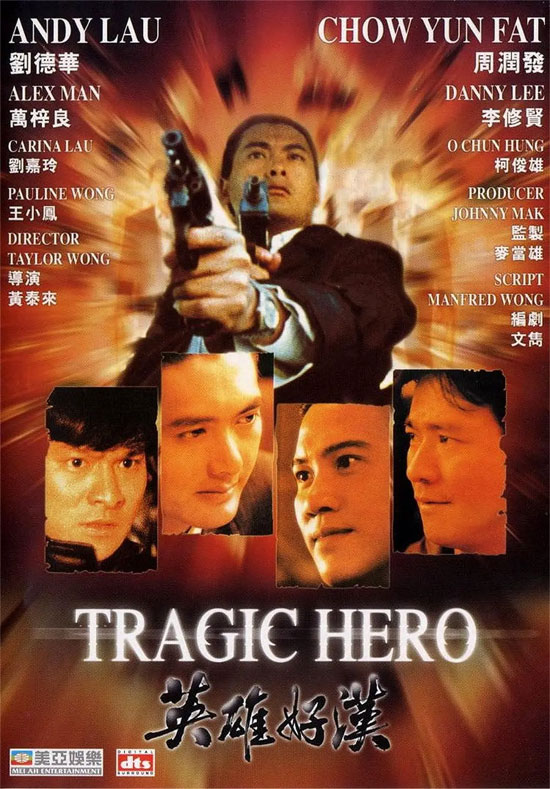
Rich and Famous and Tragic Hero can be viewed as a single narrative.
The film’s backdrop is rendered with remarkable authenticity. The Hong Kong triads of the 1950s and 1960s differed from the stereotypical gangsters; they were essentially labourers. They worked regular jobs but were often called upon by fellow villagers or clan members—connected by kinship or shared heritage. They operated in tight-knit groups, making outsider involvement difficult. Without some connection, even getting hired as a labourer was uncertain. Deng Jiayong, Lam Tingkwok, and Hei Gor were all Chaozhou natives who earned their positions through merit.
People of that era approached their work with genuine dedication. In the underworld’s code of honour, Andy Lau being suspended over ice blocks likely involved real ice. When Boss Chu spat a cigar into his mouth, even if it wasn’t lit, it was undoubtedly some sort of prop. That era truly embodied a spirit of professionalism.
What struck me most was the villain portrayed by Wan Ziliang. Viewers often perceive this character as evil for evil’s sake. Beyond his acting, the scriptwriting for his lines was particularly brilliant. In the first instalment, when Wan Ziliang’s cheating at the casino was exposed, he didn’t hesitate to deny it outright, instead turning the tables by suggesting the opponent’s glasses were faulty and that they should go to Maochang tomorrow to get a new pair fitted. Then there’s Ji Ge exposing him for murdering his benefactor. He actually claims it wasn’t about the money – that he could have handed it over for everyone to share. ‘What I did was for your own good,’ he says. ‘If Uncle Fan hadn’t died, none of us would have had a single day of peace.’ It portrays his shamelessness to absolute perfection. (An interesting detail: Chow Yun-fat himself may not have truly wanted to kill Wan Ziliang. Having previously sworn an oath that compelled him to kill Wan, he instead signalled his henchman to do it. Midway, he even asked his man Ah Liu why he hadn’t acted. Later, when Andy Lau intervened to plead for mercy and seeing his henchman also reluctant to strike—likely deceived by Wan’s own acting—he ultimately spared Wan.) Wan Ziliang’s character remains consistent across both films: he shirks responsibility whenever possible, and when he cannot, he puts on a righteous front, claiming it’s for your own good and so on.
At its core lies sheer selfishness. In his worldview, seizing advantage by any means is perfectly justified, and anyone standing in his way deserves death. His apparent thick-skinned nature masks an inflated sense of self-importance. Upon hearing a woman he fancied speak ill of him behind his back, he promptly introduced her to Brother Ji. He harboured resentment for years after his brother and Ji angrily confronted him, later seeking brutal revenge in the sequel to restore his pride. He massacred Brother Ji’s entire family, then brought his own father out of hiding. When his father confronted him, he acted as if he’d saved his father’s life—as if the implication was, ‘I slaughtered Brother Ji’s family and rescued only you; you ought to be grateful.’ His extreme nature is plain for all to see.
Yet he wasn’t entirely devoid of humanity as others perceived. In the first instalment, when his brother was shot, he did show concern. Later, when pursuing his brother with his men to an old friend’s place, he knew full well his brother was hiding nearby. Yet he feigned ignorance, cutting off his friend’s finger to seal his oath of loyalty. Later, when he wanted to strike his father, he couldn’t bring himself to do it, ordering his men to do it instead—a ploy to lure his brother out. There’s a telling detail: when his men recorded his father’s anguish, a man weeping alone, he felt a pang of sorrow at first, then abruptly cut them off. A man unwilling to face his own kindness may well find happiness elusive.
Art springs from life. While some may find Wan Ziliang’s portrayal of villainy unrealistic, I find it utterly authentic. He embodies selfishness in its most extreme form. Are not his actions precisely the culmination of the selfishness we witness in everyday life?
Please specify:Anime Phone Cases » Tragic Hero 1987 Film Review: A person unwilling to face their own kind-hearted nature may find it difficult to be happy.