Film Name: 癫佬正传 / The Lunatics / 癲佬正傳
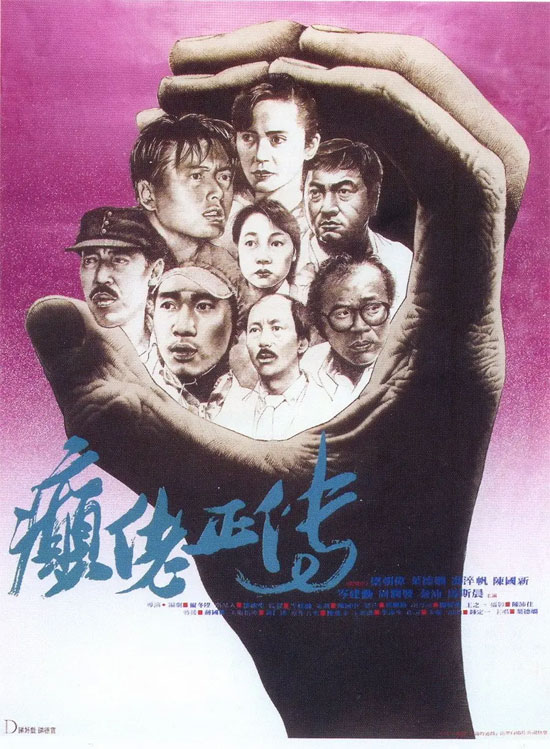
A social worker weaves together the stories of several lunatics, forming this film, “The Lunatics.”
Fung Kwai-fun portrays Mr. Tsui, a social worker—a profession society desperately needs, yet few choose due to survival pressures, societal judgment, and personal demands. These individuals possess immense inner strength, striving to offer care to the mentally ill and make them feel society’s warmth. Yet they also harbor deep vulnerability; their selfless dedication doesn’t always yield results, leading them to doubt themselves.
Miss Lau, portrayed by Deanie Ip, is a social columnist who begins following Xu after the paparazzi incident. She hopes to leverage media influence to raise public awareness for this vulnerable group—both the mentally ill and the social workers. Driven by a desire to understand more and help more, she disregards Xu’s advice, perfectly illustrating how good intentions can lead to disastrous outcomes. Sometimes, we need to understand the full implications of each decision before acting. Otherwise, Liu’s tragedy could easily befall you.
The “madmen” in the play, particularly the paparazzo played by Tony Leung, appear twice, perfectly capturing the essence of madness. The first time, he didn’t intentionally harm everyone in the market. Resting his head on a housewife’s shoulder, he simply sought protection and affection—only to be met with chaos, fear, and avoidance. Xu skillfully used toys to communicate with him, defusing the situation. When boarding the police car, Liu’s flashes triggered the paparazzo’s frenzy again, fueled by his fear of harm—a foreshadowing of events to come. The second time, when the dog’s mother told him to go die, he feared abandonment by his family more than the flashbulbs. Those simple words plunged him into an abyss, ultimately leading him to accidentally kill Xu.
Third Auntie—call her crazy, and she’s not quite crazy enough; call her normal, and it doesn’t quite fit. Though she lived amidst ruins, she refused to relocate. Despite the hardships, she found genuine happiness. Her story made Liu see social work as intriguing and straightforward—yet the deeper pain lay ahead.
Ah Song, played by Fa Ge, had a son and daughter. His son died from medication error due to a social worker’s negligence, while his daughter suffered from chickenpox and high fever without care. Unable to accept his son’s death, Ah Song prepared toys for the sick woman, revealing his deep affection for his children. Ah Ming’s inaction led to the tragic loss of Ah Song’s son. His words to Xu starkly reflected the harsh reality: social workers themselves are a group in need of care and support. “You can’t say I didn’t care for him—I’ve looked after him for over a decade.” ” No matter what we do, nothing changes.” This gray area—the social workers’ self-doubt—led Xu to question the value of his own work.
Ah Quan, who recovered only to relapse, receives the most screen time. He had regained his health but remained unemployed due to his background. He had recovered, yet his wife’s abandonment and neighbors’ judgmental stares plunged him back into madness. Ah Quan’s mother, steadfastly refusing to abandon him, clings to hope for his recovery but chooses misguided methods. His wife, having deserted him, even seeks a restraining order to keep him away from their son. Neighbors, after seeing news reports, turn on him with relentless cruelty—a mob chasing and beating a madman. Doctors, indifferent to the patient’s condition, abandon treatment after superficial care. A scathing social satire.
No madman is born that way. They may have succumbed to madness after enduring an unbearable trauma. They desperately need the care of family and society; they are society’s vulnerable. The abandonment of loved ones and society’s cold stares can cause their improving condition to relapse, turning a minor incident into a tragedy.
Social workers face pressures no less intense than others. Their profession is misunderstood, fueling self-doubt and self-criticism. The risks inherent in their work make it a demanding vocation not suited to everyone. They, too, are society’s vulnerable, needing compassion. Their ranks require expansion, their work demands understanding, support, and cooperation.
Both the mentally ill and social workers endure immense hardship.
Please specify:Anime Phone Cases » The Lunatics 1986 Film Review: The mentally ill and social workers—it’s tough for everyone.