Film Name: 上海之夜 / Shanghai Blues
The visionary Tsui Hark, a trailblazer of Hong Kong’s New Wave cinema, is widely recognized for his directed and produced martial arts films. Works like “Butterfly Murders,” “The Legend of the Flying Swordsman,” “A Chinese Ghost Story,” the “Huang Feihong” series, “Swordsman II,” and “New Dragon Gate Inn” all pioneered new trends in Chinese martial arts cinema. Yet, as the inaugural work of Tsui Hark’s film studio, “Shanghai Blues” remains relatively unknown and underappreciated.
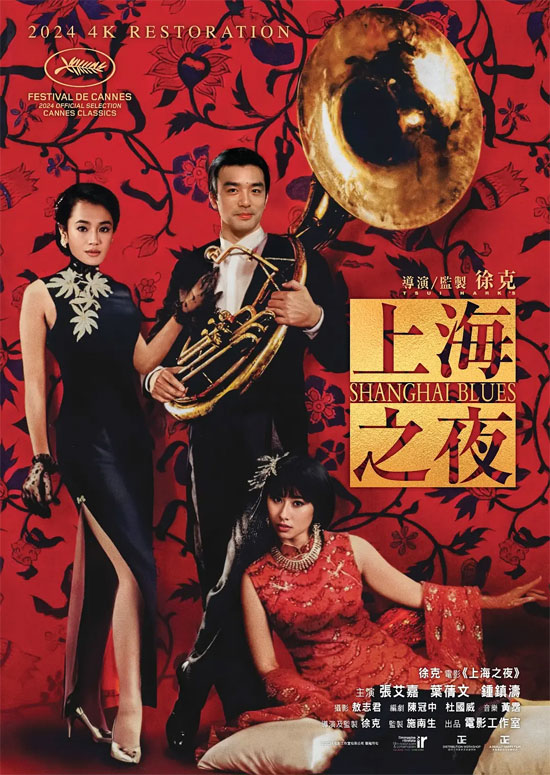
Official Poster for “Shanghai Blues”
This film actually received eight nominations at the 4th Hong Kong Film Awards, including Best Actress, Best Film Editing, Best Film, Best Supporting Actress, Best Original Film Music, Best Original Film Song, Best Art Direction, and Best Director—proof of its undeniable quality.
Today, Lu Lu invites you to explore this overlooked gem from “Old Master Tsui,” offering a chance to savor a distinctively different “Tsui Hark film.”
First, in terms of directorial style, it stands as a pioneering work that shaped Tsui Hark’s signature comedic approach.
Released in 1984, it was the first film made after Tsui and Nansheng Shi established their production studio, a project he held particularly dear. Prior to this, while working at Golden Harvest, Tsui had grown weary of the uniform style dominating Hong Kong cinema at the time. He yearned to experiment with something new, but Golden Harvest, fearing box office repercussions, refused to greenlight his vision.
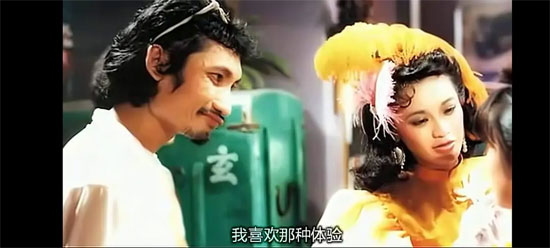
Tsui directing actors
Now with his own studio, Tsui was highly motivated to create a film reflecting his personal vision. He credits the film’s conception to his travels, drawing inspiration from anecdotes shared by friends. He also aimed to infuse his unique approach to comedy filmmaking into this project.
Second, despite its nostalgic Old Shanghai aesthetic, the film carries distinct Hong Kong flavor.
Set against the backdrop of the War of Resistance during the Republic of China era, the film chronicles the joys and sorrows of a group of ordinary people living in Shanghai.
To capture the essence of “Old Shanghai,” Tsui and producer Nansheng Shi conducted extensive on-site research in Shanghai. However, due to changes over time, they ultimately decided to blend real locations with models and painted backdrops to recreate the city’s vintage atmosphere. Thus, the film pays homage to early Shanghai classics like “Street Angel” and “Crossroads” in its details while also evoking the aesthetic of 1950s-60s Hong Kong cinema.
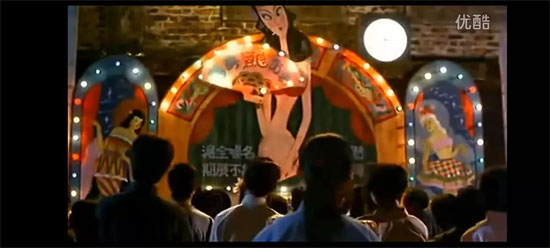
This set design was particularly admired by the director.
For the music, they enlisted the talents of James Wong, one of Hong Kong’s “Four Great Composers.” Though Wong had never visited Shanghai, composing for a city he’d already immortalized in “Shanghai Beach” posed no challenge. Over a few drinks, he presented Tsui with twelve thematic melodies to choose from. Tsui ultimately selected “Wan Feng” as the main theme.
Performed by Karen Yip, the song became more popular than the film itself. This collaboration also forged a legendary bond in the film industry, bringing Tsui Hark, James Wong, and Karen Yip together.
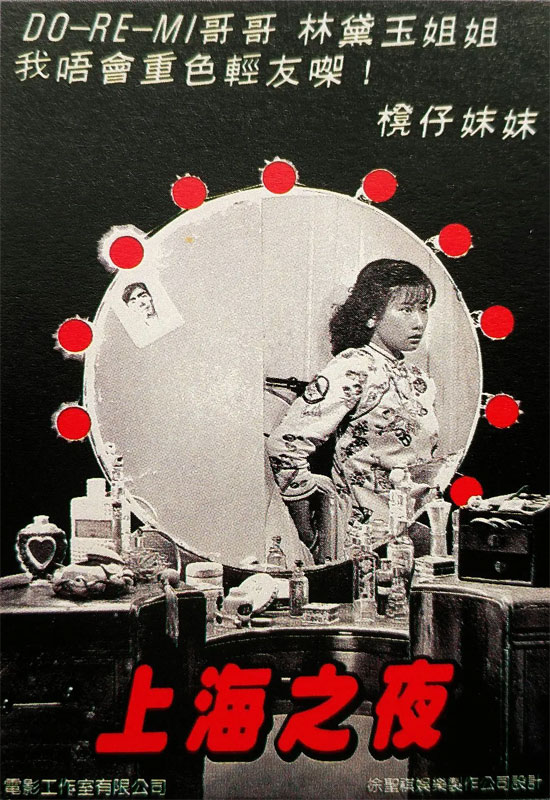
The figure on the poster is Karen Yip portraying “Xiao Deng” in the film.
Third, this film uses numerous comedic scenes to explore a serious theme.
On one hand, the elite revel in a world of glitz and glamour, dancing and singing amidst prosperity; on the other, soaring prices plunge ordinary people into hardship. The wealthy revel in nightclubs, while the underprivileged are reduced to living on the streets. These contrasts are portrayed through an exaggerated, frenetic comedic style, creating a bittersweet experience where laughter mingles with sorrow.
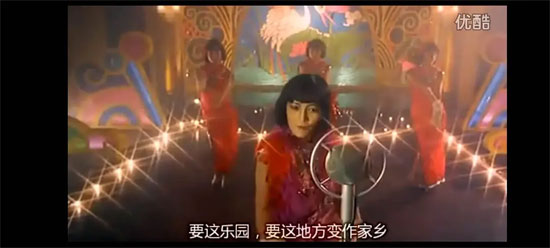
You find yourself both anxious about the protagonists failing to recognize each other after a decade apart, and heartened by their ability to find joy amidst hardship.
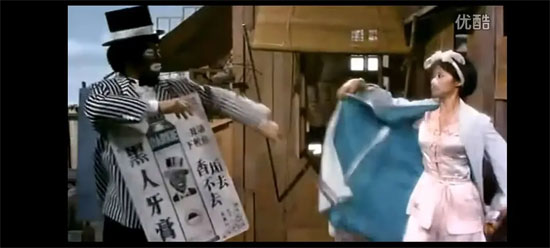
Particularly memorable is the scene where Jacky Cheung and Sylvia Chang return drenched in rain, change clothes indoors, while Karen Mok jumps through a window. Adding to the chaos is a thief hiding in the room and friends arriving to stir up trouble. The rapid scene transitions and dynamic movements within this confined space are thrilling to watch, yet they truly showcase the director’s mastery of staging.
The film is filled with such humorous moments—Sam Hui blowing a trumpet, Sylvia Chang dancing, and Karen Yip running for calendar queen—each guaranteed to make you chuckle.
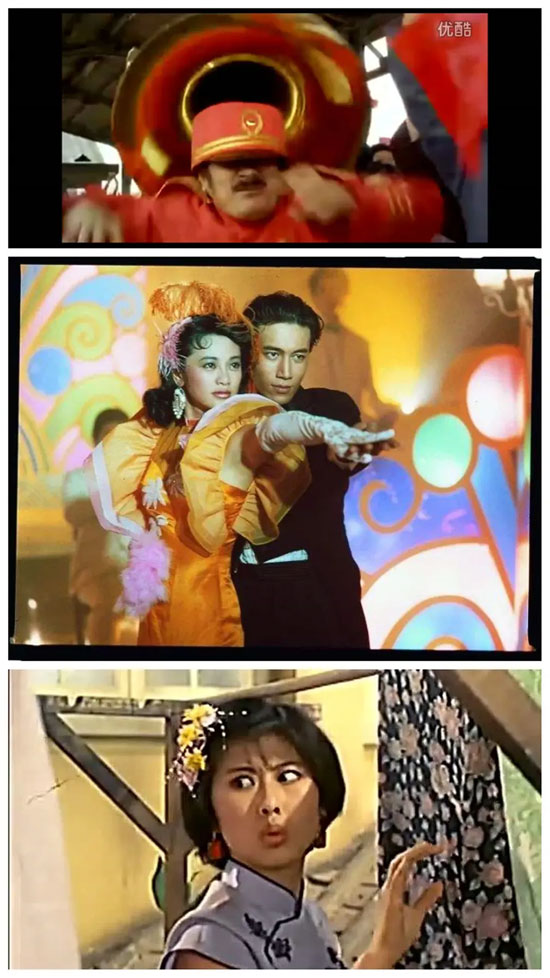
Sam Hui blowing the trumpet, Sylvia Chang dancing, Karen Yip running for calendar queen—all iconic scenes
Compared to other Hong Kong films of its genre at the time, Shanghai Blues showcased remarkably original concepts for its era. It’s no wonder that in 2009, during the 25th anniversary celebration of Tsui Hark’s film studio, the director stated, “Over the past twenty-five years, my most satisfying work remains my debut film, Shanghai Blues.”
May this underrated gem from Tsui Hark bring you a refreshing summer breeze!
Please specify:Anime Phone Cases » Shanghai Blues 1984 Film Review: Have you seen that underrated film directed by Tsui Hark that received eight Hong Kong Film Award nominations?