Film Name: 冲出地球 / Rainbow Sea Fly High
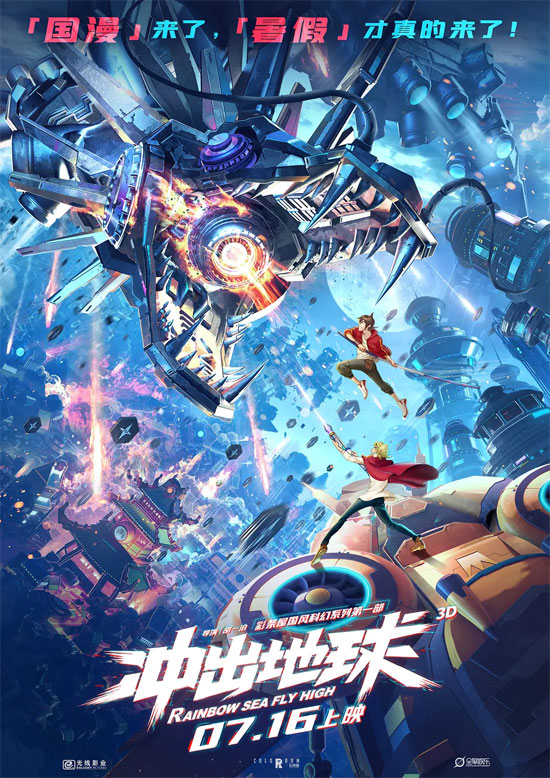
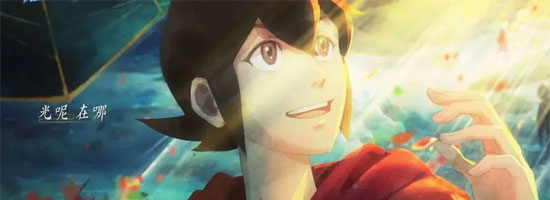
Rainbow Sea Fly High is a film spin-off from Rainbow Sea, a highly unconventional and avant-garde yet relatively obscure domestic animated TV series released a decade ago.
Its unconventionality at the time stemmed from its positioning as a work targeting young adults or at least teenagers, emerging amidst the crowded landscape dominated by numerous low-age-targeted animations like Xihui. While such targeting is commonplace in today’s animation market, it was truly unconventional back then. It bore the hallmarks of the passionate, action-packed anime style Japan excels at. Particularly, the then-dominant “One Piece” seemed to have a significant inspirational influence on the creative concept of “Star Journey.”
Its avant-garde nature stemmed from the sheer visual impact delivered by its pure 2D aesthetic. It didn’t rely on 3D modeling to create hyper-realistic worlds, nor did it use CG to generate ultimate bosses for confrontation. Instead, it delivered the visceral thrill of watching objects warp and distort yet seem to gain a new vitality when the protagonist, Ma Dan, swung his golden staff down. Crucially, it built a dynamic around a passionate male lead and a mysterious, adorable companion embarking on adventures together—a character dynamic that was highly innovative for its time.
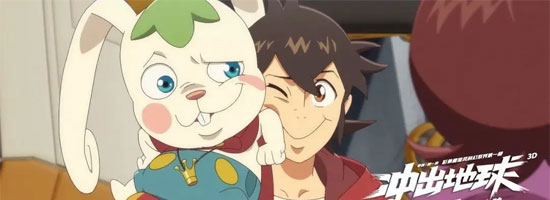
Unfortunately, this work never became a household name or achieved the phenomenon-level status of contemporaries like “Kuiba.” Its legacy lives primarily in the hearts of its devoted fans—those who, after watching this animation, gained a new appreciation for domestic animation and developed admiration for the studio and director Liu Bei.
Thus, after releasing two web films, “Rainbow Sea” has now reimagined its world-building and launched a new film whose title deliberately omits the “Star Journey” moniker. Perhaps this move aims to avoid preconceived notions that might alienate casual viewers, or perhaps it seeks to ride the surging sci-fi wave sparked by “The Three-Body Problem” to attract new audiences. But erasing the iconic “Star Journey” branding—does that truly breathe new life into the franchise? It feels more like Disney dissolving Blue Sky Studios after acquisition, leaving one with a sense of regret.
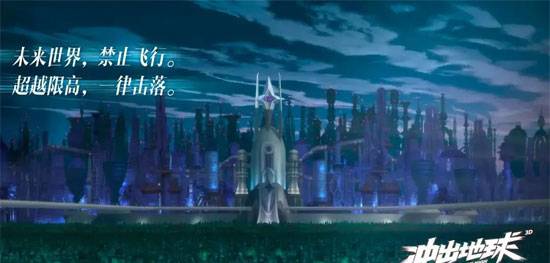
I don’t think we should dwell on whether the “science fiction” in the film truly lives up to its name. Elements like the Sky Shield, Sky Wall, and Dyson Sphere—you can tell from the height the kites can fly that the scientific aspects aren’t just underdeveloped, they lack any real credibility. Sci-fi is merely a marketing gimmick. The film has little to do with science fiction; the protagonist ultimately solves problems using unexplained superpowers rather than science.
What truly deserves attention is why those tens of thousands of kites soaring into the sky became the film’s most moving element. Because it reveals that humanity is worth saving.
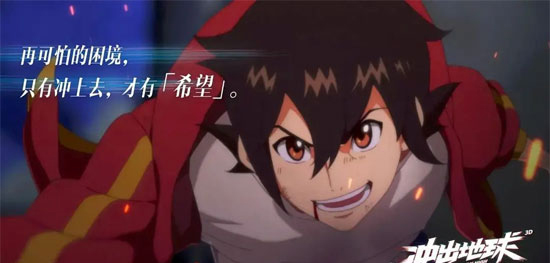
The film explores the question of whether humanity is worthy of salvation in three distinct moments. The first occurs when the villainous young man, Chamkun, ultimately fails to shoot his own father. He upholds the fundamental moral line of humanity. Though this transformation didn’t move me—it felt too abrupt and didn’t align with my expectation that Chamkun could have done more, that his sacrifice could have held greater value.
The second moment is when everyone releases their kites. They demonstrate that justice still exists in this world. When the Galactic Eye descended upon Earth bearing advanced alien technology, humanity’s “anti-intellectualism” and submissiveness felt utterly despairing. A single kite would inevitably be destroyed by missiles, but the collective release of thousands signified a collective awakening—an impenetrable barrier missiles could never breach.
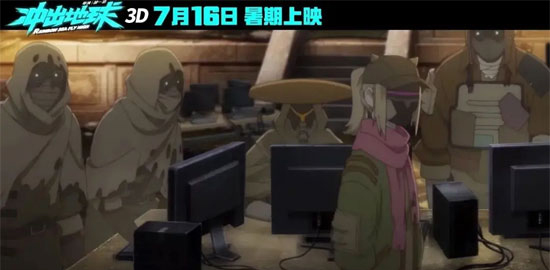
The third is the existence of those Earth forces still steadfastly resisting the aliens. They upheld the spiritual backbone of humanity. If a race willingly becomes slaves, devoid of any spirit of resistance or struggle, what meaning does their existence hold? Of course, these individuals in the film committed a grave error: sacrificing the protagonist to achieve their goal of destroying the core of the alien device. This is a classic case of committing immoral acts under the banner of morality. Had they succeeded, even if they destroyed the core and claimed victory in the struggle, they would have forfeited all moral justification for the fight.
The Galactic Eye’s construction of the Sky Wall and its decade-long suppression of human flight technology development presents a profound theme. Compared to losing the ability to fly, losing the desire to fly is far more terrifying. For while losing freedom is tragic, losing the yearning for freedom is undeniably more despairing.
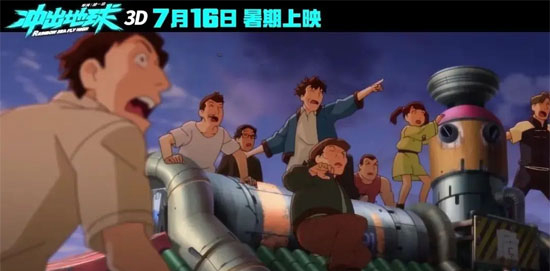
Thus, when the film reveals that the aliens’ true purpose for the Sky Wall was to turn Earth into an energy source—prompting humanity’s collective awakening to their conspiracy and forced resistance—it simplifies a profound issue. For if humanity rebels merely out of fear of death, without recognizing that the loss of freedom—the loss of the desire to break free from Earth and explore the cosmos—is the true horror, it fails to address the fundamental reason why humanity deserves salvation.
Fortunately, guided by his father, McDonald had always held onto that stubborn commitment to freedom. He was a spark that ignited those around him, including the alien visitor, the rabbit Gudu. What truly broke free from Earth was not just the spacecraft carrying McDonald and Gudu, but McDonald’s own “Star Journey” heart—a heart yearning to protect freedom and roam the starry seas!
Please specify:Anime Phone Cases » Rainbow Sea Fly High 2022 Animation Film Review: Guardian of the Star Journey Heart