Film Name: 哪吒之魔童闹海 / Ne Zha 2
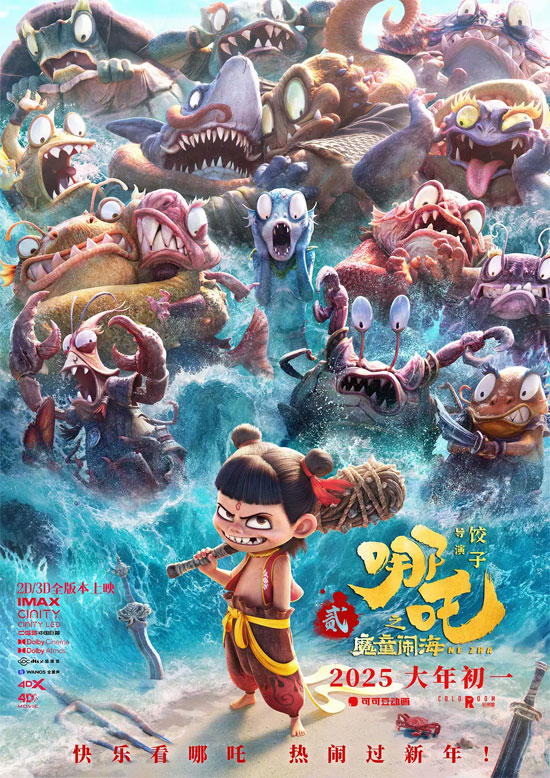
In the 2025 Chinese New Year season, DeepSeek burst onto the scene alongside Ne Zha: The Demon Boy. If we were to combine the two, wouldn’t they complement each other perfectly?
Breaking conventions and certainties, shattering barriers and oppression, challenging the unknown and uncharted paths. With a single “I want to try,” even if giants block the way, perilous peaks loom, and thorns litter the path—how could they stand against the fearless ambition and heroic spirit?
“The Demon Boy’s Birth” is a rebel’s declaration: I won’t be controlled by others; don’t underestimate me. “The Demon Boy’s Sea Rampage” is an entrepreneur’s bold proclamation: I have my own path to walk; the fiery flames that consume me only bring warmth.
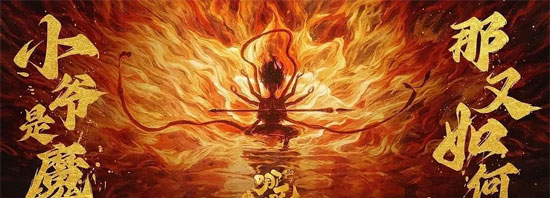
This film is a love letter to parents, brimming with familial affection. A father’s hopes for his son’s greatness, a mother’s simple wish for safety—these unspoken yet profound loves unfold like delicate lotus petals, tenderly nurturing their children’s souls as they transform from rebellious youths into mature adults. It turns out these children felt every ounce of that love, though it lay buried deep within, rarely voiced aloud.
It also voices a heartfelt plea: The path chosen by parents may not be the best fit for their children. When children grow up, the time comes to leave the nest. If they have their own path to walk, take pride in them—let us young, reckless souls go forth and explore!
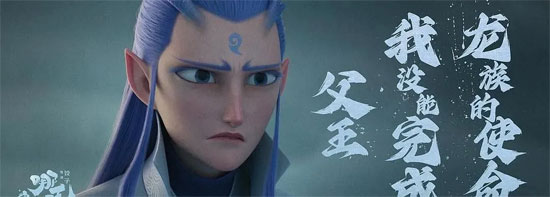
This film is a love letter to companionship. How fortunate it is for a person to encounter a soulmate, a like-minded partner, a colleague with whom they both yearn to build something together. Isn’t the self-exiled, free-spirited Nezha and the reserved, devoted Ao Bing—who always gazes at him with affection—a reflection of the film’s creative team?
Ne Zha, who wields fire, is actually a block of ice. Ao Bing, who wields ice, is surprisingly a warm-hearted soul. One pierces the world’s shackles with ice, while the other shields a friend’s heart with warmth. If Nezha ended up utterly alone, it would feel rather desolate. It is precisely because of Ao Bing’s presence that this oath becomes a long journey—one with listeners, believers, willing companions, and followers.

This film is a declaration of war against the privileged elite. Where do all these rules come from? Who set them? Where do all these predetermined fates come from? What happens if you refuse to obey? What’s with all these things taken for granted? We’re here to shatter them for you.
Ne Zha’s iron fist lands squarely on the face of the Immortal of Boundless Virtue, delivering pure satisfaction to every audience member. Even the playful pranks of the deer and crane attendants on the immortal resonate deeply, evoking office workers’ secret longing to confront their own bosses—a shared, bittersweet recognition.

The film remains a farewell letter to fantasy. American superheroes and Chinese immortal cultivation tales represent two great human spectacles: the former, self-righteous facades of self-interest; the latter, self-interest laid bare. At their core, both assert that power grants everything, justifying any means to attain it. What the Boundless Immortal did was nothing more than what would be considered “perfectly normal” within this system and mindset. Anyone in his position would have acted similarly, save for outsiders like Nezha who dared to challenge the establishment.
Yet not everyone possesses the powers bestowed by the Demon Pill and Spirit Pearl, like Nezha and Ao Bing. The Groundhog Clan and Lady Stone were struck by calamity simply for eating a meal or glancing at their reflection at home. The Shen family, Shen Gongbao and his kin, epitomized ordinary folk’s fantasies about the privileged class—hoping to leap from demons to immortals—only to find their dreams shattered by deception.
If the Sea Yaksha found warmth in General Li Jing’s kindness and thus embraced hope for life, Shen Gongbao and Shen Xiaobao experienced the harshest reality: deceived into hope, only to have that hope brutally trampled and shattered.

It’s hard to say whether General Li Jing’s kindness stemmed from his steadfast commitment to virtue and righteousness, or because he never truly reached the realm of the powerful—where utilitarianism reigns supreme and all beings are treated as mere straw dogs. If it was the former, then the film still offers us a glimmer of hope.
What we know for certain is that Nezha, in his quest for immortality, ultimately broke away from the traditional path of the immortals, choosing his own way. But how many throughout history have been corrupted beyond recognition in their pursuit of fame and fortune? How many in reality are altered by circumstance, abandoning their true selves and original aspirations?
Nezha and Ao Bing have embarked on a path of entrepreneurship to defend their true selves. Though the journey is fraught with immense hardship, let us still offer them our blessings!
What similarities and differences exist between Nezha: Birth of the Demon Child and Nezha: Demon Child Runs Amok?
Both films incorporate humorous elements. Some humor relies on common cinematic gags, such as the contrasting behaviors when Nezha and Ao Bing share a single body. Yet other humor is distinctly characteristic of director Jiaozi, some even bordering on the unsophisticated. For instance, in Birth of the Demon Child, Nezha uses his Fire-Point Spear to burn Taiyi Zhenren’s crotch, while in Nezha 2, scenes like Nezha urinating and drinking urine appear.
Both films explore the theme of individual consciousness awakening clashing with institutional constraints. In Ne Zha, he desperately seeks ordinary acceptance but is denied, forcing this outsider onto a path of “my destiny is mine, not heaven’s.” In The Demon Child Runs Amok, Ne Zha knows he’s the reincarnation of a demonic orb yet yearns to become an immortal and join the system. Ultimately, he sees through its hypocrisy and lies, choosing his own new path.
Both films masterfully handle the dynamic between Nezha and his companion Ao Bing. Their playful banter resonates deeply with audiences. Together, they evolve from impulsive, rebellious adolescents who judge superficially into post-adolescents capable of reflection, deep thought, and grasping the essence of things. They become colleagues, embarking on a shared entrepreneurial journey.

What is the theme of Nezha: The Demon Boy’s Sea Rampage?
The story of Nezha: The Demon Boy’s Sea Rampage revolves around the physical transformation of Nezha and Ao Bing. While this mission itself is not particularly monumental, it becomes fatefully intertwined with the lives of the people of Chentang Pass and the very existence of the demonic beasts.
Thus, the film’s theme lies in shaping not just their bodies, but also their hearts and emotions—in other words, forging the protagonists’ values. Nezha grows to cherish his family more deeply, trust his friends more fully, and pursue life with greater autonomy. His perspective shifts dramatically: from yearning to become an immortal to rejecting it, and from viewing demons as insignificant to shielding Shen Xiaobao with his own body.
How does he decide which path to take at this juncture? By returning to his true self. Thus, the path ultimately chosen by Nezha and Ao Bing cannot be labeled as either right or wrong—it is the path of their authentic selves, guided by their innate sense of good and evil, right and wrong.
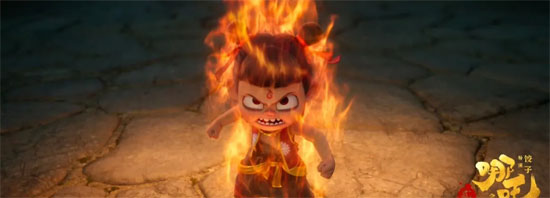
What are the highlights and regrets in the plot of The Demon Child’s Sea Rampage?
The greatest highlight is likely the portrayal of Shen Gongbao’s family, especially the character of Shen Xiaobao—adorable and touching. They sought immortality and enlightenment, hoping to transcend their demonic origins and ascend to divinity. Yet they were deceived, their hopes trampled.
Through Shen Xiaobao and his father, Shen Gongbao transforms from a cold-hearted Taoist into a tender brother and son. We never imagined what the family of the villainous mother and son might look like, or what drove them to become villains—this is profoundly meaningful storytelling.
Yet it remains deeply regrettable that Shen Xiaobao was never rescued. For such an innocent child, filled with pure aspirations for the world, to go unsaved feels cruelly unjust—a failure of responsibility on the part of the protagonists. Shen Xiaobao deserved to be saved.
Moreover, true heroes should not stand solely for their families, but for all common people. The entire town of Chen Tang Guan was reduced to charred ruins—a scene of unimaginable horror. Yet Nezha paid it scant attention, and the perpetrators escaped proper punishment. His heroism feels incomplete when confined solely to parental duty. Did he forget the children who looked up to him as their leader? Did he forget the villagers who came to bid him farewell?
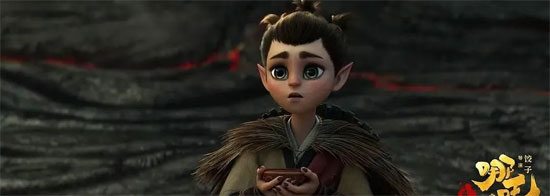
Why Did Ne Zha 2 Achieve Another Box Office Miracle?
Amidst last year’s overall sluggish box office performance outside the Spring Festival season—particularly with summer blockbusters like Falling to Earth, National Day releases like Big Head Son 6, and Christmas/New Year offerings like The Lion Boy 2 all underperforming—Monkey King: Hero Is Back’s standout success came as both a surprise and a delight.
This success likely stems from several factors. First, the film boasts exceptional production quality, ranking among the top tier in all aspects for mythological-themed works. Second, its content resonates strongly with contemporary audiences, unlike other fantasy productions that often lack emotional connection to real life. Third, the momentum of sequels played a role, with the five-year wait hitting a critical point for audience brand loyalty. Fourth, the Spring Festival season boasts robust consumer spending power. In recent years, it has surpassed the summer blockbuster season to become the primary engine of annual film consumption and the premier window for animated films.
In fact, this year’s two animated films in the Lunar New Year season represent two distinct approaches to sequels: the “cinematic adaptation” direction of the Boonie Bears series, and the standalone blockbuster approach of the Ne Zha series. The market performance of both will serve as crucial references for future domestic film production. It is anticipated that Ne Zha: The Demon Boy’s Journey to the Sea will achieve box office earnings of around 5 billion yuan, similar to its predecessor. This success will provide a significant boost to the domestic animated film market for the next two to three years.
Please specify:Anime Phone Cases » Ne Zha 2 2025 Animation Film Review: Shaping the Body and Mind