Film Name: 雄狮少年2 / I Am What I Am 2
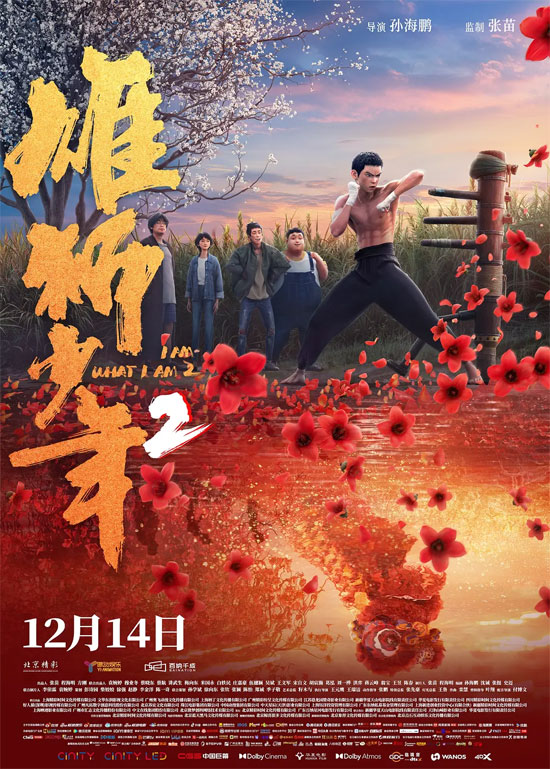
“I Am What I Am 2” is a stunningly realistic animated film. Previous animated works tackling real-world themes have never felt this authentic.
They either retain a sliver of reality like “Deep Sea,” yet unfold primarily in an imaginary realm. Or they sanitize reality through countless layers of harmless desensitization, repackaging it as another version of reality for the audience.
The reality in “I Am What I Am 2” is pure, like 24K gold. Not only does it unfold entirely within reality, but it authentically touches upon both the light and darkness, the justice and injustice of the real world. Ah Juan’s desolate expression when faced with the impossibility of paying 100,000 yuan in medical fees may resonate deeply with many. Several youths drifting in a foreign land to support their families—just how much effort must they exert to carve out their own piece of the sky? A group of artisans living under aliases in this glittering commercial society, burying deep within their hearts the yearning to pass on their craft.
But “I Am What I Am 2” redeems it all through the fighting spirit embodied by lion dancing. Life will still grant Ajuan a fair chance—with hard work comes reward. The youths, who never complain beyond their longing for home, can achieve self-reliance through perseverance. Traditional artisans, through relentless effort, can reintroduce their craft to the world in innovative ways and earn recognition.
From the lion dance in “I Am What I Am” to the martial arts in “I Am What I Am 2,” lion dancing transforms from an external form into a spiritual symbol of relentless self-improvement and unyielding perseverance—a far more beautiful interpretation of its essence. Lion dance not only built the unique foundation for Ah Juan’s martial arts skills, but the lion head—present throughout the film from beginning to end—became a symbol of the spirit of perseverance.
If “I Am What I Am” depicted lion dance elevating Ah Juan and granting her rebirth, then “I Am What I Am 2” shows Ah Juan elevating lion dance and breathing new life into it.
The final scene, where the ring and lion head appear everywhere—in arenas, shopping malls, subways, offices, construction sites, and grassy patches—is an incredibly clever extension of the lion dance spirit. Each person is an ordinary blade of grass. No matter your profession, as long as you dare to fight, you can shine brightly. Life is a continuous series of arenas. Overcoming obstacles and conquering oneself transforms anyone into a victor of life—empowering them to emerge as the mighty lion rising from the grass.
Ah Juan didn’t make it to the final round on the professional arena’s stage, but she triumphed on the stage of life along Nanjing Road. After all, isn’t life itself full of ups and downs? Being knocked down on one stage doesn’t matter—rising again on another, fighting to the end, can still lead to victory.
The spirit of the lion dance in ordinary people is extraordinary, and this is precisely the theme the film portrays. Is that overgrown wasteland not extraordinary? Is that narrow alleyway not extraordinary? Is that bustling street of food stalls not extraordinary? Countless people live in these ordinary places, and each has the potential to become an extraordinary version of themselves.
The extensive use of real-life settings as source material is also a key source of the film’s realism. Jinjiang Park, established in 1998, was Shanghai’s first large-scale modern amusement park. Yet over two decades later, its attractions inevitably feel dated—much like the traditional martial arts depicted in the film. As the movie gains popularity, Jinjiang Park’s tourism is likely to surge first, breathing new life into this traditional theme park. This mirrors how the lion spirit revitalizes traditional martial arts techniques.
Another question we must ponder is: What ultimately enabled Ah Juan to defeat Xiao Zhangyang?
All martial arts films culminate in a final showdown where the protagonist confronts their strongest adversary and prevails. But what truly secures victory? Superior strength? Unwavering resolve? Clever strategy? Or moral superiority? In the fight where Ajuan defeats Xiao Zhangyang, “I Am What I Am 2” masterfully blends all four elements—which is precisely why we find this battle so compelling.
By inheriting traditional martial arts, he developed distinctive fighting techniques that elevated his prowess. From the moment he began learning lion dance, he possessed an extraordinary will surpassing ordinary people. He devised strategies that caught his opponent completely off guard. Most crucially, he embodies perseverance and steadfastness—protecting loved ones, upholding the martial spirit, and defending fairness and justice. Thus, he defeated Xiao Zhangyang, who won through cheating, long complacent on past victories and having lost his fighting spirit.
The battle between A Juan and Xiao Zhangyang pits a seemingly frail yet internally formidable individual against one who appears strong but lacks true inner resolve. The film’s most moving aspect lies in how Ah Juan’s lion-dancing spirit not only redeemed himself but also saved his opponent. It emboldened Xiao Zhangyang to shed his cheating gloves and compete with honor, restoring a fighter’s dignity and rediscovering the true spirit of combat—one that demands giving your all, even in defeat.
In contrast, the female protagonist’s inheritance of the boxing gym seems somewhat undeserved. Xiaoyu ultimately left, though ostensibly to pursue her studies, she still abandoned it—never truly making a final stand for the gym herself. The spirit of lion dancing never truly shone through in Xiaoyu, which is the film’s greatest regret. Throughout the film, Xiaoyu never touches Ajuan’s lion head, suggesting the lion dance spirit never truly entered her heart. Otherwise, when she left home, she should have caressed the lion head with lingering affection. This small gesture could have become the film’s most heart-tugging moment.
It must be said that while the film masterfully portrays richly emotional and complex male characters—Ah Juan, Ah Mao Ah Gou, Zhang Waite, the three traditional martial artists, Xiao Zhangyang, Jin Muyang, and others—the female protagonist remains somewhat two-dimensional. She inherits the boxing gym, but can she surpass her father? Ultimately, what makes her worthy of owning this gym? This needs further clarification.
Of course, the film boasts many commendable aspects in its execution. Rich details, bold montages, and imagery connections that surpass audience expectations all deliver striking visual moments. The extended black screen during the glove’s shattering represents a daring cinematic language never before seen in Chinese animation. The cracking water tank and the dying gasps of the tropical fish echo Xiao Zhangyang’s defeat—a truly ingenious conceptual touch.
Regardless, “I Am What I Am 2” is an animated film that leaves you pondering long after the credits roll. When we’ve grown numb to endless mythological epics, dazzling spectacles, and omnipotent superheroes, “I Am What I Am 2” connects audiences with its characters through grounded, heartfelt realism—reawakening our emotions and thoughts. This is the power of grounded storytelling. May the spirit of the lion dance accompany every viewer for a lifetime!
Please specify:Anime Phone Cases » I Am What I Am 2 2024 Animation Film Review: What did the spirit of lion dancing save?