Film Name: 大闹广昌隆 / Finale in Blood / 大鬧廣昌隆
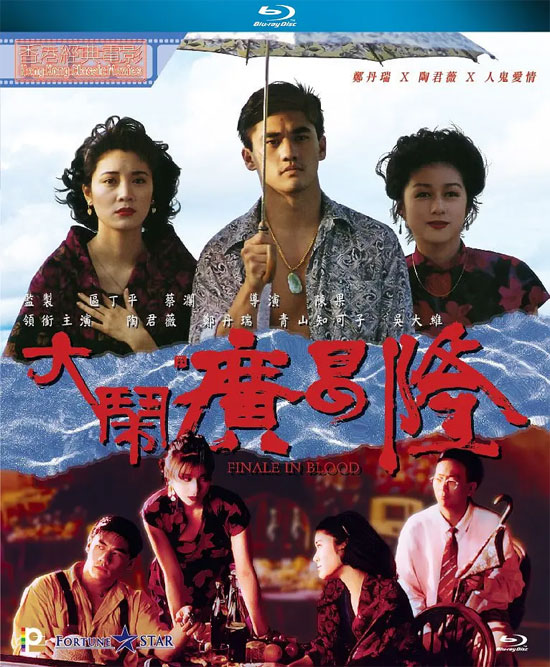
In the film, David Wu’s character Ma Guangsheng desperately tries to win back Fang Yin’s glance, frantically offering this explanation—and suddenly, I felt a pang of disorientation. For a playboy who lingers between courtesans’ thighs to utter such a spoiled excuse, it carries a touch of helpless melancholy.
The story is essentially a more mundane version of Lips of My Love: a female ghost clinging to undying devotion, a man returning from the dead to search for her, and a kind-hearted, simple-minded commoner. But Fruit Chan is not Gordon Chan. Gone is the elegance of a carved bed; instead, we find a smoky, sordid underground brothel, raw carnal desire, and the flames of passion. Gone is the youthful charm of Twelve Young Master, replaced by Ma Guangsheng’s cold indifference; vanished is the languid beauty of Rúhuā, transformed into Fang Yin’s fierce sorrow. Even the newspaper clerk becomes an unfulfilled radio DJ. Chen Guo eschews Kwan’s romanticism, instead sketching a society thick with the dust of mundane existence.
Truthfully, I cherish this mundane world more than the hazy, ethereal atmosphere. These men and women tumbling through love, hate, and helplessness; these raw desires and needs; these simple, utilitarian connections or partings. We live in this earthly realm after all. Even as we mourn the beautiful union and fleeting years of Twelve Young Master and Ruhan, once the curtain falls, we must still tie on our aprons and return to the mundane realities of daily life.
The film’s conclusion struck me as more grounded than Lips of My Love. A single bullet piercing through three bodies freezes everything in place—the tangled emotions, the chasm between the living and the dead, the stunned expressions of the audience. In that instant, I suddenly felt at peace. Even Ma Guangsheng, who pleased bodies and released desires, who always spoke sweet nothings, what was there to hate when he fell to the floor? Fruit Chan isn’t always a master storyteller, but he’s clever enough. He knows how to lead us to a place of lingering resentment, yet find no one to blame. The raised middle finger in “The Longest Summer,” the endless gravestones in “Made in Hong Kong,” the bitter taste of durian in “Durian Durian.” He pushes us before a grotesque funhouse mirror, forcing us to see the ridiculous, helpless essence of humanity itself—yet leaving us powerless to retaliate.
“Two is fate, three is karma,” the old nun sealed this tale of humans and ghosts with a prophetic curse. Yet under the blazing sun, Zheng Mingbao seems to glimpse three figures walking toward him, sharing a single umbrella. Karmic bonds inevitably lead to farewells. But what lies beyond parting? We fear not the road ahead, for we always journey together.
“Truth is, I love you deeply, but I’m not faithful.” This might be a lame excuse. The thunderous modern world won’t buy such a feeble explanation. Yet I imagine, in an era when people didn’t place such faith in money, when vanity hadn’t yet taken root, when mutual understanding still existed, when love was truly for others rather than oneself—this confession might have earned a quiet reply:
Then let the three of us spend the rest of our lives together.
Please specify:Anime Phone Cases » Finale in Blood 1993 Film Review: Truth is, I love you deeply, but I’m not faithful.