Film Name: 血洗红花亭 / An Eye For An Eye
It’s hard to pinpoint my favorite Hong Kong or Taiwanese artist, but the one I detest most isn’t due to poor skills—it’s the sheer waste of talent that makes me seethe with envy and contempt: Chyi Chin. The fact that Xiao Qian, who swept Southeast Asia, fell so deeply for him that she now spends her days with ancient Buddhas and flickering lamps… Whenever I see Joey Wong’s movies, an inexplicable rage and hatred wells up inside me.
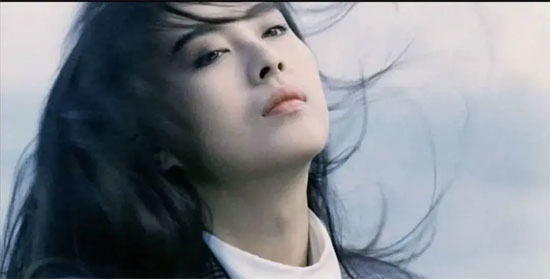
Brigitte Wang’s features aren’t striking individually—her eyebrows, nose, mouth, and eyes are all quite ordinary on their own. But when combined, they hit the sweet spot of Chinese aesthetics. That’s why the Xiao Qian hairstyle (swept back to reveal the forehead), despite clearly not flattering most women, has been endlessly copied by countless actresses. As a former basketball player, Joey Wang is tall with long legs and a modest bust (as Chow Yun-fat mercilessly teased in The Diary of a Big Man). Overall, she embodies the ideal wife and mother type—a look that’s pleasing no matter how you look at it.
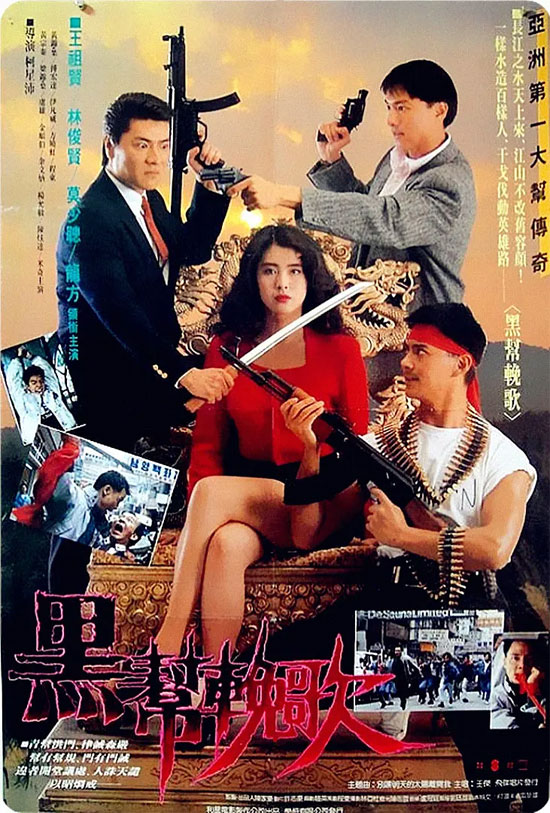
Hold on, back to the movie (the Taiwanese poster would be considered misleading today—it looks majestic and imposing, complete with a dragon throne, yet bears almost no relation to the actual plot. Given the filming technology of the time, it was likely a group shot of the main cast posing together. I wonder if they cracked up during the shoot. Suddenly reminded of the half-naked poster for “A Better Tomorrow”—those were the days!).
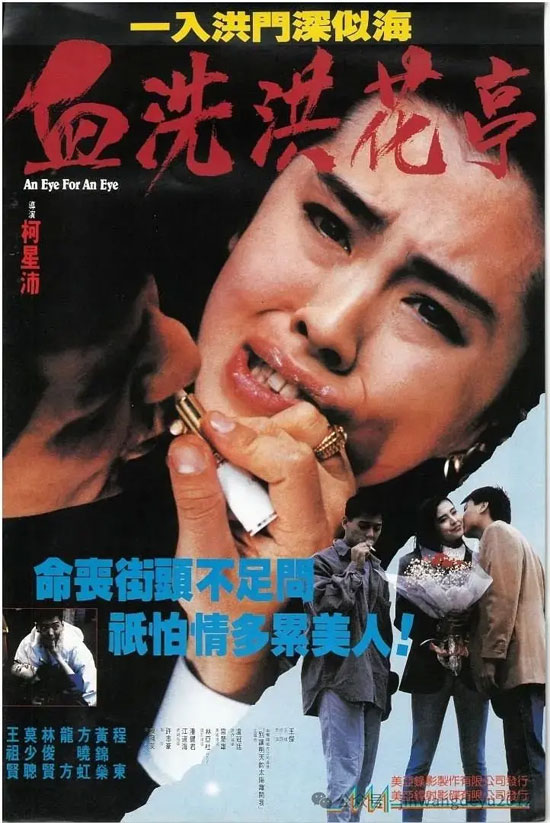
“An Eye For An Eye” sounds grand and heroic, but the film itself is utterly dull. If not for the handsome men and beautiful women starring in it, it would have been completely overlooked. The Hong Kong poster finally returns to the plot, but unfortunately highlights close-ups of the female lead being abused, which is unsettling for fans. Especially the clear shot of Joey Wong’s front teeth, ruining her perfect goddess image—that’s just too much.
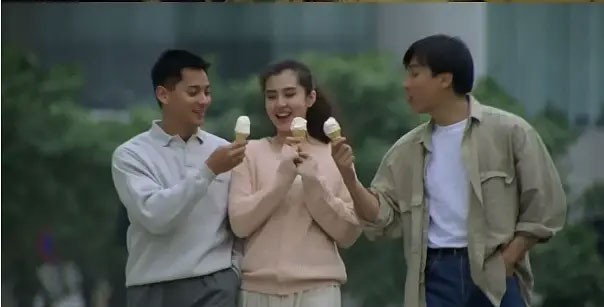
The three leading heroes were played by Lam Chun-yin, Mok Siu-chung, and Joey Wong, all at the peak of their looks. Not just women—even men drooled over their handsome faces. But one glance at Mok Siu-chung’s naturally large, captivating eyes, and you’d lose your senses. Not to mention the refined Lam Chun-yin, who flips his hair and exhales an ethereal aura—truly irresistible to both genders. In the film, Joey Wong’s modern attire radiates innocent charm. Compared to Tsui Hark’s version of Xiao Qian, she loses some of the lively humor but gains the grace of a refined lady. Especially in the latter part, her allure as a married woman reaches its peak, captivating audiences of all ages.
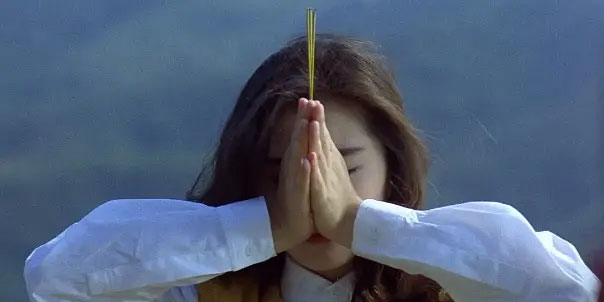
The film tells a clichéd underworld tale, with actors delivering formulaic performances as Hong Kong is portrayed as a chaotic place dominated by triads. The older generation of gangsters strictly adhere to principles, avoiding prostitution, gambling, and drugs. The problem is the screenwriter clearly lacks basic knowledge, likely penning the script after watching a few trendy, run-of-the-mill shooters. Historically, the “black” in triads stems from opium’s dark hue. Expecting them to uphold “Five Principles, Four Virtues, and Three Loves” is utterly absurd (a period saw Hong Kong films placing protagonists in moral dilemmas—but why bother with ethics when you’re in the underworld?). The new generation of gangsters is embodied by the villain specialist Long Fang in a “true-to-life performance” (in real life, he was famously kind-hearted and passed away at 54 in Chang’an District Hospital, inexplicably linked to Shaanxi). Just a year ago, he tormented the short-haired Zhang Min in “God of Gamblers,” and now he’s turned his cruel hand to the long-haired Joey Wong. Seeing one villain torment two beauties back-to-back is infuriating—you just want to eliminate him once and for all.
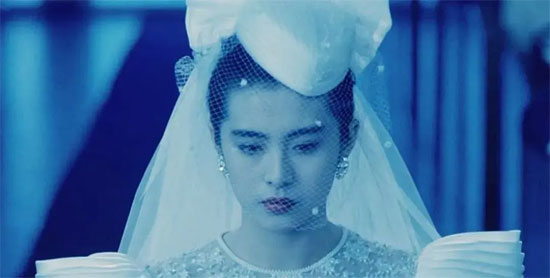
After framing the boss to seize power, Long Fang cruised through the story, crushing every rival boss and marrying the heroine. He spent his days at home subjecting her to all manner of abuse. Two-thirds of the story had passed, yet the villain remained unchallenged. It wasn’t until the final five minutes that, at the female lead’s instigation (though it didn’t seem particularly effective), Long Fang finally crippled his own right and left hands. He was then ambushed and gravely wounded by his own subordinate’s subordinate, shot six times by the handsome guy, and finally knocked flying by the female lead’s club. The villains held the upper hand throughout, with the reversal only occurring in the final minute. Long Fang’s acting was solid, but the heroes seemed utterly ineffective. Mo Shao Cong met his demise before achieving anything, and his lifeless eyes at the end truly pierced the soul.
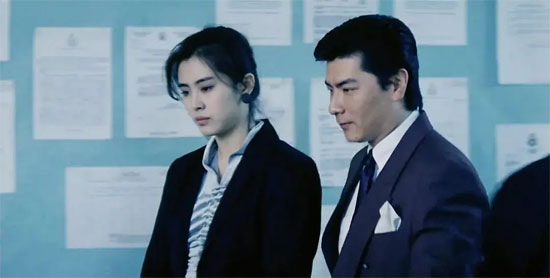
For a time, Hong Kong films popularized deeply corrupt villains oppressing protagonists, giving rise to the famous Four Great Villains and even the “Villain Gang” series. In these films, villains would torment the hero for 89 minutes out of a 90-minute runtime. The protagonist endured humiliation and hardship until a desperate counterattack, paying a price most couldn’t bear. Whether it started with the Mak Brothers’ “Rich and Famous” or not, I’ve seen plenty of similar films back then. Thankfully, I mostly watched them in video arcades, one after another. After the shootouts, there was usually comedy, and a kid’s laughter would wash it all away. But if I watched them alone at home, each one left me wrestling with my feelings for a long time afterward. These are the films that left the deepest impression, which is why “An Eye For An Eye” has stayed with me. After some time, the sharp-eyed Wong Kar-wai recognized audience demand. When filming Heavenly Sword Dragon Slaying Saber, he crafted a ruthless, never-backing-down Zhang Wuji. Making the protagonist invincible might reduce narrative depth, but it amplified the thrill factor—another hallmark of Hong Kong cinema.
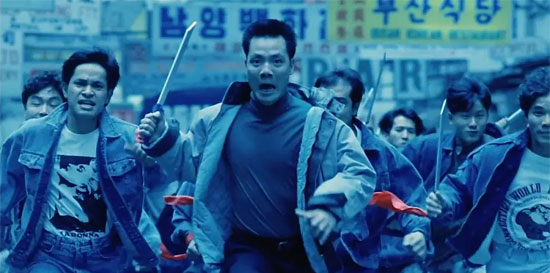
PS: Joey Wong now resides overseas. Occasionally, fans share photos of her daily life, and she appears to be in good spirits. It’s a pity that the film world has lost Nie Xiaoqian since then. Additionally, the one-eyed actor Dong, who often appeared as a psychic, made a rare appearance in this film as a ruthless assassin—a role not commonly seen throughout his acting career.
Please specify:Anime Phone Cases » Film Review: Nostalgia for Hong Kong Cinema 1990 “An Eye For An Eye”