Film Name: 停不了的爱 / Everlasting Love / 停不了的愛
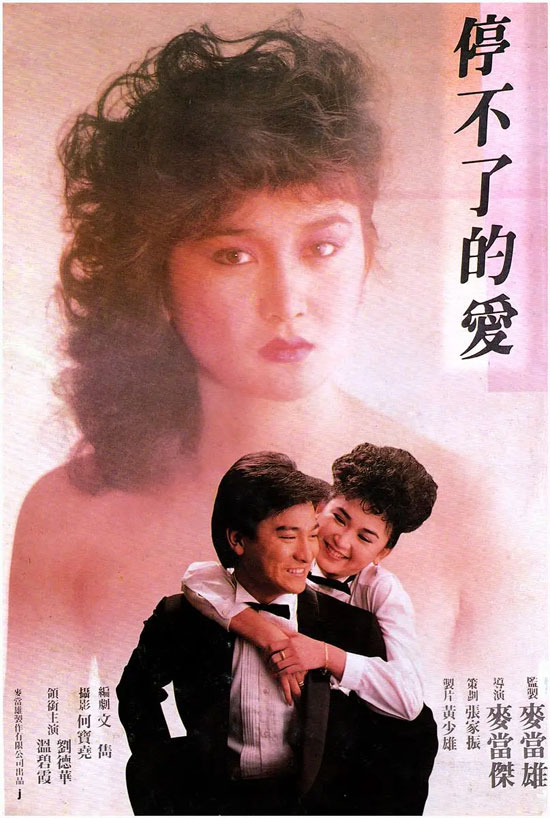
I love Hong Kong films from the 1980s because they’re unapologetically tacky.
The nightclub hostesses were dressed like the wicked stepmother from Snow White—all seductive and bewitching. Unlike today’s movies where hostesses look like streetwalkers, lacking any sense of style. How splendid those princess-sleeve sequined gowns were! Those vivid red lips, heavy eye shadow, and dramatic blush—the rags-to-riches plot was utterly kitschy, a world of glitz and glamour that left one spellbound.
The story itself is equally trite—a quintessential bourgeois poisonous weed that saps the fighting spirit of suffering proletarian women, tempting them to willingly become playthings for bourgeois playboys. It sells like hotcakes.
Bianca Wen’s performance feels a bit restrained, while Michelle Reis effortlessly embodies the delinquent girl. Andy Lau was truly handsome in his youth—tears welling as he races through the streets, meowing away, utterly irresistible.
Before Andy Lau’s entrance, the backstory for Miss Wen drags on far too long. What could be explained in a few simple shots is stretched out endlessly, with the male lead taking forever to appear. How is this supposed to convey “love that never stops”? The synopsis claims the wealthy young master forgives past grievances to redeem the unfortunate dancer, but watching reveals it’s pure nonsense. Clearly, it’s just a wounded male ego—there’s no forgiveness whatsoever.
The film initially hints at social commentary, but the moment Andy Lau’s handsome face appears, it instantly transforms into a fairy-tale romance. Any moderately self-respecting screenwriter wouldn’t have envisioned a happy ending for this story. Yet ending purely in tragedy doesn’t equate to realism either, leaving the film feeling awkwardly mismatched.
Please specify:Anime Phone Cases » Everlasting Love 1984 Film Review: Short Review