Film Name: 龙在边缘 / Century of the Dragon / 龍在邊緣
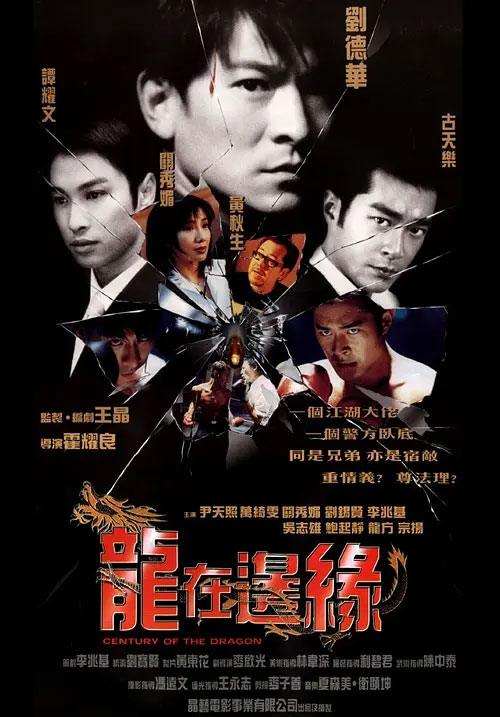
After rewatching “Century of the Dragon,” I found my rating for it was significantly higher the second time around. Setting aside moral judgments, I gained a much clearer understanding of the antagonists I disliked intensely during my first viewing. This story is truly excellent, offering substantial room for discussion and reflection. Most characters are well-developed, not only showcasing human nature and choices but also symbolizing the intergenerational transmission of community-political issues.
Here are a few key themes the film explores, focusing less on specific characters or plot points—many reviews already summarize those aspects. What’s more noteworthy is how these characters and narratives reflect deeper underlying themes and reflections.
It extensively explores human nature and inequality—both in terms of gang power dynamics and material consumption. Some accept it, some remain indifferent, and some actively resist. Indeed, in their active resistance to inequality, Fei Long and his brother’s son share common ground, though their methods and environments differ.
Regarding the so-called police villain who provoked strong aversion upon first viewing, subsequent screenings yield a less moralistic assessment. The existing social order precisely requires such a police antagonist. On one hand, they must constantly monitor and suspect Louis Koo’s undercover agent, as such operatives risk being turned into genuine gangsters. On the other, facing the ruthless and cunning triad boss portrayed by Tam Yiu-man, confronting such forces without unwavering resolve is impossible.
Upon rewatching, I revisited the film’s main antagonist—the character played by Tam, who strives to ascend through his father’s influence—and gained deeper insights. Broadly speaking, the film’s villains follow a formulaic path, often rooted in childhood trauma: Brother Fei Long’s strict, patriarchal upbringing warped his psyche. Yet this is fundamentally beside the point.
The true focus mirrors the decline of political order depicted in Plato’s ” The Republic,” depicting the downward spiral of political order through generational transmission. Fei Long and Bao Ge (the antagonist played by Tan Yao Wen) represent a relatively aristocratic-style triad culture—one that values honor and loyalty. Yet Bao Ge’s son prioritizes neither, as revealed in his hospital dialogue with his father. Brother Leopard himself is not the problem, nor is his son’s perspective inherently flawed (from a descriptive factual standpoint).
Thus, the film’s central narrative more critically examines the organization—the triad or gangster world itself. The former leader Fei Long seeks to transition and go straight, while the current leader Bao Ge is severely injured in an attack, and the gang offers no justice. The crucial question is whether his son should follow his father’s old ways of handling matters.
Note: This isn’t just his personal dilemma, but a challenge faced by any young gangster aspiring to become a leader. Times have changed…
The character played by Louis Koo primarily serves as a narrator, facilitating the seamless and compelling storytelling of both sides. Why does Brother Feilong end up pleasing neither side?
Another unlikable character in the drama is the troublemaking sworn brother. This role is also quite formulaic—not in the tradition of Chinese literature, but rather in British literature. Such individuals shouldn’t exist in the first place, or at least shouldn’t become lazy good-for-nothings. They shouldn’t have been characters at all (merely ordinary shop workers or street-level hoodlums). Yet through some twist of fate or ancestral virtue, they receive undeserved privilege. This mismatch then triggers a cascade of awkwardness or tragedy—a classic narrative trope.
On my first viewing, heavily influenced by “Infernal Affairs,” my focus was squarely on the undercover agent’s struggles and moral dilemmas. The second time around, I couldn’t care less about that aspect, even though this film undeniably serves as an intermediate step leading to “Infernal Affairs.” My second viewing, likely shaped by the “Election” series, shifted my attention to the generational shift within the triad and the power struggles between the underworld and the authorities.
Another recurring theme is power dynamics and conspiracy within the triad, a core narrative element in all gangster films. The antagonist here displays fox-like cunning, often offering remarkably insightful analyses of situations. I found myself appreciating—even surprised by—this aspect upon rewatching. He covets everything Brother Fei Long possesses (the company, the triad, his sister-in-law…).
His sharp analysis initially seems like pure villainy, but a second viewing reveals it’s precisely the opposite. The antagonist’s astute observations expose a major flaw within the protagonist, Brother Feilong. No matter how morally upright he appears, within the larger political-power landscape, he is a “traitor” or a figure in a “transitional phase.” When Brother Feilong’s mother’s birthday banquet was disrupted by rival gang members, it wasn’t merely about the villain being evil. It highlighted the inevitable predicament faced by anyone who rashly betrays their former faction and severs ties with the power base that sustained them (even if that power wasn’t socially sanctioned).
While Brother Feilong’s counterattack in the film partially resolves the plot conflict, his subsequent confrontation with the gang within the narrative—and the real-world possibility that he might actually be killed—makes for compelling storytelling.
Please specify:Anime Phone Cases » Century of the Dragon 1999 Film Review: Upon reading it a second and third time, I realized this is a truly remarkable story.