Film Name: 了不起的菲丽西 / Ballerina
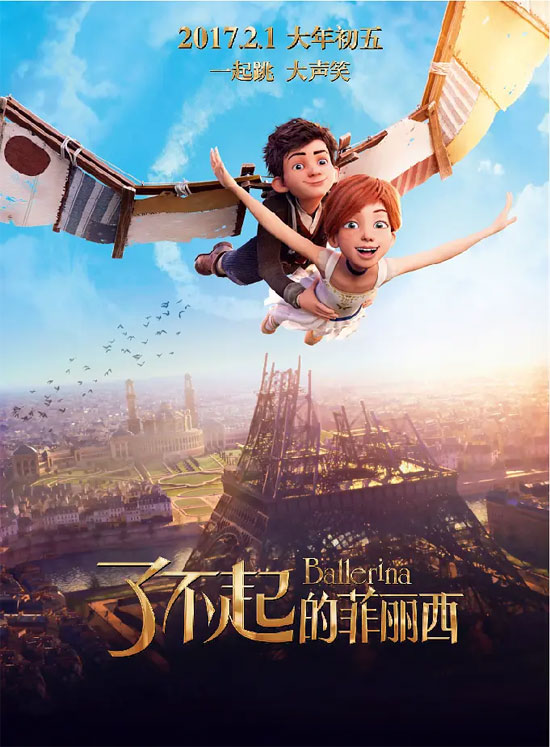
As the saying goes, one minute on stage takes ten years of practice behind the scenes. Though Félicie possessed boundless passion and devotion for dance, was that truly enough to propel her from zero ballet experience to performing in “The Nutcracker” after just ten days of training?
The film’s success lies in its vivid recreation of late 19th-century Parisian ambiance. The Eiffel Tower was under construction, and people were enjoying life with high spirits. Of course, this inevitably came with some shadows cast by social issues like wealth disparity and class divisions. Yet Paris, and France as a whole, remained a society that revered art, respected authority, and pursued dreams.
But the film’s failure lies precisely in its portrayal of achieving dreams through impatience. Whether it’s the young inventor’s boyfriend or Félicie’s dance, it seems as though these dreamers can achieve their aspirations with almost no effort—as if the “French Dream” could materialize overnight. While the French do cherish romance, this feels overly idealistic.
I regret that Félicie’s moment on stage wasn’t synchronized with the Eiffel Tower’s completion. Otherwise, why include that half-built tower at all? This tallest structure in Paris, this monument commemorating the centennial of the French Revolution, this landmark built for the World’s Fair to surpass Britain’s Crystal Palace—was it not the very embodiment of France’s dream to surpass Britain and become Europe’s foremost power? If Felicie’s personal dream and the symbol of France’s dream could be completed simultaneously, wouldn’t that be a truly beautiful image?
In reality, Felicie’s ballet career encountered scarcely any substantial setbacks. She earned the full tutelage of a reclusive master merely by polishing floors. She gained admission through deception despite lacking qualifications. She never faced insurmountable hurdles—everything came effortlessly with practice. She suffered no injuries, save for one inexplicable defeat in a duel, only to triumph in an even more baffling subsequent contest. Had the film allowed Felicie’s ballet training to extend for two years—a duration akin to the construction of the Eiffel Tower—the hardships she overcame would have felt sufficiently grounded. Only then could her final, exuberant leap truly evoke genuine joy and emotion.
As for Felicie’s teacher, the former ballet master, by the film’s conclusion he should not only earn the admiration of the choreography authority but, more importantly, rediscover the joy and courage of dancing through Felicie’s passion. From her first appearance, she was clearly a character with a story, yet this narrative remained underdeveloped, and her subplot failed to reach its full potential. Why did she suffer her injury? Did she feel timid? Did she harbor resentment yet secretly yearn to slip into pointe shoes and step onto the stage? On the surface, she was teaching Felicie dance techniques, but shouldn’t Felicie have reignited something within her? Because if so, it would have ignited the audience’s passion as well.
“The Nutcracker” is Tchaikovsky’s classic ballet, yet it premiered in Russia only in 1892. The film’s setting is clearly 1888-1889, during the construction of the Eiffel Tower—a significant historical anachronism. Another anachronism is the Statue of Liberty. Shipped from France in 1885 and unveiled in New York in 1886, it simply couldn’t have been in Paris during the Eiffel Tower’s construction.
Please specify:Anime Phone Cases » Ballerina 2016 Animation Film Review: The Overly Romantic “French Dream”