Film Name: 小亲亲 / And I Hate You So
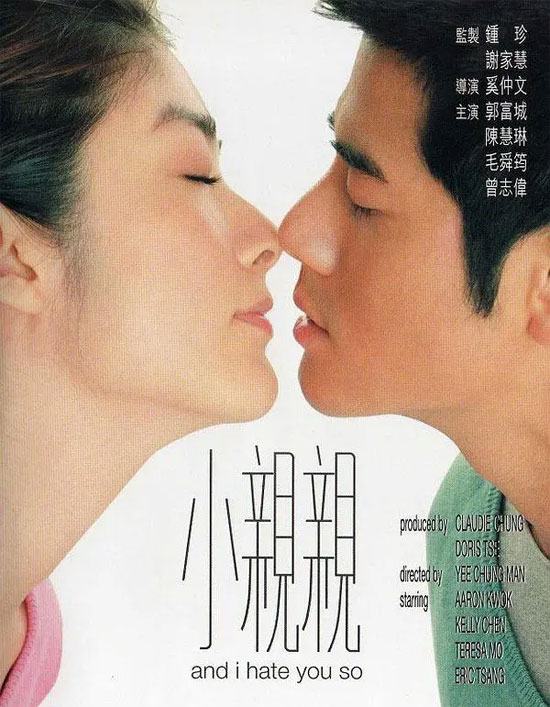
“And I Hate You So” marks the second collaboration between director Xi Zhongwen and screenwriter An Xi following “Anna Madelina.”
If you place too much weight on Douban ratings, this film might slip under your radar. But if you’re willing to invest a little time to understand it, I believe it will prove to be a remarkably rewarding companion.
Radio DJ Zhang Rong finds a long-sought vinyl record at a vintage shop but doesn’t have enough cash. On his way back for money, columnist Wu Qiuyue happens upon the record while browsing the store. The story’s opening is masterfully serendipitous: this very record was the one Wu Qiuyue once gave to her first love. Wu Qiuyue is determined to reclaim it, but Zhang Rong, who has rushed back, refuses to give it up.
A tangled web of emotions begins to simmer between them.
So, as a columnist, Wu Qiuyue relentlessly attacks the “scumbag” in her columns. As the sharp-tongued radio DJ, Zhang Rong retaliates by criticizing the “bitter woman.”
After several rounds of verbal sparring, Zhang Rong was the first to make amends with Wu Qiuyue. But then, at a restaurant, he witnessed Wu Qiuyue’s boyfriend cheating on her. Devastated, Wu Qiuyue was then confronted by her first love, who had been sent by the scriptwriter.
Feeling guilty about selling her vinyl records to a secondhand store, her first love proposes reconciliation, planning to take Wu Qiuyue abroad to start anew. On the way to the airport, “I Wish You Love” plays. Of course, the film takes another unexpected turn, leading Wu Qiuyue to resolve to be with radio DJ Zhang Rong.
Foes become lovers, a small domestic reunion.
The screenwriter masterfully transforms a simple urban romance into an engaging tale. Though imperfections exist—such as the redundant romantic subplot involving Mao Shunqun and Tsang Chi-wai, the less-than-rebellious nature of Cheung Chi-lam’s playboy character, and the abrupt retreat of Xuan Xuan when faced with formidable romantic rivals—the film remains compelling. Take Aaron Kwok’s portrayal of the radio DJ Zhang Rong, whose sharp tongue and charming dimples with long lashes make him irresistibly irresistible. Yet in the final scene, this smooth operator actually smiles with such shy awkwardness.
Still, one cannot deny this Hong Kong film’s authentic charm and flavor. There’s no need to put on a stern face or take it too seriously.
You can fully savor the uniquely Hong Kong flavor of love here. It’s a bright, lighthearted, and utterly unburdened kind of romance—the kind where simply curling up together on the couch feels wonderfully perfect, even if nothing else happens.
In the film, Wu Qiuyue writes a column piece titled “Jiu Ai,” recounting an umbrella she couldn’t shake off but desperately wanted back after letting go. The movie suggests that mending broken relationships in this world is always a complicated story.
PS. It’s said Leslie Cheung gave Kelly Chen extensive guidance on her performance, hence the special acknowledgment to Mr. Leslie Cheung in the closing credits.
PPS. Back when I watched this film, I envied Wu Qiuyue’s room full of books—and I still do.
PPPS. A lighthearted, authentic Hong Kong film that makes you lose track of time. Hope you’ll find it to your liking too.
Please specify:Anime Phone Cases » And I Hate You So 2000 Film Review: Frenemies, Reunited in This World