Film Name: 命中罪爱 / A Stolen Life / Town Without Pity
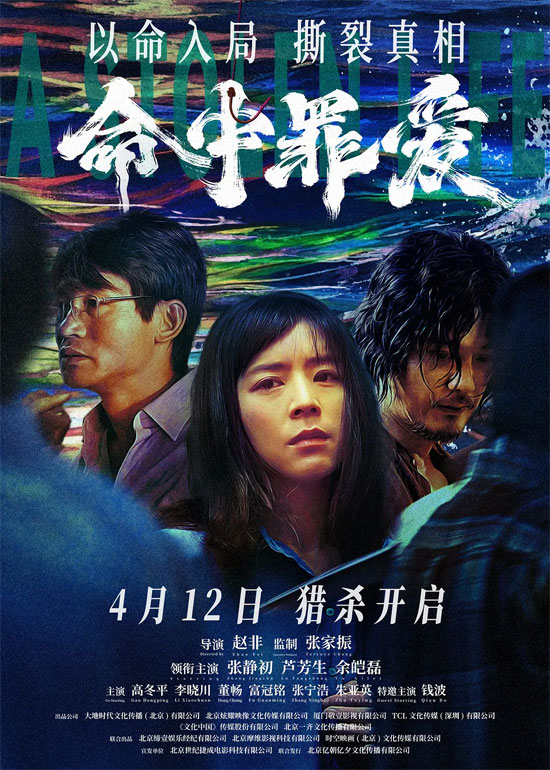
Apart from its rather unfortunate title, this film is otherwise flawless. Some claim there are continuity errors, but I was so engrossed while watching that I failed to notice such details.
It was only through the end credits that I first learnt of the existence of body doubles and hair doubles within the production crew. This speaks volumes about the film’s level of industrialisation, the thoroughness of its shooting process, the coordination of crew members, and the seamless integration of post-production and other stages. Perhaps it’s precisely because the film is so well-made that one feels compelled to watch the credits.
The plot unfolds layer by layer, with flashbacks and flash-forwards perfectly timed. Even when glancing at the progress bar, fearing the story might end, unexpected twists kept me utterly engrossed. Not once did I feel bored or tempted to fast-forward.
When he secured her a government position and residency upon graduation, and when she arranged a false identity for him to evade capture during a crisis – their profound affection never wavered despite life’s harsh realities. Their simple acts of protection and resistance nearly faded away like fallen leaves in the wilderness.
As Lin Jian waited in the car to assassinate the Third Brother, an ant crawled across his finger. He became engrossed in playing with it, perfectly mirroring the earlier scene where he couldn’t bear to raise the knife to slaughter a pig. Though a murderer, one might argue that in certain circumstances, it is the heart that matters, not the deed. An adult who smiles while teasing ants, who cannot bear to crush them—such a soul must harbour profound gentleness and kindness. That he could wield a knife to end another’s life speaks to an extreme, one surely tied to his deepest affection.
All characters are sharply defined. The mother embodies the type who controls her children in the name of love, laying the groundwork for her daughter’s tragedy. Zhang Jingchu’s portrayal of the female lead captures the harrowing anguish of her tragic circumstances. Lin Jian’s rage at witnessing his beloved’s trauma, the eldest brother’s inherent brutality, the second brother’s cunning, the third brother’s loyalty intertwined with his own wickedness, and the relentless pressure the extortionist old man exerts on Lin Jian – all are rendered with consummate skill.
The conclusion is masterfully crafted. When Zhang Jingchu reveals the truth, it utterly shatters the eldest brother’s psychological defences. In that instant, she transforms from a passive, enduring victim into one standing on higher ground, shifting the balance of power. Thus, the question of revenge becomes irrelevant—revenge has, in effect, been achieved. As an audience member, my fixation on vengeance was finally resolved. The protagonist’s tragic ordeal finds temporary catharsis. Yet in his moment of despair, the boss dithers on, even attempting to force a kiss upon Zhang Jingchu – a truly excessive act. Her perfectly timed single tear elicits profound sympathy from the audience, reigniting our loathing for this villain. Yet, as fate would have it, just when Zhang Jingchu relinquished her quest for vengeance, the boss’s inherent weaknesses—his greed and corrupted psyche—propelled him into the abyss of death. Perhaps such profoundly corrupted humanity could only meet this end. After the boss’s death, depicted with a resigned shrug, the film cuts to a shot of the Guanyin statue—a profoundly symbolic moment, suggesting that karma inevitably catches up, and that good and evil will ultimately meet their due.
Brilliantly done. Even Hollywood rarely produces such meticulously crafted, earnest work these days.
Please specify:Anime Phone Cases » A Stolen Life 2025 Film Review: A kiss steeped in buckwheat’s flavour, bitter and sorrowful— That is Heaven’s judgement.