Film Name: 异度空间 / Inner Senses / 異度空間
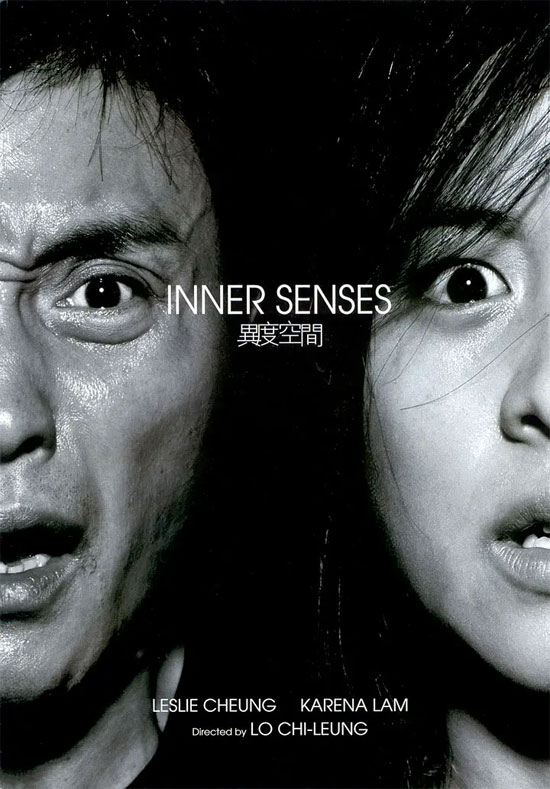
The film “Inner Senses” owes its fame largely to being Leslie Cheung’s final cinematic work before his passing, preserving his unforgettable presence and mesmerizing performance. Out of admiration for Leslie Cheung, I chose this film from the vast sea of cinema to watch during the May Day holiday.
In the first half of the film, the person tormented by ghosts until she’s barely clinging to life is Ah Yin, played by Karen Lam. The divorce of her parents and their subsequent abandonment of her became an eternal wound in her heart. Ah Yin became neurotic, which directly led to her romantic struggles. Life’s various setbacks made her paranoid. Under the influence of psychological factors, she began experiencing hallucinations and attempted suicide multiple times. Her psychiatrist Jim (played by Leslie Cheung) timely intervenes in her life, helping her unravel her emotional knots and warming her cold heart with love.
Yet Jim himself carries an unspeakable, harrowing past: in his youth, he betrayed a girl who, consumed by heartbreak, ultimately jumped to her death. Her horrifying, disfigured face remains etched in his memory, like a lingering spirit. Deep guilt prevents Jim from ever finding joy in life; he isolates himself in his work, shunning all social interaction. During A-Yin’s therapy sessions, the ghosts within Jim’s heart were awakened, beginning to frequently disrupt his life. He grew increasingly tormented, even seeing the ghost of a girl in a school uniform following him while swimming. The terror became an inescapable shadow, pushing him to the brink of collapse. Ultimately, he found himself standing atop a high rooftop…
What sets this film apart from other horror movies is its consistent emphasis on one point: ghosts do not exist. The psychiatrist, played by Leslie Cheung, tells us from the outset that ghosts are merely the brain’s natural reflection of external information about supernatural beings, not an objective reality. Throughout the narrative, ghostly apparitions consistently function as metaphors for psychological disorders. The woman and child appearing before the emotionally vulnerable Ah Yin are reflections of her landlord’s tragic story within her mind. Precisely because she felt utterly alone, with no one to rely on, she became susceptible to external influences, leading to her hallucinations. For Jim, deep regret and unspeakable pain had been suppressed for years. When they suddenly erupted, the hallucinations became intensely vivid, driving him to the brink of death.
When Jim was comforting A-Yin, he said, “Truth is, everyone is vulnerable. We all experience sorrow and pain. If suppressed for too long, it can form emotional knots. That’s why the most important thing is learning to regulate and comfort ourselves.” Everyone harbors secrets they dare not reveal. If kept hidden for too long, these secrets become a heavy stone pressing on the heart, making it hard to breathe. I recall in the film “2046,” Chow Mo-wan once said that in the old days, if someone had a secret, they would go to the mountains, find a tree hollow, speak their secret to the tree, then seal the hollow shut. That way, no one would know the secret, and they could free themselves from its burden. After confiding in her parents, Ah Yin returned to normal. Jim, however, refused to share his burden, forcing him to endure the torment of the vengeful spirit born within his own heart.
In the film’s final scene, on a rooftop swept by the night wind, Jim confesses his regrets to the spirit that has followed him all along, revealing the years of inner agony he has endured. He declares he would rather leap from the high building, offering his life as atonement. In that moment, the ghost’s resentment dissolved. She ascended to heaven, Jim found liberation, and he embraced A-Yin, who had come searching for him.
This thriller is filled with spine-chilling elements: ghosts in mirrors, dimly lit rooms, the eerily smiling landlord, and an atmosphere thick with oppression. More crucially, it masterfully portrays psychological states. Karen Lam excelled in her role, vividly conveying Ah Yin’s anguish and inner turmoil. Her character radiated a tender vulnerability that evoked deep sympathy and sparked the imagination. Leslie Cheung’s performance, however, undoubtedly reaches a level beyond the reach of other actors. He masterfully conveys the indescribable terror within, the numbness and pain when memories surge like a tidal wave. In my view, he has attained godlike heights, and it will be difficult for any actor to match him from now on.
I’ve always been drawn to Leslie Cheung’s blend of elegance and bewilderment. My initial awe came from his portrayal of the young, dashing police officer in “A Better Tomorrow.” Later, he captivated me as the decadent, fallen Ah Fei in “Days of Being Wild,” the seemingly fragile yet unwaveringly devoted Ning Caichen in A Chinese Ghost Story, the heartbreakingly aged and weathered Twelfth Young Master in Rouge, the timelessly legendary Cheng Dieyi in Farewell My Concubine, and the sharpshooter consumed by murderous desire in Double Tap… Each unforgettable role collectively forged the perfect Leslie Cheung.
As the final work of superstar Leslie Cheung, “Inner Senses” bore an unfair burden of criticism. Many claimed that his intense immersion in this horror film left him unable to escape its grip after filming concluded. A cascade of psychological issues overwhelmed him, ultimately driving him to the rooftop like the female ghost in the movie. Tragically, he was not as fortunate as Jim. Leslie Choing escaped the torment of his inner demons through a tragic leap, leaving an irreparable wound on the world. To this day, his fans continue to honor his memory in countless ways.
The film’s beautiful conclusion draws an involuntary smile and silent admiration, seeming utterly perfect. Love is a requiem, dissolving irreconcilable human conflicts and hatred, bestowing tolerance and magnanimity. I deeply believe the restless spirit that haunted Jim for so many years will no longer intrude upon his life, for his inner turmoil has been resolved. The sunlight of life will henceforth illuminate the depths of his soul.
Please specify:Anime Phone Cases » Inner Senses 2002 Film Review: Love is a requiem.