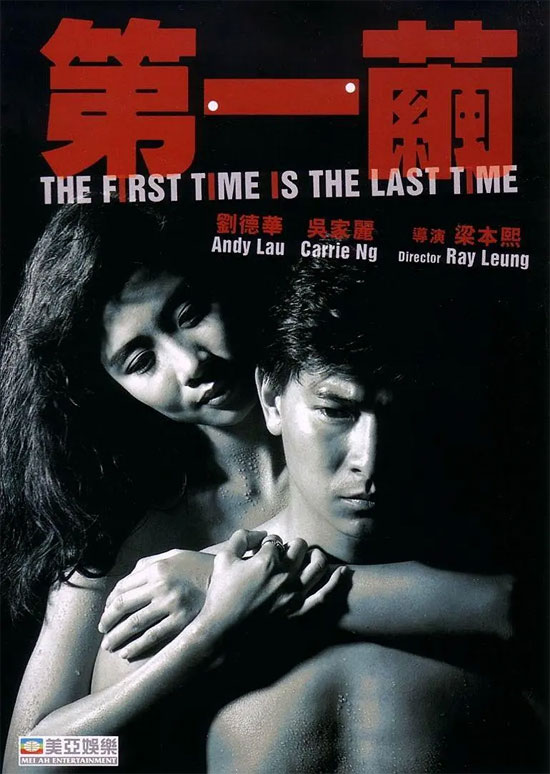
Film Name: 第一茧 / The First Time Is the Last Time / 第一繭
When it comes to prison-themed films in Hong Kong cinema, the first titles that come to mind are undoubtedly director Ringo Lam’s Prison on Fire (1987) and Prison on Fire II (1991). These two films have become classics within the prison genre.
Hong Kong cinema doesn’t have many prison-themed films. Besides Ringo Lam’s two classics, another one that left a deep impression on me is “Chinese Midnight Express” (1997), directed by John Tung and starring Tony Leung. This film later spawned a sequel, “Chinese Midnight Express II” (2000).
All the prison films mentioned above feature male protagonists. So, are there any Hong Kong films set in women’s prisons?
Looking further back, Kwei Chih-hung directed “Bamboo House of Dolls” (1973) for Shaw Brothers Studios. This film could be considered an “unofficial” prison genre entry, blending exploitation, voyeurism, and eroticism into a work that induces both psychological and physical discomfort in viewers. But does this truly qualify as the “pioneering work” of Hong Kong women’s prison films?
Compared to “Bamboo House of Dolls”—which was essentially “bait-and-switch”—Leung Bun-hei’s “The First Time Is the Last Time” (1989) stands as the definitive masterpiece of Hong Kong women’s prison cinema.
First, “The First Time Is the Last Time” is fundamentally a prison drama, making it a remarkably “pure” example of the genre.
Second, the film earned three nominations at the 9th Hong Kong Film Awards, with standout performances from its four leading ladies: Wu Jiali, Lam Kin-ming, Ma Si-chan, and Ni Xue.
Third, while the film fully embraces Hong Kong cinema’s signature excesses and frenzy in portraying the cruelty of the women’s prison and the inmates’ tragic plight, the themes of loyalty and betrayal, love and friendship, remain deeply moving.
Fourth, as a popular leading man, Andy Lau plays only a “supporting role” in the film. In fact, his somewhat exaggerated performance, which tries too hard to be cool, pales in comparison to the female leads’ portrayals. It’s no surprise he ended up as a supporting actor.
In terms of screen time, Andy Lau is the male lead in “The First Time Is the Last Time,” but he fails to occupy the narrative core—the prison scenes. In this sense, he becomes a “supporting role.”
Andy Lau plays Ah Yung, a police undercover agent infiltrating a drug trafficking ring. For eight long years, he lived a life neither fully human nor ghostly, walking on eggshells within the cartel while facing rejection and distrust from family and friends. Though tormented, he couldn’t abandon the call of “justice.” On the eve of bringing down the cartel, he was betrayed by a fellow undercover agent and brutally “executed.” Even more tragic, the vindication he longed for never came after his death.
I’ve always believed that undercover work is the least worthwhile “profession” in the world—both morally and in terms of the safety of lives (including those of family and friends).
Twenty-three years later, Andy Lau reprised the role of an undercover agent in “Infernal Affairs” (2002). This time, however, he was an undercover agent sent into the police force by a triad boss. The weight of age and the reversal of roles gave Andy Lau greater scope for performance. Though he narrowly lost the Best Actor award to Tony Leung at both the Hong Kong Film Awards and the Golden Horse Awards, their performances in the film undoubtedly rank among cinema history’s most iconic duels.
“The First Time Is the Last Time” is a meticulously structured film, beginning with Ma Yufeng (played by Ma Sichen) entering prison and ending with her release. The difference lies in her state of mind: she enters prison filled with “love”—determined to help her boyfriend carry out his revenge plan—only to face his furious murder upon release. Love, it turns out, was nothing but a beautiful deception, and she ultimately meets her end beneath a car.
In prison, Ma Yufeng sought out “Madwoman” (Winnie Wong), a woman of honor who slaughtered gangsters to avenge her lover, Ah Yong.
Winnie Wong came from a floating community. Due to her father’s drug addiction, she was sold to a madam at nine and began her life as a prostitute at twelve. After over a decade of “decadence,” she met Ah Yong. He rescued her from the pit, helped her kick her drug habit, and gave her hope for life. Upon learning Ah Yong’s true identity, she was plagued by foreboding and longed to flee with him to Canada for a fresh start. Ah Yong, unable to let go of his sense of “justice,” ultimately met his demise, dying penniless.
After Winnie was imprisoned, to evade murder charges, she feigned insanity and behaved erratically, repeatedly getting herself locked in solitary confinement (Cell 9). It was there she met Ma Yufeng. Her “loyalty” and ‘kindness’ moved Ma Yufeng, who began to realize her boyfriend had sent her to the women’s prison under false pretenses. Ultimately, she did not carry out the planned murder of Winnie. Winnie forgave and accepted Ma Yufeng, but her boyfriend, Luo Bazi (played by an actor resembling a smaller version of Andy Lau), did not “forgive” her.
From a disoriented woman of the night to a tender young woman saved and nurtured by love, then to a righteous avenging goddess, and finally to a “madwoman” who despises evil and fears nothing (adopting a “what’s the point” attitude), Wu Jiali delivered a relatively restrained performance of a rather “over-the-top” character, demonstrating remarkable control.
Ma Sze-yan entered the film industry with “Boat People” (1982). Her relatively plain face naturally carried an air of innocence and guilelessness. In “The First Time Is the Last Time,” she practically played herself to shape her character.
In contrast to Ma Si-chan’s naturalistic performance, Lam Kin-ming, playing 5354 (a prison code name, Cantonese homophone for “shady”), masterfully brought to life the seasoned veteran among the female inmates. When she received a “proposal” from the father of her child, she also displayed the innocence and simple-mindedness of an old prostitute finding true love. Just when she thought her suffering had ended, she was killed by a selfish cellmate during an escape attempt.
The murderer was the wealthy young woman played by Ni Xue. Imprisoned for her reckless behavior, she endured constant beatings and humiliation at the hands of the prison bully. After becoming cellmates with Winnie, Ma Yufeng, and 5354, she received protection and care, yet her selfish, reckless, and frenzied nature remained unchanged. To join the escape plan, she ruthlessly murdered her pregnant cellmate. This scene stands as the film’s most infuriating and heartbreaking moment. Ni Xue’s character is both pitiable and despicable.
“The First Time Is the Last Time” chronicles the fates of four distinct female inmates. While its depictions may seem excessive, it leaves audiences with profound sorrow and endless sighing. In a sense, this film can be considered a feminist work.
Please specify:Anime Phone Cases » The First Time Is the Last Time 1989 Film Review: In this Hong Kong film set in a women’s prison, Andy Lau plays only a supporting role.