Film Name: 无敌幸运星 / When Fortune Smiles / 無敵幸運星
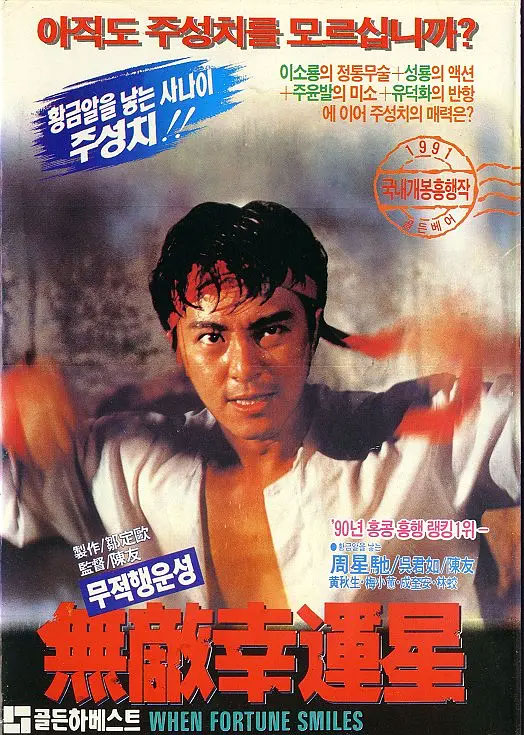
I’ve always believed that film is an art form, and art originates from life. That’s why I now focus more on the deeper meanings and underlying messages conveyed in movies.
“When Fortune Smiles” was a film I watched during my childhood. Back then, it aired frequently on TV, so whenever it came on, I’d happily gather around the television and watch it with rapt attention. As a youngster, I was drawn only to the comedic bits, lacking any grasp of the story’s logic or deeper themes. Especially the gags about the “Rubber Man” and “Turtle Man” had me laughing out loud—I was quite the mischievous kid back then.
Now, as an adult navigating the real world, shaped by life’s hardships and the complexities of human nature, that childlike joy has long faded from my heart. By chance, I recently revisited this film—I can’t recall its title, only that silly character played by Chen You and the “two superheroes” scenes (for some reason, Chen You left a deeper impression than Stephen Chow in this movie). My excitement surged, as if I’d caught the tail end of my childhood. I searched online for a copy and watched it again.
A classic is a classic. That it left such an impression on me as a child, and still stands out today as a rare blend of reality and comedy, speaks volumes. I laughed just as hard as I did back then, marveling at the humor, the boldness (quite avant-garde for its time), and the sheer ingenuity of the plot twists. Yet this time, while laughing along with the plot, I also gasped at the ugliness of human nature. To fight over inheritance, even fathers and sons, relatives and kin, could turn against each other and inflict harm. To steal money, even friends and brothers could scheme and frame one another. As I mentioned earlier, film is art, and art stems from life. As a child, I neither understood nor cared to understand such logical plot points, but now I can’t help but feel a bit disheartened by reality.
Therefore, I consider this a fine film. It succeeds in its humor and wit, and its storyline has been grounded in realism. Stephen Chow’s film uses ordinary people to reflect on society at large, and the ending still manages to reveal the warmth of humanity, which is deeply moving. I will accept this reality, and likewise, I will adopt Stephen Chow’s approach—viewing reality with near-mocking amusement.
Please specify:Anime Phone Cases » When Fortune Smiles 1990 Film Review: As a child, I sought only amusement; as an adult, I appreciate reality more.