Film Name: 辣手神探 / Hard-Boiled
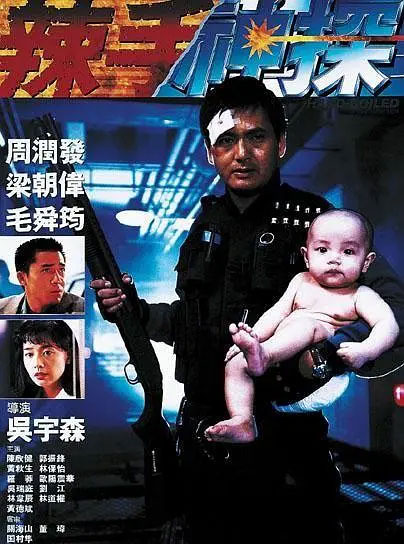
In the late 1980s and early 1990s, Hong Kong’s bold and enterprising people had transformed the city into an international financial hub. Hong Kong’s film industry also flourished, earning the title “Hollywood of the East” and becoming the world’s second-largest film production base. Among its achievements, John Woo’s violent aesthetic transcended borders, even making a significant impact in Hollywood. “Hard-Boiled” stands as John Woo’s final classic masterpiece before his move to Hollywood. Its monumental action sequences and abundance of (live-action) stunts far surpassed contemporary Hollywood productions, leaving the Hong Kong film industry in the dust. Among films released in the early 1990s, the only work that could rival its gunfights and stunts was Luc Besson’s “Leon,” which came out two years later.
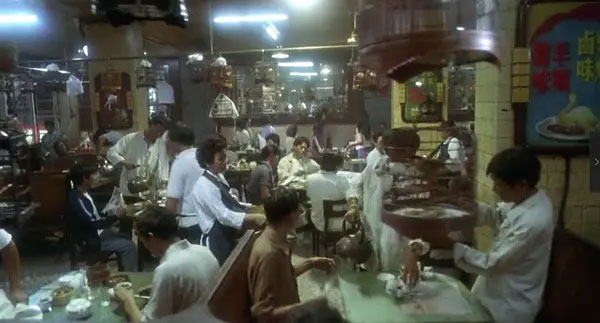
The First Gunfight Scene: Yun Lai Tea House, Steeped in Hong Kong Flair
Throughout the film, three gunfight sequences unfold as the plot progresses. The first takes place at Yun Lai Tea House, a shootout steeped in quintessential Hong Kong flavor. The second unfolds within a warehouse at the docks. Teahouses, cafes, and docks are common locations for gangster deals and negotiations in Hong Kong films, so it’s no surprise that John Woo transformed them into battlefields. However, the boldest and most spectacular shootout in the entire film takes place at Ming Xin Hospital. The choice of location is truly imaginative, and beyond imagination, John Woo’s execution is breathtaking. Countless explosions, principal actors performing their own stunts (including several infants), authentic firearms, sound effects, and score, coupled with exceptional post-production editing, elevated this shootout into a classic of Hong Kong action cinema.
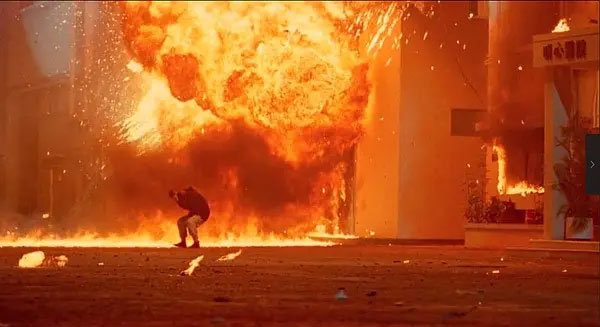
The final shootout, set in a hospital, features monumental explosions
Unlike today’s commercial films dominated by CGI, grand spectacles, and big budgets yet lacking in character development and narrative grounding, John Woo’s vision of chivalrous camaraderie blended with violent aesthetics elevates “Hard-Boiled” beyond mere explosions, gunfights, and action sequences. It achieves mastery in characterization, plot structure, and intricate details.
Tequila, played by Chow Yun-fat, embodies the film’s title. A hard-boiled man who drinks hard liquor and values brotherhood, he witnesses his men killed by assassins in the first shootout. Though he could have captured the killer alive, he chooses to shoot him in the head. Driven by vengeance for his comrades, he defies his superiors, plants a newspaper on Johnny’s car, and single-handedly infiltrates Uncle Hai’s arms cache to confront Johnny. Yet he also possesses a tender side: during the final shootout at Ming Xin Hospital, he evacuates infants alongside Mao Mao, ultimately singing to lull a baby to sleep while shielding it. Loyal, fearless, and fiercely righteous—a tough guy with a soft heart. TEQUILA stands as a modern-day chivalrous hero. In John Woo’s classic films, Chow Yun-fat became his signature actor, portraying one compelling modern knight-errant after another in films like “A Better Tomorrow” and “The Killer.” Much like Clint Eastwood in Leone’s Westerns, he defined an important genre in cinematic history.
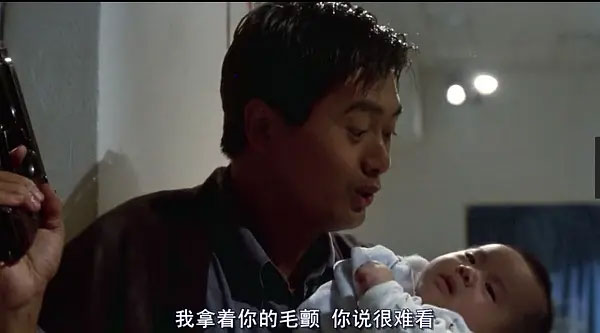
The rap that Uncle Fa used to lull the child to sleep during the final shootout scene
As for Tony Leung’s character Ah Long, he embodies the helplessness of being caught in the underworld in this modern chivalry tale. Undercover as Hai Shu’s subordinate, he works tirelessly for the arms syndicate that seeks to overthrow Johnny. His characterization is steeped in romanticism—a man without fixed identity, living aboard a yacht. In his first scene, he kills the traitor who betrayed Hai Shu with cold-blooded decisiveness. Yet he despises killing as much as folding paper cranes, despite his yacht being adorned with them. At the dock’s arms depot, he stifles tears while eliminating Uncle Hai. In the climactic standoff, he locks horns with Chow Yun-fat’s gun—only for the Detective to fire again, sparing Chow whose pistol is now empty. Since joining the force, Ah Long had served the police through undercover work and other shadowy roles, leading him to contemplate emigrating to Iceland—a country bathed in sunlight 24 hours a day. The undercover agent, existing in this liminal space between justice and crime, risking daily exposure to gangsters that could leave him dead on the streets while also facing the danger of mistaken identity by his own police force, represents the greatest innovation in character design within this film. This character archetype would later be explored in depth by directors like Johnnie To, giving rise to another classic Hong Kong film genre. A decade later, in Sir To’s “Infernal Affairs,” the undercover agent played by Tony Leung also received a birthday gift on a rooftop.
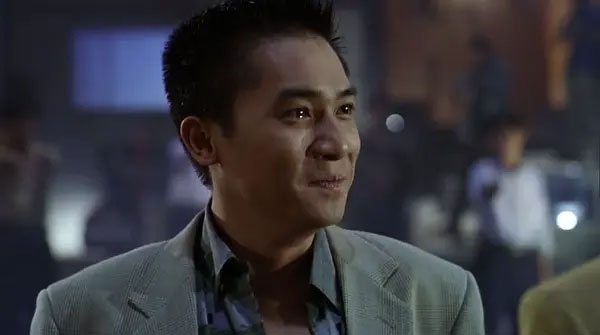
Tony Leung’s tearful killing of Uncle Hai
Beyond the lead trio of Chow Yun-fat, Tony Leung, and Maggie Cheung, even the supporting cast and extras in “Hard-Boiled” featured future pillars of Hong Kong’s entertainment industry: Wong Cho-sang as Johnny, Lam Po-yee (star of TVB’s classic The Fugitive) as the officer sacrificed in the teahouse, and Au Yeung Chun-wah (later nominated for an Emmy for Casino Tycoon and star of TVB’s classic The Fugitive) as the “police officer” with only a few lines who was ultimately killed by Ah Long. Johnny’s henchman Wong Tak-bun, and Kwok Ching-hung, who handled the gun deal in the first shootout scene.
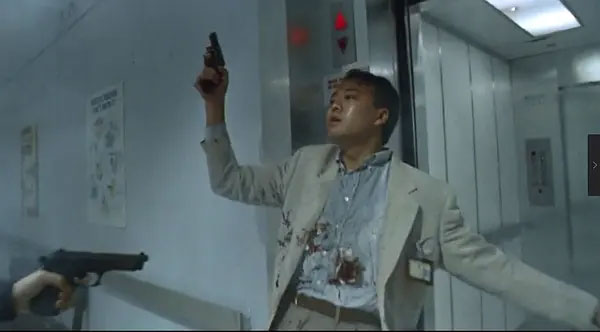
At the time, Au Yeung Chun Wah was still a bit player, but his expression when shot? I give it full marks.
It must be said, “Hard-Boiled” stands as the pinnacle of John Woo’s Hong Kong cinema. After moving to Hollywood, he continued to pursue his violent aesthetic to the fullest, with Nicolas Cage and John Travolta becoming his trusted collaborators.
Please specify:Anime Phone Cases » Hard-Boiled 1992 Film Review: There’s a kind of Hong Kong film—it’s called John Woo.