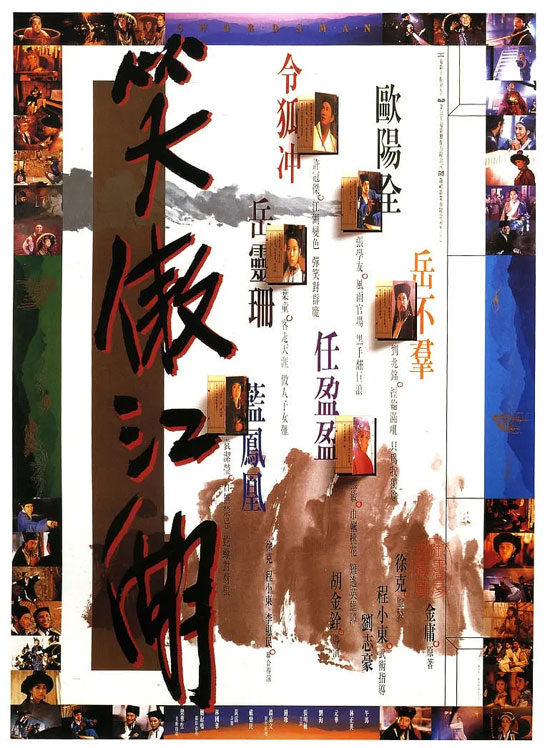
Film Name: 笑傲江湖 / Swordsman
Jin Yong’s works have been adapted into numerous film and television productions, each boasting its own classics. Examples include the Huang Rihua version of “The Heavenly Dragon’s Eightfold Path,” the Cheung Chi-lam version of “The Legend of the Condor Heroes,” the Louis Koo version of “Return of the Condor Heroes,” the Aaron Kwok version of “The Heaven Sword and Dragon Saber,” the Jordan Chan version of ” The Duke of Mount Deer,” the version starring Liew Siong Hian as “Swordsman,” the version starring Cheng Siu-chiu as “Book and Sword,” the version starring Chan Kam-hung as “The Flying Fox of the Snowy Mountain,” the version starring Lam Ka-tung as “Crimson Sabre,” and so on. These classic adaptations enriched our childhoods, infusing our youthful martial arts dreams with a touch of fantasy.
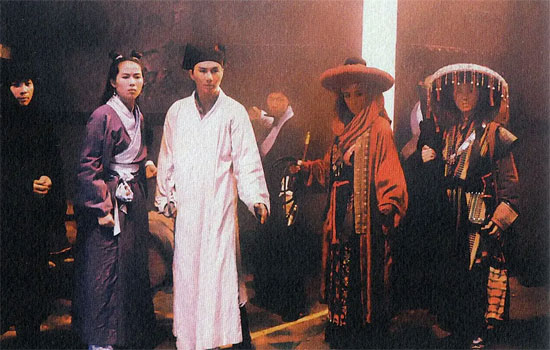
In the realm of cinema, numerous iconic adaptations stand out, with the 1990 version of “Swordsman” being particularly noteworthy. As the first installment of the “Swordsman” trilogy, it lacks the dazzling action choreography of “Swordsman 2” or the personal flair and romanticism of “Swordsman 3.” Yet as the origin story, it carves its own narrative path. While not strictly adhering to the source material, it presents the personalities of most characters quite faithfully. Sam Hui’s Linghu Chong embodies unrestrained freedom and clear-cut passions; Ye Tong’s Yue Ling Shan is whimsical yet fiercely devoted to love; Zhang Min’s Ren Ying Ying radiates icy beauty and noble kindness; Yue Bu Qun is treacherous and ruthless, forsaking all kinship; Zuo Leng Chan is a sycophant who bullies the weak. These character traits mirror the original work perfectly.

In its unique narrative approach, the director uses a musical score and a martial arts manual as focal points of conflict. This brings together various factions, effectively weaving the main plotline and unleashing a wave of bloodshed across the martial world—a perfect echo to the opening scene of blood staining the curtains. The film masterfully portrays the dichotomies of good versus evil, love versus hate, and right versus wrong. Though these themes are somewhat stereotypical, they still immerse audiences in the sword-and-swordplay world of martial arts, leaving them utterly captivated.
Its theme song, “Cang Hai Yi Sheng Xiao,” elevates the already superbly crafted work into a household name. This timeless classic enriches the entire theme, while its profound lyrics imbue the “jianghu”—this vast melting pot—with a more heroic and majestic aura. The hero’s personal ambitions appear both tragic and stirring against the backdrop of the martial world.
Despite well-known conflicts between director Tsui Hark and producer Hu Jinquan, the film’s completion fell short of its potential. Evident patchwork and chaotic editing from multiple hands are apparent throughout. Yet, the occasional flashes of brilliant dialogue leave one lamenting its underutilized potential. These lines often center on individual heroism and the greater good, or the petty scheming and moral choices within power struggles, revealing the director’s solid grasp of storytelling. Perhaps had this film focused solely on any one character, it might have achieved a more satisfying conclusion.
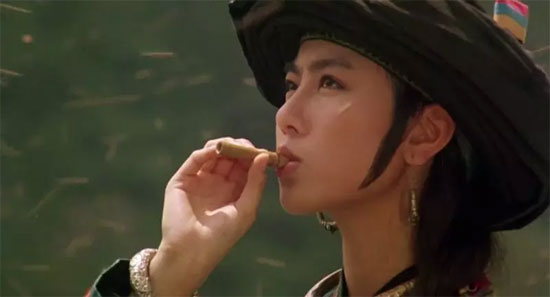
Despite its flaws, the film’s strengths shine through. “Swordsman” delivers a visually stunning experience and leaves much to ponder. Linghu Chong’s carefree spirit inevitably brings the film’s theme to mind—perhaps this is the life truly worth aspiring to: laugh at the vast sea, roam the world with boundless freedom.
Please specify:Anime Phone Cases » Swordsman 1990 Film Review: A song of laughter over the boundless sea, Roaming freely to the ends of the earth.