Film Name: 黄飞鸿之五:龙城歼霸 / Once Upon a Time in China V / 黃飛鴻之五龍城殲霸
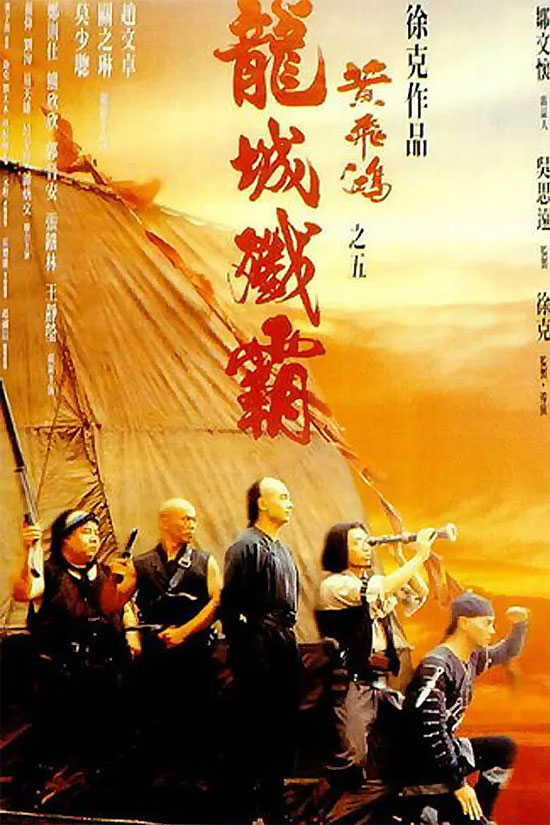
Once Upon a Time in China IV underperformed at the box office. As the man who reignited the Wong Fei-hung craze for the second time, Tsui Hark was determined to prove himself. He reunited with Rosamund Kwan and produced Once Upon a Time in China V, featuring the most complete cast of Wong Fei-hung characters outside of Jet Li. This time directing personally with the entire cast, the box office was far from ideal. After 21 days, it grossed less than 5 million yuan, ranking 63rd on the annual box office chart. The director remained unsatisfied. Next, he reunited with Jet Li, putting aside past differences, to jointly confront Hollywood in “Once Upon a Time in China and America.” “Once Upon a Time in China V” was watched directly on VCD. Initially assumed to be a spin-off or imitation, it turned out to be a proper sequel produced by the film studio. The cast was impeccable—everyone who could come did (even Emperor A-Ma overcame difficulties to play a low-level civil servant). The director aimed to prove that the trend he pioneered could still thrive without the lead star. The outcome, as mentioned earlier, was disappointing.
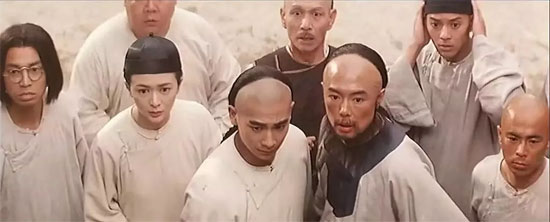
“Once Upon a Time in China V” picks up where “Once Upon a Time in China IV” left off. Wong Fei-hung and his group leave the capital for refuge in the south, meeting up with Auntie Thirteen in a coastal town in Guangdong to prepare for their journey to Hong Kong. This time, Yuen Biao returned to his specialty, designing exceptionally brilliant fight sequences. Wong Fei-hung and his companions made their grand entrance one by one in the rain, shot with such grace and flair that it instantly captured the audience’s attention. The screenwriter’s dialogue was also quite amusing. Auntie Fourteen actively pursued her brother-in-law, every smile and frown teasing Wong Fei-hung. The lines she delivered while putting on her shoes at the beginning would also fit perfectly in “The Golden Lotus.” The town, pirates, and households barricaded behind closed doors—yet the population seems substantial. Placing protagonists in such unfamiliar, confined settings is a specialty of the master director. Whether in “Butterfly Murders” or “We’re Going to Eat You,” he excels. Now, facing ruthless pirates who resort to ambushes, the villains are well-conceived. Particularly standout is the portrayal of the old, cunning Cheung Po-tsai (a good guy in “King of the Sea”), with well-written dialogue. His showdown with Wong Fei-hung features brilliantly choreographed action. Beyond that, the film’s opening sequence, where the protagonist resolves to fight pirates, starts to unravel. Tsui Hark wanted to depict the people’s apathy but also had to consider box office appeal, resorting to humor as a means of expression. The pirate lair sequence is pure Pirates of the Caribbean style, with One-Eyed Ying’s dialogue being downright inappropriate for kids. Even Wong Fei-hung swears like a sailor—it’s just too much to stomach. The finale, setting an ambush during the Goddess Festival to capture Zhang Yulin, turns into farce when Mo Shao-tsung’s comedic antics derail the operation. Good intentions backfire, creating utter chaos. The grain merchant’s subplot remains ambiguous—whether satirizing insatiable greed or awakening Wong Fei-hung to his bigamistic situation—leaving the narrative disjointed. With neither compelling action nor passionate romance, audiences were left feeling disappointed. As the credits rolled, Auntie Fourteen exited while Wong Fei-hung’s group remained—only for a typhoon to strand them. This left audiences thoroughly confused. But viewers voted with their feet, and the franchise never recovered.
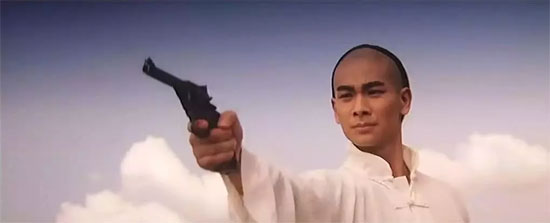
Once Upon a Time in China V might be Tsui Hark’s attempt to explore a new style for Wong Fei-hung. After all, Hong Kong cinema was rife with imitations back then. Within just a few short years, Hong Kong stars who hadn’t portrayed Wong Fei-hung could be counted on one hand. The themes explored were wildly varied, spanning every conceivable genre. Tsui Hark sought innovation, choosing to shoot Chinese martial arts films using techniques reminiscent of Westerns. The Era of Vampire was one such experiment, and this film is no different. What draws audiences to Wong Fei-hung? His Shadowless Kick—though defying physics, its effortless grace captivates viewers. But ask the master to draw a gun, Western-style? Audiences couldn’t accept it. This served as a cautionary tale for later filmmakers. Even “Once Upon a Time in China and America,” shot in the American West, dared not have Wong wield a firearm—a lesson learned too late. Tsui Hark remained undeterred. With no film financing, he pitched the TV series “Once Upon a Time in China” as a first-of-its-kind TV adaptation, continuing the cinematic storyline. Unable to secure Rosamund Kwan, he cast Michelle Yao instead (this casting change made me lose interest entirely). The director shifted to Lee Yan-kong—but that’s another story.
PS: “Once Upon a Time in China V” delivers plenty of action and raunchy dialogue. While initially novel, it ultimately feels hollow. The Wong Fei-hung saga has run its course.
Please specify:Anime Phone Cases » Film Review: Remembering Hong Kong Cinema 1994 “Once Upon a Time in China V”