Film Name: 薰衣草 / Lavender / Fan yi cho
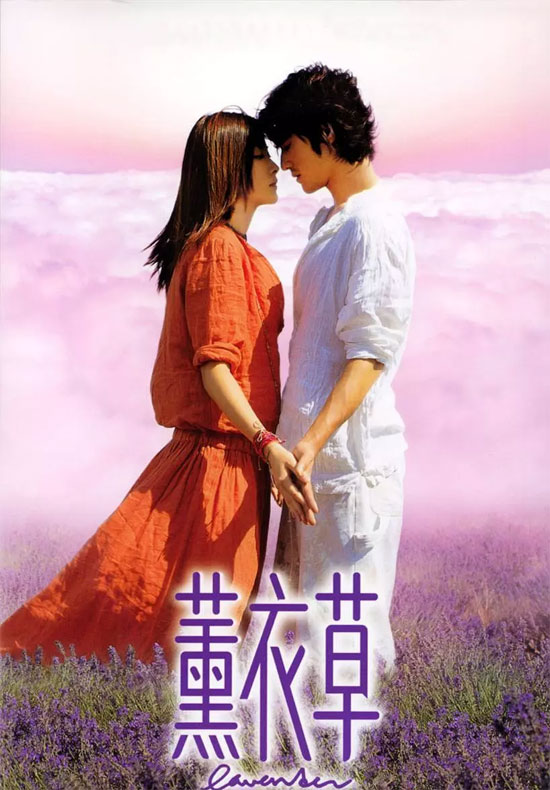
Revisiting this film was a chance occurrence. Out of boredom, I flipped through every channel on TV until I stumbled upon the ending on the movie channel, which suddenly piqued my interest.
As a child, I didn’t truly grasp the film’s meaning. All I wanted was a happy ending where lovers reunited. So at the conclusion, my young self naively believed the restaurant owner downstairs must be the golden angel in disguise. After all, hadn’t he said, “If I can’t return to heaven, don’t worry about me. I’ll just stop being an angel”? Surely love had made him reluctant to fly back to heaven.
But time changes all. Revisiting the film over a decade later, my perspective shifted dramatically. I must admit, the female lead holds no appeal for me whatsoever… The true highlights are the angel who fell to earth and the gay man who brought smiles to his lover’s face.
How does one carry on after losing a beloved? The film’s heroine retreats into a monotonous, self-imposed isolation and self-hypnosis: walking the same route home each day, picking up an orange helium balloon on her way, ignoring the flirtatious whistles from construction workers below her apartment building, eating a bowl of Cup Noodles at night while crying, tears falling into her cup; soaking in a lavender-scented bath while weeping, tears dissolving into the water; writing “I miss you so much” on the orange balloon before releasing it into the night sky before bed… (As an aside, Kelly Chen’s crying scenes were the film’s biggest flaw—they felt forced and artificial.) Then, on a thunderstorm night, a golden angel with wounded wings fell onto the female lead’s rooftop. I couldn’t grasp the significance of his initial appearance—covered in white powder even on his face. Was it meant to contrast with his later, polished handsomeness for dramatic effect? Anyway, the golden angel ends up staying at the female lead’s place. As payment, he’ll bring her things back to heaven.
Meanwhile, he befriends the gay man living across from the protagonist, Chow Chow, played by Eason Chan. The plot then delves into themes of love and desire. Since angels survive solely on love, but the emotionally dead protagonist cannot offer him any, the golden angel spends every night out with Chow Chow. Using his striking looks to attract women’s affection, he sustains his existence. The female lead expresses disgust and contempt for his actions. The dialogue here is somewhat interesting, though I feel it doesn’t quite fit the film’s overall tone. It’s not entirely out of place, yet there’s a certain connection… Alright, I admit I’m a contradictory person…
Golden Angel knew nothing of tears, nothing of love, and certainly nothing of the pain of losing what one cherishes most. Pure and innocent as a white dove, even when he danced provocatively, when crowds of women swooned over him, when he bought shoes to fill his entire room—I still saw only a naive child. To him, his actions were utterly simple: dancing to earn the affection needed to survive, buying shoes purely for pleasure, without a trace of desire. Desire belongs to those whose hearts have already been stained by color—including the female lead. For mortal minds are infinitely more complex, something the angel cannot comprehend. When the Golden Angel loses the old leather shoes the female lead gave him, he seems to grasp the meaning of loss for the first time. It is only from this moment that the film truly takes on a sorrowful tone.
The gay Chow Chow is an indescribably complex character in the film. He always ends up falling for the same person as the female lead, regardless of who came first. Perhaps in the unspoken love triangle involving him, the female lead, and her ex-boyfriend, it was he who loved her ex most deeply—not the female lead, who wept night after night. “Would he be happy without us?” “Only humans think that way.” “Do homosexuals go to hell? Then if one loves an angel, would they go to hell?” Chow Chow maintains a humble love—25 years of devotion, and lingering affection even after death. This longing keeps him near the female lead, the person loved by the one he cherished most. He also understands the deceased ex-boyfriend best. Thus, when the golden angel helps the female lead see her ex, she sees a great black bull on the African savannah—exactly as Chow Chow described.
Chow Chow’s love for the ex-boyfriend differs entirely from the female lead’s. When the angel returned to heaven, she had him carry bags filled almost entirely with daily necessities—and that bouquet of lavender, symbolizing her life. Thus, after the ex-boyfriend’s death, she lived in a daily cycle of memories. Chow Chow, however, brought her ex-boyfriend a smiling face—even as he wept bitterly. Perhaps their differing circumstances shaped their responses: one clinging, unwilling to let go; the other forcing a smile through grief to release.
The most beautiful scene in this film isn’t the vast purple lavender fields of Provence, but the tree laden with orange balloons beside the big black bull on the grassland. If you truly love someone, no matter where they are, your feelings will always reach them.
Back then, seeing the Golden Angel and the heroine fall in love would have made me happy. But today, I no longer feel that way. Fortunately, the heroine finally let go of her ex-boyfriend. She didn’t let the Golden Angel bring anything to him—that’s true letting go. After the Angel left, she cried even more. The water cup and bathtub could no longer contain her sorrow; tears overflowed. This plot twist? A complete misstep! It’s merely one wave of emotion replacing another. Her affection for the golden angel feels more like a substitute—she hasn’t truly grown stronger, but has instead stepped into another heartbreak.
The more comforting aspect of the ending is the restaurant owner downstairs. Unlike my childhood perspective, I now lean toward believing he isn’t the golden angel. Golden Angel is merely a figment of her imagination. The entire story is just a beautiful dream the female lead had, a journey of self-hypnosis to heal from her past heartbreak. When she finally stops dwelling on the past, she’ll notice the restaurant owner downstairs is quite handsome too. She’ll realize there might be someone right beside her who loves her. That person has whistled at her more than once before, but she never paid it any mind.
We gaze skyward as balloons drift away, hoping angels might fall from the heavens. Yet we seldom realize the right person might live just downstairs—all it takes is opening our hearts to discover them.
Please specify:Anime Phone Cases » Lavender 2000 Film Review: An angel lives downstairs.