Film Name: 真心英雄 / A Hero Never Dies / 眞心英雄
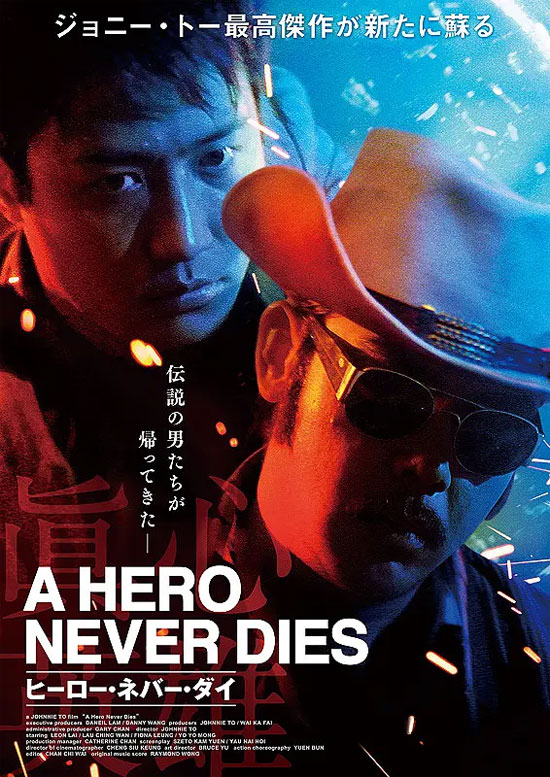
What if you follow the wrong boss?
I believe this is a crucial question every streetwise, intelligent person has pondered—and must ponder. Even those who are bosses now were once underlings. If they hadn’t considered this issue back then, or hadn’t thought it through clearly, the consequences could range from a lifetime of mediocrity and obscurity to ending up dead on the streets, disgraced and ruined. Tell me, isn’t this question important?
In the film, Jack and Qiu ultimately had to confront this dilemma, though their personalities and styles made them deeply reluctant to do so. Interestingly, both had conversations with the Thai Master, yet neither ever considered seeking his guidance on this matter. Even more intriguing, they both instinctively drew their guns, fired at the Master, then turned, walked out, and urinated. Why? As the film states, “Know your opponent, and you know the outcome.” I reckon if your opponent is fate itself, you wouldn’t have the slightest inclination to ask some damn master any damn questions. “With a gun in hand, you’re a god”—that’s the true essence of a hero!
Thus, from the very beginning, fate had already sealed the fates and endings of these two heroes. Because, fundamentally, they had followed the wrong boss. Both were heroes, destined to be spirited and bold, commanding respect in the underworld. Yet fate arranged for them to become the most capable lieutenants to their respective bosses. More fatally, fate gave them bosses who were both narrow-minded and driven solely by greed. Yet these heroes, both men who scorned fame and fortune as fleeting clouds and brooked no compromise, could only meet a grim end—a death so brutal it would serve as a warning to future generations: If our underlings grow so formidable and arrogant, how can we, the hypocritical, tyrannical leaders, maintain our authority?
But heroes are heroes. Even in death, they must make a statement that shakes heaven and earth, moves ghosts and gods. Just as Jing Ke assassinated the First Emperor, knowing full well that Prince Dan was a coward, knowing full well that the warrior who sets out never returns, nothing could stop his single-minded march toward doom. Like Jack’s gut-wrenching phone call: Notify all brothers: we two will seek revenge against someone at a certain time and place. Those who are brothers, make way. Like Jing Ke, what matters to them is not life or death, but that immortal spirit of heroism! Possessing this righteous spirit, ancient figures like Jing Ke and modern ones like Tan Sitong stand as rare commoners immortalized in Chinese history. It is precisely these virtuous men and women, cut down in their prime, who have sustained China’s five-thousand-year history of the common people. They prevented history from becoming merely a stage for emperors and generals to take turns performing their roles. Simultaneously, they provided Hong Kong filmmakers with boundless creative inspiration, giving birth to immortal heroes like Mark, Ken, Jack, and Qiu, along with their stirring tales. Each viewing stirs the soul, igniting an irrepressible heroic spirit within, urging one to shout aloud: How magnificent, heroes!
But I digress. Let’s return to the opening question: What if you follow the wrong boss? I believe it is precisely this dilemma, constantly weighing on the hearts of Hong Kongers, that drives filmmakers to endlessly retell these heroic tales—to soothe the collective anxiety and longing. Hong Kong, this tiny place, no matter how hard it strives, is destined to remain a subordinate. Whether capable or not, the question lies solely in which leader to follow and how to follow them. From earlier works like A Better Tomorrow and Too Many Ways to Be No. 1, to the Election series and this latest installment, A Hero Never Dies, Hong Kong filmmakers continually vary their techniques and narratives while fundamentally posing similar questions: Which boss should one follow? What constitutes following a good boss? And what happens if you follow the wrong one? …I believe this is precisely one of the key reasons Hong Kong has produced so many such gangster films. Unsurprisingly, the endings of these films are invariably tragic and somewhat melancholic, yet the atmosphere remains uplifting and spirited. I think this is the very lifeblood of Hong Kong gangster cinema.
As the saying goes, life and death are predestined, and fortune lies in the heavens. No one knows what the future holds. Yet, as Sima Qian wrote, “All men must die; some deaths weigh heavier than Mount Tai, others lighter than a feather—it all depends on the cause for which one dies.” Thus, a true hero fears neither life nor death. Often, only by casting life and death aside can one find rebirth through the brink of death. A head lost leaves a scar the size of a bowl, and eighteen years later, one rises again as a hero—what is there to fear?! This is the true, immortal hero!
Please specify:Anime Phone Cases » A Hero Never Dies 1998 Film Review: What if you follow the wrong boss?