Film Name: 八星报喜 / The Eighth Happiness / 八星報喜
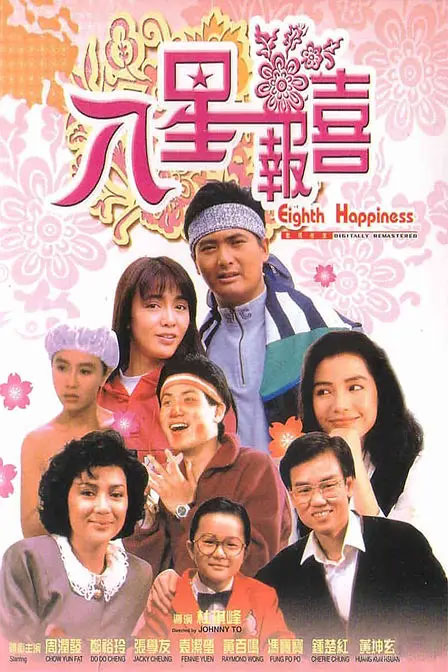
In 2012, Raymond Wong, who had moved north to pursue profits, produced “The Eighth Happiness,” starring the then-popular Dan Yu. I think I’ve seen it—at least I have some vague recollection. Conversely, the 1988 “The Eighth Happiness” remains vividly etched in my memory; scenes from it can flash before my eyes at any moment. “The Eighth Happiness” marked the final glory days of Golden Harvest. It not only claimed the year’s box office crown but also decisively outshone Jackie Chan and Golden Harvest (neither Jackie’s “Police Story II” nor the Yuen Brothers’ collaborative effort “Dragons Forever” could challenge Golden Harvest’s dominance).
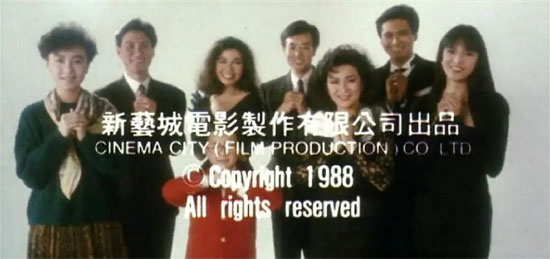
“The Eighth Happiness” is a classic Wong-style Lunar New Year film. Even Du Sir couldn’t steer it away from its core formula of chasing girls and singing family-friendly tunes. The Fang brothers’ names carry the aura of martial arts heroes: eldest brother Fang Jianhui (Wong Bak-ming) paired with his tagalong Feng Baobao; second brother Fang Jianlang (Chow Yun-fat) torn between Cheng Yu-ling and Zhong Chuhong; youngest brother Fang Jiansheng (Jacky Cheung) sharing a pure love with Yuan Jieying. Joining them is Wong Kwan-hin, who later skyrocketed to fame with “All About Ah Long,” completing the eight stars. The cameo appearances by the Seven Monsters of New Art City and other big-name stars aren’t counted among them.
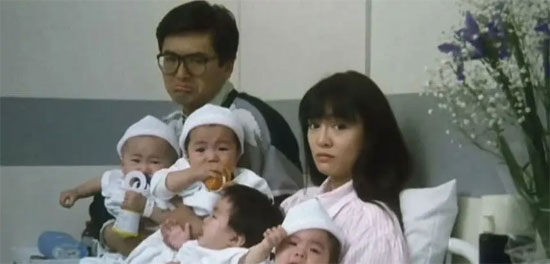
Though the film stays firmly within the Huang Brothers’ comedic framework, Sir To introduces a slight plot twist. Chasing girls is fine, lowbrow humor is acceptable, and ending with a joyful Cantonese opera sing-along is perfectly fine. The problem lies in the fact that not everyone finds love in this film. Wong Bak-ming’s character, the eldest brother, is all talk and no action when it comes to romance. He frequently collaborates professionally and boasts about being a womanizer and playboy in public, yet in reality, he’s a middle-aged homebody too busy caring for his two younger brothers to have a love life. Feng Baobao, as a single mother, effortlessly plays the role of this romantic fool. After one scene, the audience was ready for the stars to gather and celebrate prosperity. But Director Du defies convention, insisting on adding a personal epilogue. This isn’t inherently problematic—it’s merely depicting an individual’s happy life. But who could have predicted the older brother would step aside? Considering the future happiness of his wife and child, he sacrificed his own. Such a setup is rare in comedies, let alone in New Year’s films. After all, what Huang-style comedy would feature love that doesn’t triumph in the end? Yet, from an Eastern perspective on emotions, the older brother’s choice feels like the most rational decision for an ordinary person. Life is already exhausting enough—who has the time or energy for a romance that might fail? Cutting losses early is the rational choice. After all, they already have a child together. Blood ties are unbreakable, and once a woman becomes a mother, her considerations extend far beyond mere romance. The Bachelor features a similar theme: a mother willing to sacrifice everything—including love—for her child (a quintessentially Eastern mindset). In 1988, Hong Kong cinema still revolved around romantic pursuits. That same year saw releases like The Romancing Star II and How to Pick Girls Up! The Eighth Happiness, stripped down, is another clichéd love chase story. Were it not for Sir To’s unconventional ending, the film would feel rather lackluster decades later. After all, it’s the imperfections that leave a lasting impression and resonate deeply.
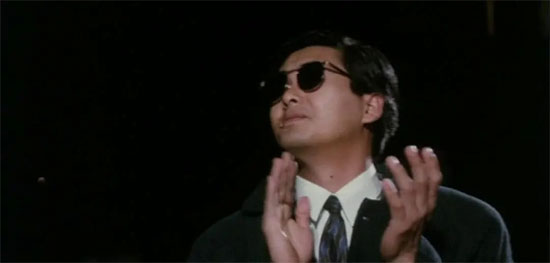
PS: At that time, Chow Yun-fat’s character “Little Horse” had already become wildly popular across Hong Kong. Having secured the real Little Horse himself, it would have been a shame not to showcase him fully. I wonder how Sir To managed the compromise, but regardless, it was Little Horse who received the standing ovation from the theater audience—dressed in his trench coat, a matchstick dangling from his lips.
Please specify:Anime Phone Cases » Film Review: Remembering Hong Kong Cinema 1988 “The Eighth Happiness”