Film Name: 仁者无敌 / The Invincible Power of Kindness / 仁者無敵
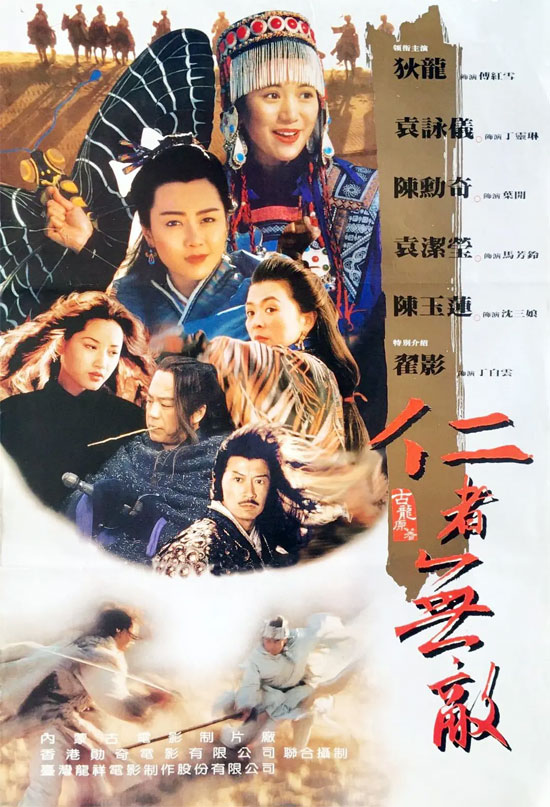
Chen Xunqi’s Martial Arts Masterpieces: The Commercially Divided “A Warrior’s Tragedy” and “The Invincible Power of Kindness” Hold Gu Long’s Ultimate Regret
In 1993, Chen Xunqi ambitiously prepared to adapt Gu Long’s classic “A Warrior’s Tragedy” for film, originally planning a two-part series to fully depict the fated martial world of Fu Hongxue and Ye Kai. Yet, under the pressure of capital, this grand vision was forcibly split into two distinct yet interconnected martial arts masterpieces—1993’s “A Warrior’s Tragedy” and 1995’s “The Invincible Power of Kindness.” As Ti Lung’s Fu Hongxue wields his blade against destiny, Chen Xunqi’s portrayal of Ye Kai chooses to lay down hatred. Embracing the philosophy that “the benevolent do not kill,” he challenges the very foundations of martial world rules: Is there truly an end to the cycle of violence begetting violence?
In this film, Chen Xunqi not only steered the project behind the scenes but also embodied Ye Kai’s carefree spirit with consummate skill. His signature moves—straw between his teeth, fingers flicking flying knives—made every frame a timeless image in the hearts of martial arts enthusiasts. And Ti Lung’s portrayal of Fu Hongxue stands as the “most heart-wrenching version”—a crippled, epileptic soul consumed by vengeance. His emotional entanglements with Ding Lingling (played by Anita Yuen) and Cui Nong (played by Luo Huijuan) cut sharper than any blade. Notably, the role of Cui Nong was originally cast with Chen Yulian, but scheduling conflicts led to Luo Huijuan’s stunning debut as the fiery courtesan—an unexpected delight in wuxia cinema history.
As Wong Kar-wai’s go-to composer, Chan Huen-ki infused both films with soul through his music. The desolate flute piercing the desert at the opening of A Warrior’s Tragedy instantly plunges viewers into a bleak martial world; the torrential piano notes at the conclusion of The Invincible Power of Kindness, carrying the characters’ fates, are heartbreaking. Even more surprising, the theme song for Ye Kai, “Wo De Kuai Le Shi Dai,” was later covered by Eason Chan, becoming a DNA code for generations of martial arts memories.
To authentically portray Fu Hongxue’s condition, Chen Xunqi insisted Ti Lung shoot the entire film with a real limp, causing the veteran action star’s old knee injury to flare up. Yuen Wing-yee endured scorpion stings during desert scenes, gritting her teeth to avoid stunt doubles. Without green screens or elaborate costumes, these raw, scarred moments infused the film with a gritty vitality starkly contrasting today’s “artificially sweetened” wuxia productions.
Twenty-nine years later, if both films could be re-edited, perhaps they might piece together the complete “Border Town” world envisioned by Gu Long. Yet as Chen Xunqi once remarked: “The soul of wuxia cinema resides in its unfulfilled potential.” What remains incomplete is not just the films themselves, but the irretrievable golden age of Hong Kong cinema—and the unshakable dream of the martial arts world we can never fully let go.
Please specify:Anime Phone Cases » The Invincible Power of Kindness 1995 Film Review: The Unforgettable Dream of the Jianghu