Film Name: 连城诀 / A Deadly Secret / 連城訣
In 1963, the venerable Jin Yong completed the serialization of “Su Xin Jian,” later republished as “A Deadly Secret.” At the time, the author maintained close ties with film and television professionals, even sparking rumors of romantic entanglements. The novel was hailed as the most adaptable for screen adaptation, yet time proved unforgiving. By the time the film industry matured, audience tastes had shifted. Adaptations of this novel remain relatively scarce among Jin Yong’s works, as audiences generally shun melodramatic suffering. The protagonist Di Yun’s plight is particularly harrowing. In 1980, screenwriter Ni Kuang and cult film director Mou Dunfu collaborated to bring the story to the screen. Released in Hong Kong, the film grossed over 1.4 million yuan in just nine days, ranking 39th on the annual box office chart. Lead actor Wu Yuanjun remained perpetually busy both on and off screen, yet never achieved stardom. As a veteran of the Yuan Family Troupe and one of the Seven Little Fortunes, he should have secured a defining role—even as a villain—but instead faded into obscurity. Ironically, his looks ranked among the most striking among his peers, making his fate all the more lamentable. As they say, it was simply not meant to be.
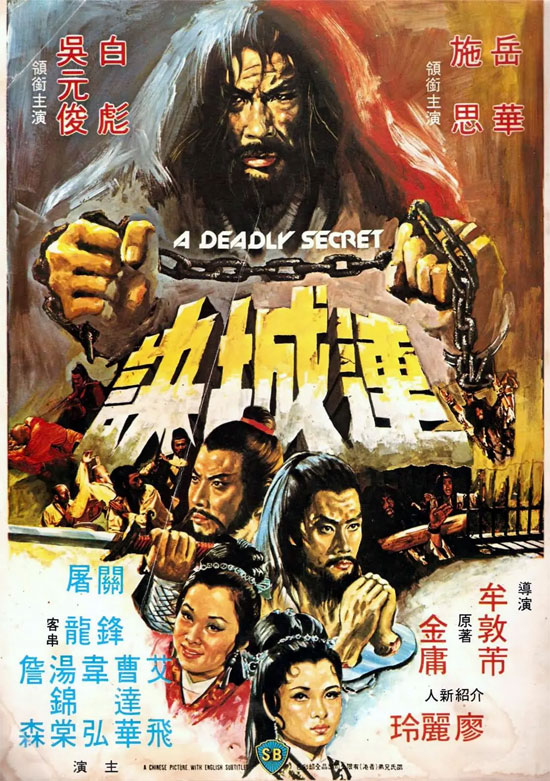
This adaptation of “A Deadly Secret” excels in two key areas. First, it captures the novel’s core theme: injustice in a corrupt world where the righteous suffer wrongful accusations, with justice never fully prevailing throughout the story. Second, it elevates the character of Ding Dian—originally a minor, visually unremarkable figure—to a pivotal role that amplifies the protagonist’s journey. Screenwriter Ni Kuang deserves credit for mastering these two elements. Bai Biao can portray the heroic Guo Jing as convincingly as he can the adaptable Ding Dian. Unlike most martial arts heroes, Ding Dian is a man who assesses situations pragmatically, upholding principles while adapting to circumstances. In the original novel, he rescues a martial arts elder ambushed by three rogues, gaining martial arts manuals and treasure secrets. He intended to live anonymously, practicing righteousness, but while admiring chrysanthemums, he met his soulmate. They bonded instantly and never parted. Alas, Miss Ling’s rigid upbringing left her unaware of human treachery. Her single-minded devotion to being a dutiful daughter bound Ding Dian’s hands, trapping him even after mastering the Divine Light Technique. He ultimately sacrificed his life in vain. Their love in the original story is as enduring as gold, the most moving aspect for readers. Neither the protagonist Di Yun’s bond with his junior sister nor Shui Sheng’s shared hardships in the snow valley matched the steadfast devotion between Ding Dian and Miss Ling in their admiration for chrysanthemums. Otherwise, the junior sister wouldn’t have married Wan Gui, nor would Shui Sheng have considered reconciling with her cousin.
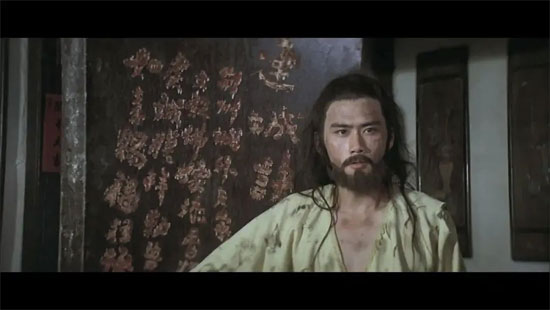
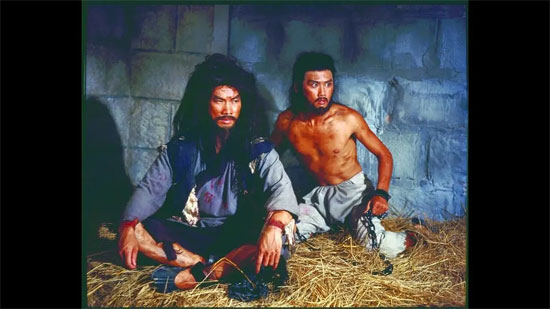
The film streamlines the narrative, opening with Di Yun en route to prison. Their prison cohabitation largely follows the original. By omitting the junior sister’s storyline, it unilaterally highlights Di Yun’s devotion—a first instance of downplaying the protagonist. Subsequently, flashbacks depicting Ding Dian and Ling Xiaojie’s meeting, bond, and ordeal further diminish the protagonist’s prominence. Numerous martial arts masters like the Blood Blade Patriarch and Falling Flowers, Flowing Water are omitted, elevating Ling Tui Si as the ultimate antagonist. Even the three brothers who betrayed the Heavenly Guardian Sect appear less intensely hostile toward each other. The ending stays true to the original: the terrifying hands emerging from Miss Ling’s coffin remains a childhood nightmare. However, the Liancheng Secret on the pipe cover being revealed as a deciphered riddle rather than numbers feels significantly less impactful. In the original, the scene where the three brothers-in-arms slaughter each other in the Buddhist hall is what truly makes the protagonist Di Yun realize the treacherous nature of human hearts, ultimately leading him to withdraw from the martial world. Of course, while the film concludes with Di Yun riding off alone, the original novel had him accompanied by Hollow Vegetable and Water Flute.
In most of Jin Yong’s wuxia novels, martial artists value face and honor their word—even the Western Toxin Ouyang Feng kept his promises. In “A Deadly Secret,” the martial arts master Mei Niansheng, possessing the Divine Light Technique and the Liancheng Manual, took on three disciples yet taught none of them. He never pointed out flaws in their sword techniques, always guarding against his disciples. The eldest brother taught his son and disciple sword techniques in a deliberately disordered sequence. The youngest brother deliberately misled his daughter and disciple, even refusing to teach them to read. The second disciple was even more ruthless, refusing to take any disciples at all. Such utterly treacherous individuals, trusting no one but themselves, are rare even in martial arts fiction. Their cunning runs so deep that they perpetuate the same wicked deeds for decades—a truly chilling thought.
PS: Among Jin Yong’s works, “A Deadly Secret” feels the most perfunctory to me. Its overly realistic content and the protagonist’s relentless suffering make for an unsettling read.
Please specify:Anime Phone Cases » Film Review: Nostalgic Days, Remembering Hong Kong Cinema’s “A Deadly Secret”