Film Name: 倚天屠龙记 / Chivalrous Killer / Heaven Sword and Dragon / 倚天屠龍記
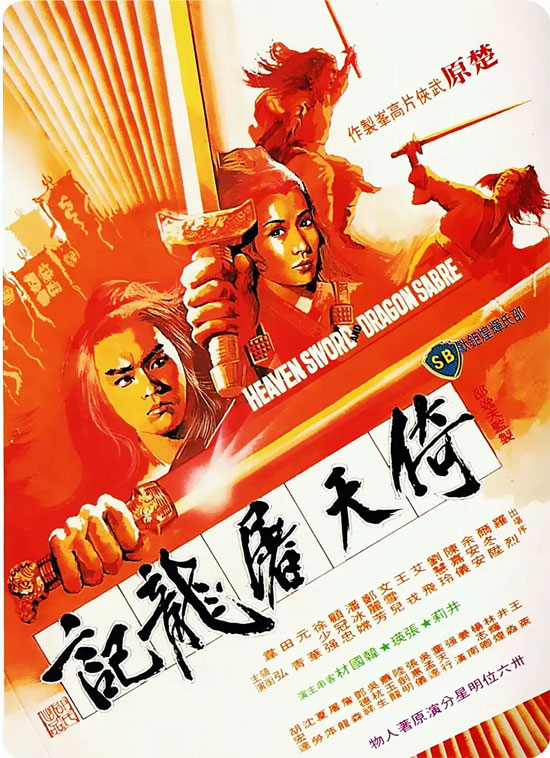
As a die-hard fan of Jin Yong’s works, I practically know “Heaven Sword and Dragon Saber” by heart. I’m most familiar with the Sanlian edition and have read the revised version, but I knew very little about the serialized version. For the sake of Er Xiaobao’s youthful ‘handsome’ (director Er’s exact words in an interview 😁) and stunning good looks, I stayed up all night to binge-watch this “Heaven Sword and Dragon Saber.”
At nineteen, Er Xiaobao was at the peak of his looks. Whether catching red frogs in ponds, cuddling little monkeys in valleys, or sporting two little buns as a pageboy before the Grandmaster, he radiated youthful charm. Even when tearing the princess’s clothes in Green Willow Manor’s dungeon and threatening to assault her, he instantly transformed into an upright, righteous youth once the secret mechanism was found. But honestly, Er Bao’s thick, dark, sharply arched eyebrows and piercing, slightly melancholic eyes suit many roles—a bold, untamed, arrogant, or lonely master ranger—but they simply don’t match the gentle, indecisive character of Wuji.
The ethereal set design resonates with me, though contemporary audiences accustomed to grand spectacles might find it less impactful. The breakneck pace feels almost flighty, revealing how challenging it is for a film—even split into two parts—to fully capture the scope of Jin Yong’s epic. I adore the exhilarating martial arts sequences; compared to the rigid, formulaic fighting in the 1982 TVB adaptation of Demi-Gods and Semi-Devils, Shaw Brothers’ choreography is undeniably more aesthetically pleasing. The protagonists’ long legs, flowing robes, powerful techniques, and diverse weaponry—all executed with minimal special effects—showcase the visual appeal of Chinese martial arts at its finest in Shaw Brothers’ wuxia films.
Speaking of the actresses, “Heaven Sword and Dragon Saber” has always been a film to admire the beauties. After all, the line “Four women in one boat—what more could one hope for?” surely resonates as a dream for many men. This was my first time seeing these actresses perform, and I personally favored Jing Li. Even her simple hairstyle couldn’t hide her scholarly grace. I believe that to truly embody a complex character in a profound work, an actress must possess substance—whether it be knowledge or life experience. It’s not that the other actresses aren’t beautiful—especially the first-love pairing of Xiao Bao and Yu An’an, which had many viewers shipping them hard. But the overwhelming praise for Yu and Wen Xue’er’s looks, often accompanied by disparaging remarks about Jing Li, left me perplexed. The reasoning was mostly the same: Jing was over 30, while Yu and Wen were just 18 or 19. Only then did I realize that for so many viewers, a woman’s beauty hinges first and foremost on her biological age. That numerical symbol in the mind outweighs the information conveyed by the eyes. Compare this to Deng Cuiwen, who also played Zhou Zhiruo in her teens. Even though Yu’s version of Zhiruo was hollow and lifeless—so much so that even I, a lifelong Zhou fan, couldn’t bring myself to like it—she was still showered with praise for her beauty. How disappointing.
Of course, straight-laced Xiao Bao never showed the slightest hint of tender affection toward anyone, no matter who they were
Yin Li merging with the Yellow-Robed Woman, Yang Buhui’s affection for Zhang Wuji, Zhang Wuji’s clear awareness of her feelings yet polite refusal, Yang Buhui’s death atop Wanan Temple’s pagoda, Yin Li mastering the Eighteen Dragon Subduing Palms to become Beggar Clan leader, Wuji shaving Zhiruo’s head—these adaptations, whether from the serialized version or the film screenwriter’s reimagining, remain unclear. But my favorite part is Ji Min’s ending.
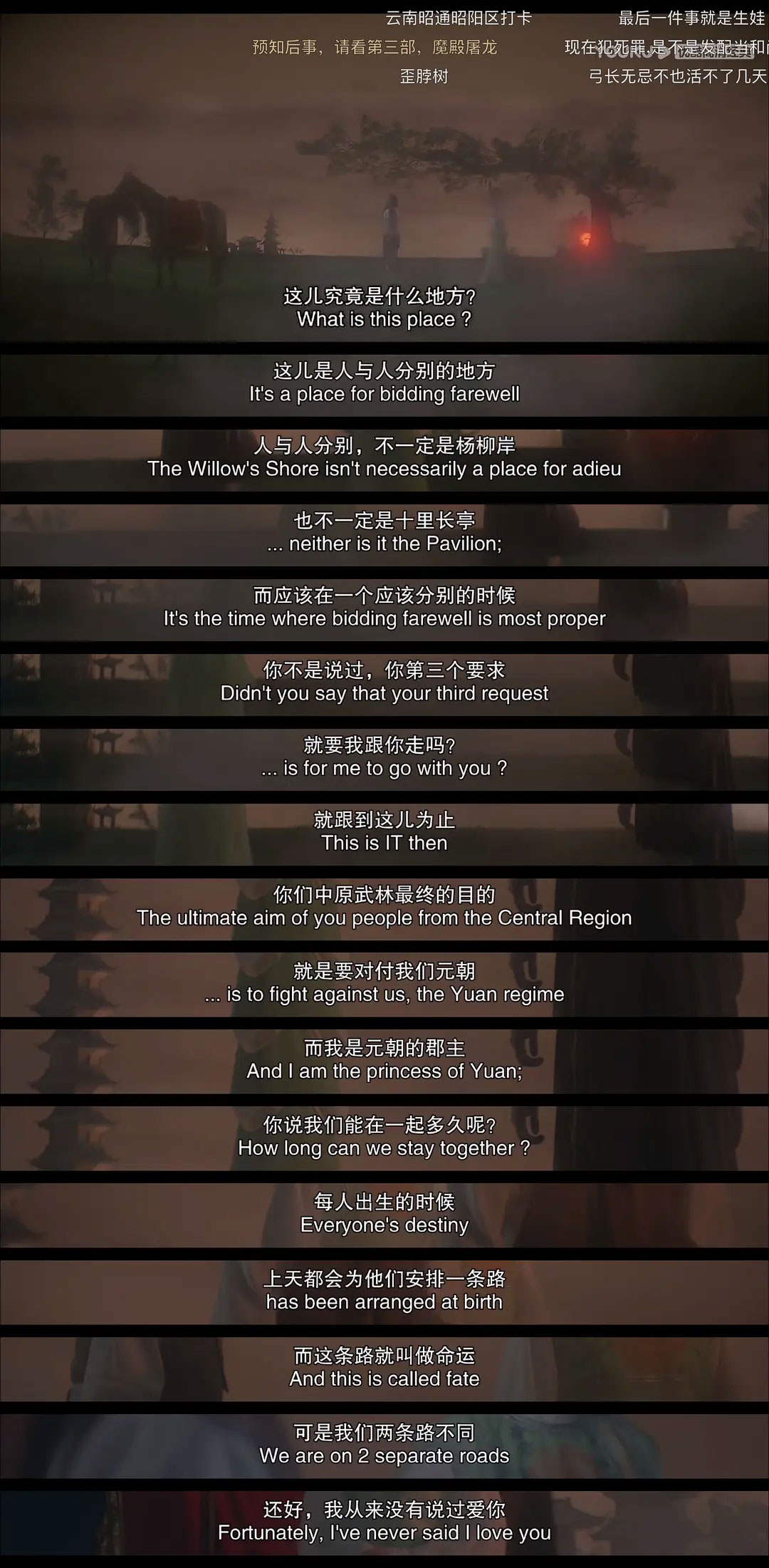
In all the versions I know—whether the original novel or adaptations—even the brilliantly cunning Zhao Min portrayed by Gigi Leung still ends up abandoning her family and country to become the nameless, unrecognized Mrs. Zhang for the Cult Leader. Only the version with Myolie Wong left Zhao Ming’s fate ambiguous—alive or dead. Meanwhile, the version with Jing Li portrayed Zhao Ming with a clear-eyed understanding of her romance with Zhang Wuji—the chasm between their nations and peoples was utterly insurmountable. Against a sunset steeped in Gu Long’s signature style, two lovers who’d faced death together, who’d pledged their hearts to each other yet never voiced it, parted ways. It was the most helpless, the most heartbreaking, yet also the most profoundly logical.
Please specify:Anime Phone Cases » Heaven Sword and Dragon 1978 Film Review: Zhao Ming finally stopped being a love-struck fool who abandoned his family and country for Zhang Wuji.