Film Name: 新神榜:杨戬 / New Gods: Yang Jian
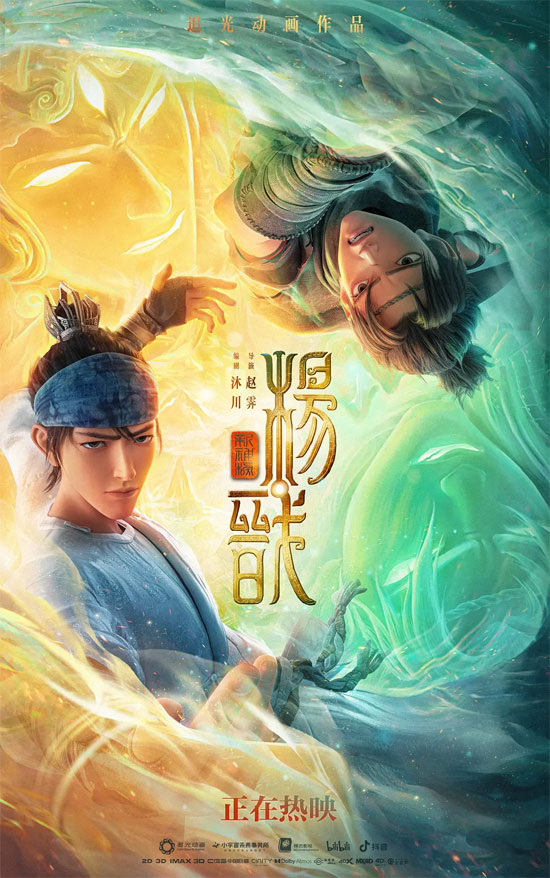
As the sweltering summer draws to a close, China’s animation scene once again roars with thunderous excitement. “New Gods: Yang Jian” has arrived.
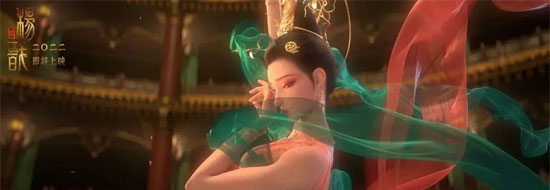
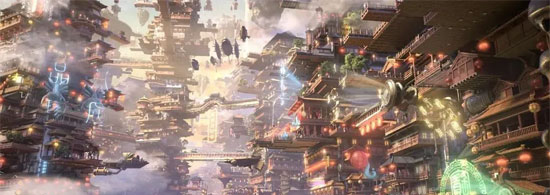
From my perspective as someone unfamiliar with animation techniques, the visuals in this film are truly flawless. It was well worth the substantial 80 yuan I spent to see it in an IMAX theater. Whether it’s the breathtaking celestial architecture, the deities’ magnificent and solemn divine forms, the “Luo Shen Fu” dance reminiscent of Dunhuang flying apsaras, or the innovative ink-wash style blending three-dimensional rendering with two-dimensional elements in the “Tai Ji Tu” sequence, “Yang Jian” truly deserves a place among the “New Gods” of Chinese animation’s technical prowess.
Whether we admit it or not, Chinese animation—much like the broader Chinese film and television industry—often relies on “idols” for promotion. Both animation and its two leading fronts, web series and cinema, have undeniably entered the “idol era.” The difference lies in the fact that while “live-action idols” may face various external distractions, “anime idols” need only focus on one thing: drawing the most handsome boy in your imagination.
If you swapped the character designs of Yang Jian from New Gods: Yang Jian with Nezha from New Gods: Nezha Reborn, I don’t think it would feel out of place. Even within Yang Jian, the two young heartthrobs—Yang Jian and Chen Xiang—differ little in appearance beyond their height. While the interchangeability of similar-looking fresh-faced actors is perfectly normal in this era of “idol-centric” films, I still hope to see more genuinely “cartoonish” characters emerge in Chinese animation.
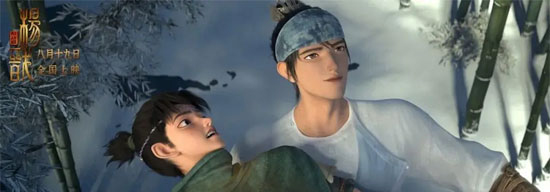
Regarding contemporary Chinese animation, I’m not being pretentious in opposing the “face-value economy.” I even admit to having a bit of a “looks-first” aesthetic bias myself. But if “young heartthrobs” become an exceptionally crucial component of a film’s visual appeal—if replacing them with a less “fresh-faced” character would instantly lose a significant portion of the audience—then we must reflect on what truly should underpin a work. In animation, we need character designs that are uniquely indispensable, not generic pretty-boy templates that could be swapped anywhere.
Of course, the above is merely my speculative commentary on Chinese animation entering the “young heartthrob era.” “New Gods: Yang Jian” is by no means sustained solely by its characters’ cool, handsome appearances. It continues the vision of the “New Gods” series—to forge new gods while shaping new humanity. These “new gods” can, in essence, be every ordinary person.
The “New Gods” series particularly emphasizes the humanity of mythical characters beyond their divine nature—they experience joy, anger, sorrow, and pleasure; they possess desires and passions; they embody the patriotic spirit and compassion for all beings that heroes should have.
But honestly, when Yang Jian shouted that he was fighting for all beings, not just for the Golden Mist Cave, though he was hoarse from shouting, I wasn’t particularly moved. Because he actually had little connection to all beings. He had only experienced separation from his mother, who had transformed into starlight to protect the common people. He had only passively witnessed the desolation of human warfare during his missions. He had never truly seen what the common people were like, how they lived, or even where they were. Therefore, rather than fighting for the common people, it was more accurate to say he was fighting for his mother’s dying wish.
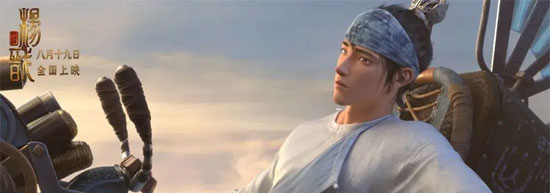
If one truly cares for the common people, they should immerse themselves among them, experiencing the hardships of ordinary life and contrasting it with the extravagant, decadent existence of the immortals. If one truly cares for the common people, they should immerse themselves among them, experiencing the sincerity and joy of ordinary folk and contrasting it with the grand yet hypocritical attitudes of the immortals. It is precisely by witnessing the genuine goodness and beauty of the common people that one feels compelled to protect them, and it is precisely by witnessing their suffering that one feels compelled to fight for them. Currently, the film portrays only the selfishness of the immortals, neglecting the selflessness of the common folk. Thus, this notion of protection feels somewhat like a castle in the air.
Yang Jian, a fallen immortal stripped of his powers, is initially cast as a constable—essentially a “bounty hunter.” This profession is actually well-suited for him to experience mortal life. Unfortunately, throughout his duties, he only captures one lowly minor deity who habitually steals and smuggles. Yet even with just this one character, I believe Yang Jian’s encounter, rescue, and assistance form one of the film’s most compelling moments.
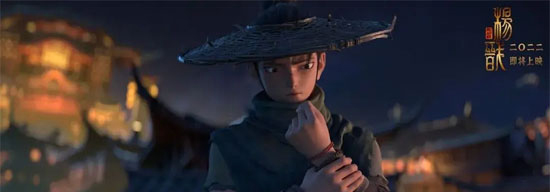
This minor immortal represents the lowest strata of the celestial realm—essentially a stand-in for ordinary mortals. Though their lives are hard, they possess an infectious cheerfulness. When Yang Jian imprisons him in the celestial dungeon, the minor immortal shows no malice toward his fallen comrade but instead offers forgiveness and encouragement. When Yang Jian escapes, he casually rescues the little immortal—the sole interaction between this great hero and the truly downtrodden in the film. The little immortal later returns the favor, aiding Yang Jian’s journey to the mortal realm, reflecting the gratitude inherent in ordinary people.
Had Yang Jian, as a constable, completed more missions and apprehended more criminals, he could have gained deeper insight into people’s lives, thoughts, and the beauty of human nature. This would have given him a more direct and profound understanding of what the common people truly are and what they truly desire. His “fighting for the common people” would then cease to be mere rhetoric and become something tangible and real.
Speaking of the “bounty hunter” profession, one cannot overlook the 1998 Japanese anime “Bounty Hunters,” also known as “Kauboi Bibappu: Cowboy Bebop”—a classic among classics. The protagonist team takes on bounty missions together, each member carrying their own compelling backstory. Spike, the male protagonist, serves as the team’s leader and nerve center. Skilled in combat, he carries himself with a carefree, almost reckless air, yet beneath his cool exterior lies a warm heart.
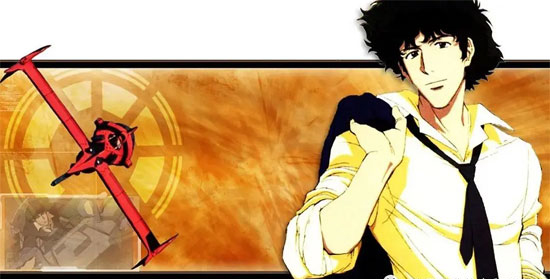
In fact, many settings in the first half of “New Gods: Yang Jian” clearly draw inspiration from this Japanese anime.
Yang Jian himself shares an identical personality tone with Spike. Why must the Celestial Hound transform into a slightly deranged little girl? Because the “Bounty Hunters” protagonists’ team includes a member who looks remarkably similar. If you’ve heard the jazz-inspired music composed by Yoko Kanno for “Bounty Hunters,” you’ll understand why Yang Jian plays such un-Chinese-sounding tunes on his harmonica. Simultaneously, if you replace the futuristic interstellar scenes from “Bounty Hunters” with Chinese palace architecture, you’ll easily recognize the creative inspiration behind the massive air traffic hubs and spacecraft docking stations featured in the “Yang Jian” segment.

But “Bounty Hunters” builds its entire narrative around the profession of bounty hunting, genuinely exploring life’s fleeting nature and forging team bonds through successive missions. In contrast, the bounty hunter role in “Yang Jian” isn’t the film’s true focus. Yang Jian only symbolically undertakes one or two missions, and the crisis at Mount Hua he ultimately resolves bears no connection to his constable profession.
This creates a disjointed feel between the first and second halves of “Yang Jian.” Judging by the latter half’s plot, whether Yang Jian is a constable or not makes no difference. His prolonged portrayal as a bounty hunter earlier serves little purpose beyond being an imitated, somewhat interesting premise. In truth, his final battle for the common people was itself an ultimate “bounty mission.” Only this time, the mission wasn’t issued by the divine realm but by the masses themselves. The reward was no longer silver coins, but the hearts of the people.
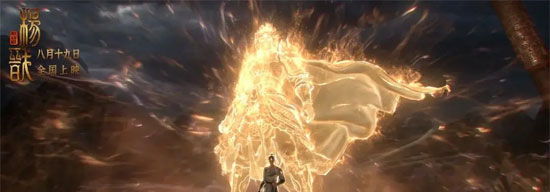
The portrayal of Shen Gongbao stands out as another significant highlight of the film. First, it adheres to the widely recognized consensus that Shen Gongbao is a “villain born of evil lineage.” His physical design alone makes him repulsive. His voice acting masterfully captures his seductive nature. Whenever he appears, it’s never under clear skies—always at night or in dark settings, deepening the aura of evil surrounding him.
Yet the character also receives unique treatment. He operates by his own principles and values. He isn’t a purely selfish villain; for Shenxiang, he would even shield himself from celestial generals. The fact that his mount, the White-Browed Tiger, was willing to sacrifice itself for him shows Shen Gongbao is a man of loyalty—at the very least, he and the tiger shared a bond of life-and-death devotion. A person who has even one friend willing to give everything for them cannot be entirely evil. This approach—balancing shared understanding with diverse perspectives and innovation—is a valuable model for future films to draw upon.
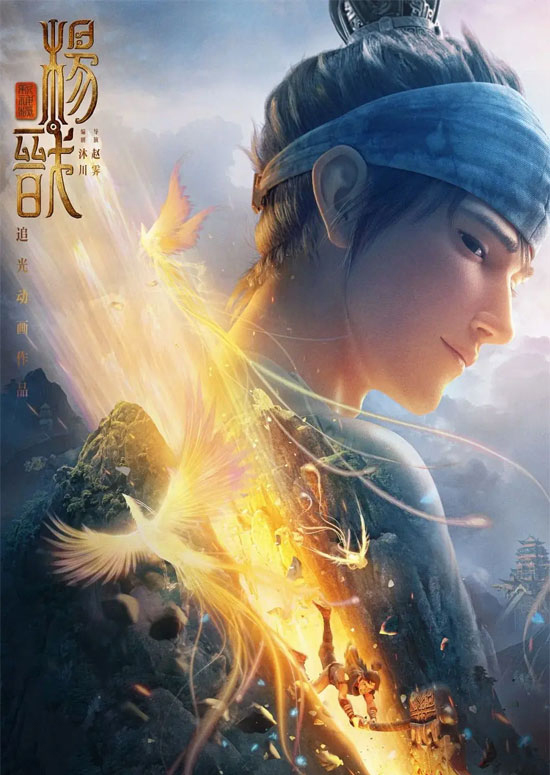
Finally, I believe “New Gods: Yang Jian” stands as a truly awe-inspiring masterpiece of Chinese animation precisely because of the creators’ meticulous attention to detail. Every building, costume, prop, and even pattern deserves careful examination. It lies in the film’s foundation of extensive research and fieldwork, richly presenting cultural elements that allow audiences to feel the texture, charm, innovation, and vitality of China’s outstanding traditional culture.
The reluctance of audiences to leave after the credits roll is surely the most direct feedback and moving affirmation of the creative team’s sincerity, isn’t it?
Please specify:Anime Phone Cases » New Gods: Yang Jian 2022 Animation Film Review: How should one fight for the common good?