Film Name: 新神榜:哪吒重生 / New Gods: Nezha Reborn
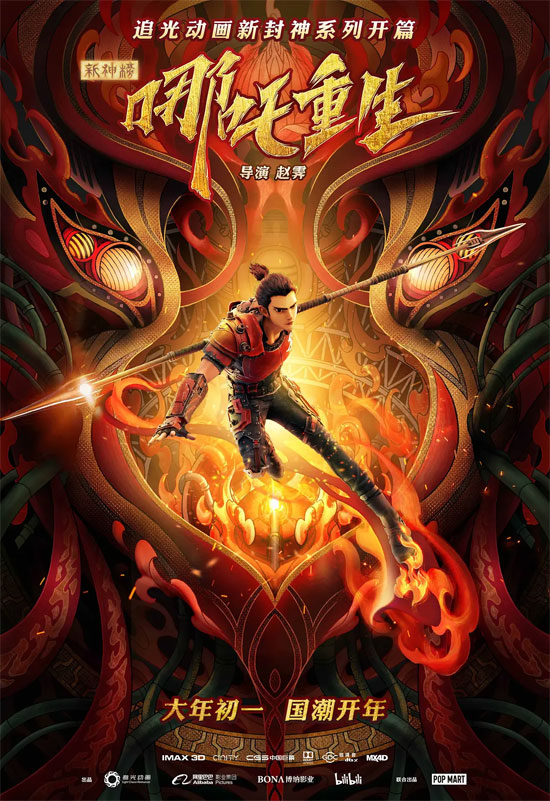
About Nezha
The reason Nezha has been adapted to such an overwhelming extent today is largely because people have not formed a consensus—or perhaps a fixed stereotype—about his character. This lack of consensus makes him highly malleable, leaving ample room for imagination. This film places Nezha in a modern technological society—a so-called cyberpunk setting—marking the most unconventional portrayal and imaginative reinterpretation of the character to date. This alone is commendable.
Throughout the film, one constantly senses the collision of history and modernity, the fusion of traditional culture and sci-fi elements. While such a collision and fusion cannot be perfected, the very attempt deserves praise.
On Rebirth
At the core of themes like rebirth or soul possession lies a fundamental question: Is it the possessor who is proactive, or the possessed? In other words, does the possessor choose to incarnate or possess someone they perceive as having great potential? Or is it the possessed who, driven by some inner ambition, attracts the possessor? The distinction lies in this: in the former case, we can only determine the outcome of the possession, while in the latter, we can also alter the original intent and motivation behind it.
This film does not delve into this question in a clear or profound manner. Nezha’s rebirths appear random, as many obscure reincarnations existed before. This doesn’t resemble the pattern where the host actively seeks possession. Yet Li Yunxiang, the latest reincarnation, seems to fit the latter model. He harbors subconscious rebellion against patriarchy, societal norms, and authority—even acting upon it. Thus, his inner self requires Nezha’s divine power to assist in achieving heroic deeds. Yet during this process, his original intent and motivation shifted—from leaning toward rebellion to leaning toward protection, transforming from a star-killer into a savior. Thus, he harnessed Nezha’s divine power without being consumed by it, instead using it for his own purposes.
The film’s title, “Ne Zha Reborn,” carries dual meanings. On one level, it signifies the rebirth of Ne Zha’s divine power within Li Yunxiang, transforming him into a being of extraordinary ability. On another level, it refers to Li Yunxiang’s own resurrection after exhausting his divine energy in battle against the Dragon King. Though he had died, his protective instincts brought him back to life. At this point, he had evolved from a being controlled by divine power into one who controls it. The imagery of the Heaven-Shaking Brocade shattering from depleted divine power yet reborn through protective will is exceptionally powerful.
On the Father
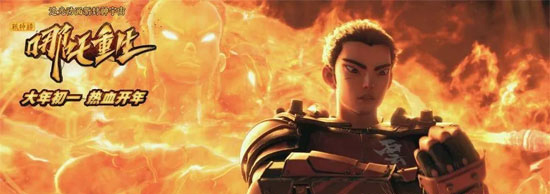
While it’s true that a hero’s father must die, he shouldn’t meet his end by being crushed by a boulder. Nezha brought calamity to those around him, and Li Yunxiang himself carried a star of misfortune. Yet treating the father as just another bystander diminishes the drama. The reason his death failed to evoke deep sorrow in the audience lies in his minimal interaction with the protagonist. His significance wasn’t established before his demise, rendering his death meaningless.
In fact, Li Yunxiang had an older brother. This is a puzzling setup. Nezha should have two brothers; if he retained two brothers after rebirth, it would be more consistent. But if he only had one, it would be better to merge the brother’s role with that of the father. The brother could serve as a police-like figure who knows his younger sibling’s activities yet often turns a blind eye. This role could seamlessly merge with the nagging father’s persona. Such a setup would naturally increase the father’s screen time and interactions with Li Yunxiang.
The father’s death is crucial for Li Yunxiang’s character arc. It teaches him the value of cherishing relationships, transforming him from an anti-authority figure into a protector. This loss becomes the key that unlocks his protective instincts.
About His Girlfriend
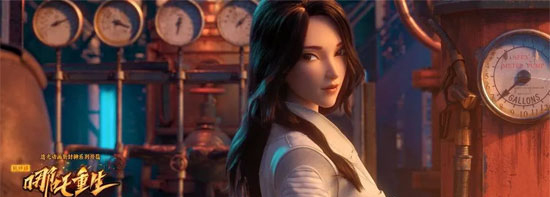
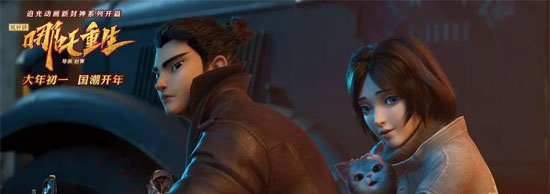
Who exactly is Li Yunxiang’s girlfriend? One is a sophisticated older woman, the other a younger sister who sparks intense protective instincts; one is a skilled motorcycle rider herself, the other always seated behind Li Yunxiang on his bike. The film’s ambiguous romantic subplot leaves audiences bewildered. Is straddling two relationships also considered an open ending?
What kind of person could possibly be worthy of Li Yunxiang, who possesses the divine power of Nezha? A female doctor who rides motorcycles? Or his childhood sweetheart, now disabled? Both seem plausible, yet both feel slightly off. Their statuses and abilities are simply too mismatched. Though the female doctor participates in the final battle, seemingly gaining an advantage in her romantic pursuit of Li Yunxiang, she remains an ordinary bystander. In the brutal struggles of the future “New Gods Ranking,” merely knowing how to ride a motorcycle won’t be enough to aid the protagonist.
On Technology
I’m not well-versed in technological matters. However, I feel Nezha shouldn’t be portrayed as an Iron Man wielding a fire-tipped spear. The premise of relying on machinery to harness divine flame power underestimates the essence of divine might while overestimating the capabilities of technology. Conversely, Li Yunxiang’s passion for motorcycles could have been more deeply integrated into his combat techniques as Nezha.
Additionally, the film places the hospital where the protagonist heals the sick within the Zhenhai Temple, perched on a sheer cliff face. This location is easy to defend but difficult to attack, requiring lengthy journeys along winding mountain roads each time one enters or exits. I’m not sure what scientific rationale this follows, but it certainly has a whiff of nonsense about it.
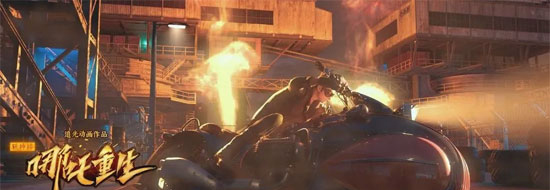
On the Antagonists
The primary antagonists are the Dragon King and his third prince, who have assimilated into modern society and built a vast commercial empire. Before the third prince demonstrates his divine powers, the film offers no supernatural foreshadowing. Thus, the introduction of mystical elements during his first confrontation with Li Yunxiang elevates the viewing experience significantly.
In fact, given Nezha’s past blood feuds, the film could easily have become a story of Nezha’s Avengers-style revenge. Li Yunxiang’s significance as the reincarnated Nezha lies in explaining and resolving these old grudges. Regarding the Yaksa woman, Li Yunxiang handled her well by letting her go, even though she showed no gratitude. After all, we now live in a harmonious society where harmony is a core value. There’s no need to resort to violence and kill others at every turn.
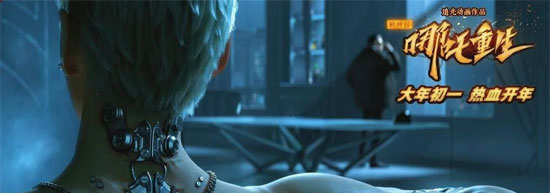
Therefore, I strongly oppose Li Yunxiang’s repeated depiction of dismembering Prince Nezha. Beyond its visual shock value, this act conveys no positive message to the audience. In “Prince Nezha’s Triumph Against Dragon King,” Nezha likely represents the oppressed common people, justifying his act of dismembering the Dragon King—a symbol of the landlord class—as a matter of life-and-death class conflict. In this day and age, resorting to such brutal torture for interpersonal conflicts lacks any justification—whether viewed through the lens of humanity or animal welfare.
The Dragon King possesses a crucial artifact: the “Dragon Ball.” Yet this treasure ultimately fails to demonstrate any significant power, making it as disappointing as a long-hyped precious object revealed to be worthless. The Dragon Ball, nurtured as the Dragon King’s ultimate weapon, crumbles under the protagonist’s single strike—a hard pill to swallow. This reinforces my long-held view: what truly wins the final battle? Why does Nezha triumph over the Dragon King and this formidable Dragon Ball? Is it mere brute force? Certainly not. What ultimately triumphs is virtue—it was Li Yunxiang’s desire to protect all beings that shattered the Dragon Ball. This demands a weighty statement.
Another antagonist in the film is a “traitor” within the smuggling crew. This character is highly symbolic. Though a minor figure, he embodies those without extraordinary power yet desperate to survive—even at the cost of principles and dignity. I was particularly eager to see his ultimate fate: How would Nezha treat this traitor? Would the traitor ultimately reclaim his humanity and dignity? Unfortunately, the film’s resolution for this character is nothing short of disastrous—a simple fall off a cliff, ending his life abruptly. Li Yunxiang doesn’t even attempt to save him, let alone offer psychological redemption for him or for us, the audience, who might identify with this ordinary character. The entire incident unfolds at Zhenhai Temple Hospital, under the watchful gaze of the Buddha statue—a scene that chills the soul.
On Disability
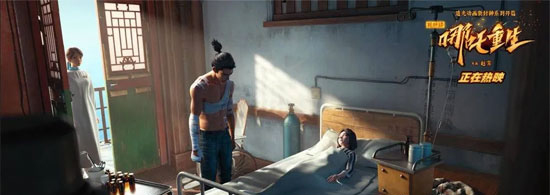
The calamity brought by Li Yunxiang extends to “Little Sister,” who becomes disabled in an accident. Frankly, the scene where the camera slowly pans from her upper body down to her amputated leg beneath the white sheets is deeply moving.
Any portrayal of characters with disabilities demands utmost sensitivity and empathy. We must ask: Would viewers with similar disabilities find this depiction offensive? The film handles this aspect rather carelessly. Xiao Mei is simply fitted with a prosthetic leg and immediately stands up. How does one overcome the psychological trauma of disability? How does one regain confidence in the future? The film should have explored these questions through dialogue, with Li Yunxiang offering a sincere apology. It shouldn’t be portrayed as if the little sister simply accepted this reality after a few days of distress and naturally turned her gaze toward the future. Nothing is that simple.
Regarding Sun Wukong
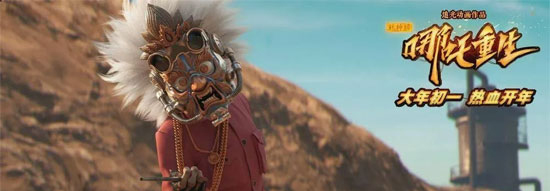
Sun Wukong becoming a mentor-like figure is an excellent creative choice that works well. He will undoubtedly continue to play a significant role in subsequent films. Whether it’s the mystique of his mask, his carefree personality, or those adorable monkey spirit pets, all become highlights of the film.
However, whether he actually accepted the Dragon King’s gold bar gift remains crucial—the film doesn’t make this clear. If he refused it, how did he decline without provoking the Dragon King? If he accepted it but didn’t fulfill the Dragon King’s request, then he loses his sense of justice.
Overall Impression
Clocking in at nearly two hours, this film is the longest animated feature produced by Chasing Light Animation. Overall, it never feels tedious. The characters, settings, and world-building are all quite novel. The action sequences that appear every six or seven minutes, combined with well-crafted suspense, effectively maintain the audience’s sustained engagement throughout the film. Secondly, the film demonstrates high technical maturity in sound, lighting, and effects, with its mature themes and blockbuster-like production values standing out distinctly.
However, the film also suffers from some overall issues. First, the excessive number of elements creates a sense of being a hodgepodge. It blends machinery, fantasy, traditional culture, cyberpunk, Chinese aesthetics, and Western influences, causing the audience’s focus, which should be on the characters, to become scattered. Second, from the latter half—particularly the battle at Zhenhai Temple Hospital—the film significantly diminishes its humanistic elements. Plot holes and oversimplified treatments become increasingly evident, threatening to undermine the narrative’s coherence.
Overall, this remains a distinctive animated film that provokes thoughtful reflection.
Please specify:Anime Phone Cases » New Gods: Nezha Reborn 2021 Animation Film Review: Nine Points for Discussion Regarding This Film