Film Name: 超人总动员2 / Incredibles 2
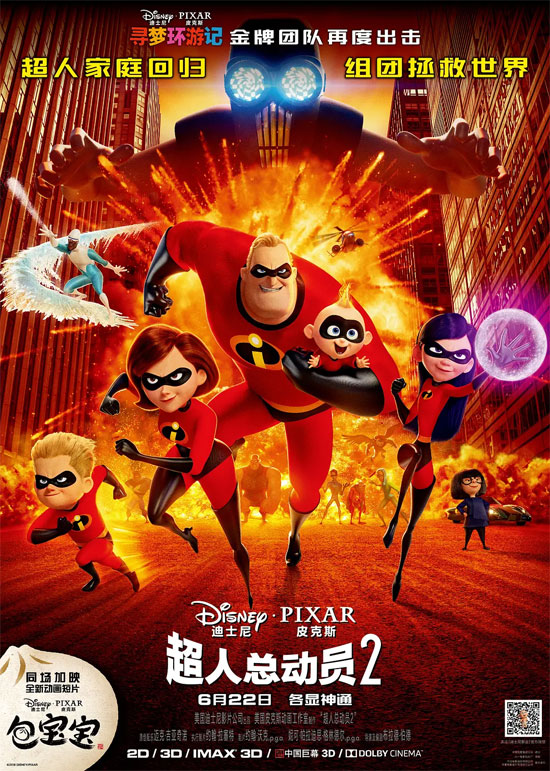
The Incredibles is a 2004 film by Pixar, marking the globally renowned animation studio’s first feature with human protagonists. Prior to this, Pixar had explored worlds populated by toys, insects, monsters, and sea creatures—though human characters appeared in these films, they were mostly supporting roles. It can be said that The Incredibles diverged from Pixar’s anthropomorphic worlds from the outset, presenting a relatively grounded work.
After all, human protagonists naturally spark more relatable reflections on real-world issues. Elements like office bosses, police officers, designers, politicians, tycoons, and media figures—all facets of society—become easier to depict. Scenes of a family gathered around the dinner table, for instance, appear in both “The Incredibles” films.
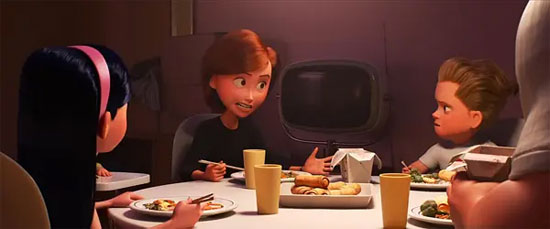
Family dinners are a must for the Incredibles.
The Superman family is quintessentially middle class. The parents hold regular jobs and raise three children. They bear no difference whatsoever from the family in the American TV series “Growing Pains.” The only distinction is that in the Superman-free American TV shows, the United States is a binary society composed of the middle class and the elite class. In stories featuring Superman, however, superheroes become the third class that Americans have spiritually created and come to demand. Superheroes, the middle class (the masses), and the elite form a tripartite society.
The elite wield power, heroes wield strength, and the masses hold public opinion. The relationships between these classes, their mutual influences, and even the flow of individuals between them are often central and compelling elements of the narrative. In the first film, The Incredibles, the antagonist was once part of the masses before becoming a superhero (albeit a villainous one with superpowers). The story emphasizes the price he paid for aspiring to rise from the masses to the hero class and ultimately succeeding in that transformation. Incredibles 2, meanwhile, depicts the complex relationship where many elites must both suppress heroes and rely on them.
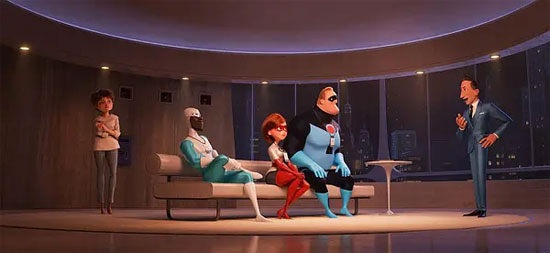
Elites are negotiating with heroes.
This is the relationship between the elite and the heroes. From this perspective, the tycoon’s use of media and entertainment tactics to package Superman in “Incredibles 2” makes perfect sense—it’s a relationship of exploitation between commercial elites and heroes. Sometimes, it’s mutual exploitation. Of course, some elites and heroes also collaborate. For instance, designers, as dual cultural and commercial elites with absolute authority in the design field, need to maintain this position of influence through partnerships with heroes.
What defines the relationship between elites and the masses? Broadly speaking, elites exert control over the populace. A pivotal line in the film captures this dynamic: “People today are slaves to their screens. They no longer venture out to explore the world, nor do they enjoy reading or independent thought. They’re too lazy to voice their opinions, relying instead on superheroes for protection. They numb themselves with variety shows and soap operas, easily manipulated by politicians and businessmen.” ” This describes precisely how the masses are controlled by elites through media products. Of course, the public sentiment held by the masses is sometimes something elites must consider. Elites always hope that public opinion will be expressed and develop in ways that align with their own expectations.
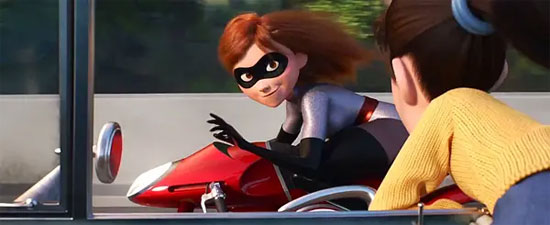
Heroes’ Engagement with the Masses
What is the relationship between heroes and the masses? Heroes must use their power to protect the masses, not the elite. Public opinion toward heroes perpetually swings between approval and criticism, a recurring theme in films like this. The film also features an intriguing inter-class interaction: the story of Xiao Qian and her boyfriend. The reason this narrative captivates more than Mr. Incredible and Elastigirl’s story lies in its portrayal of interclass “marriage”—much like the romance between maid Emma and her noble master William. Such unions serve as vital pathways for social mobility: commoners can ascend to elite status through marriage, and vice versa. The outcome of Xiao Qian and her boyfriend’s “marriage” remains to be seen.
Beyond inter-class dynamics, conflicts also arise within classes themselves. Take the daughter of a financial tycoon, for instance. Possessing superpowers derived from technological inventions (surpassing ordinary humans), she embodies a heroic attribute. Her conflict with the Superman family is purely an internal struggle within the hero class. Fundamentally, if she were to defeat all the superheroes, she could monopolize the class’s resources. The specific justification she uses is, in truth, irrelevant. Superhumans occasionally clash among themselves, but compared to class-based conflicts, these altercations are mere childish posturing.
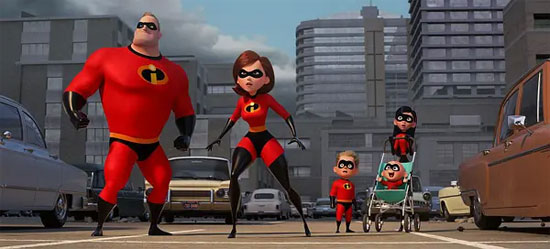
Let’s save the world.
So, “Incredibles 2” offers us a glimpse into America’s dual-tiered society and the illusory third tier that emerges from it. But let’s not forget: it’s itself a cultural product, a tool crafted by the elite to control the masses. In real life, where are those heroes? Hah.
Please specify:Anime Phone Cases » Incredibles 2 2018 Animation Film Review: Recreating the Tripartite Society