Film Name: 新大头儿子和小头爸爸2一日成才 / New Happy Dad and Son 2: The Instant Genius
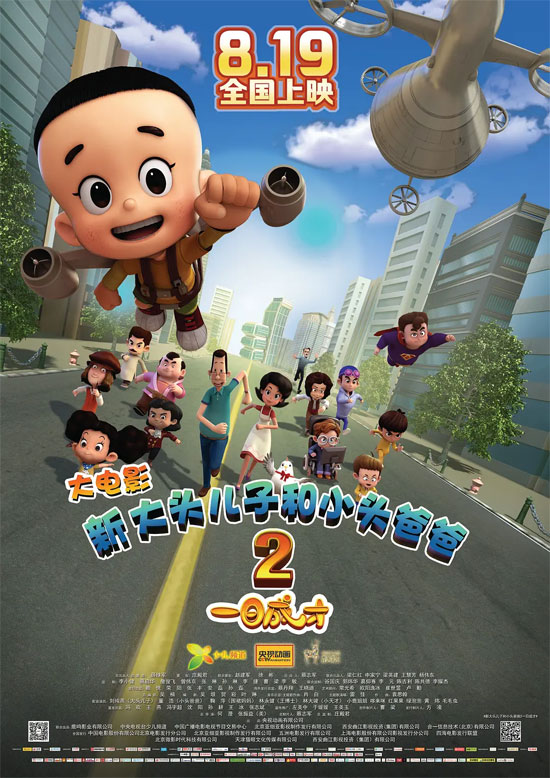
This is yet another pinnacle of China’s new dogmatic animation. Under the guise of criticizing educational perspectives, it relentlessly indoctrinates viewers with its own views on education.
This doesn’t feel like an animated film produced by an animation studio at all. It’s more like mainstream media using animation to exercise its oversight role (if it has one), essentially filming a news report: Look, this is the state of education in Chinese families today. Parents are short-sighted and impatient, neglecting their children’s natural need to play. They resort to cramming education and hold distorted views of success. Educational institutions run all sorts of tutoring classes under the banner of “winning at the starting line,” though many of these are unnecessary for the children. So what should be done? This, that, and the other.
Is this film meant to drive educational reform in China? To reshape parents’ educational beliefs nationwide? This self-imposed, inexplicable sense of responsibility—this creative mindset that equates itself with mainstream media—is actually another form of propaganda and indoctrination, another kind of cramming education. Only this time, the target isn’t the children, but the parents.
The problem is, the atmosphere created by this “social commentary” film doesn’t feel joyful at all. Do children enjoy watching this film? I doubt it. Especially when they see their hero—Big Head Son, once the embodiment of joy and wisdom—trapped for extended periods in a state of indifference, exploitation, and family breakdown. They can’t bear to watch, they become frightened, they cry. This Big Head Son is so different from the outgoing, optimistic, helpful figure they admire. Why is he like this? They are deeply afraid.
Let’s look at a few comments from netizens. A parent named “Minmin” said: “I’ve taken my daughter to see so many animated films, but this is the first time she’s been so deeply immersed. Her crying echoed throughout the theater. When she saw Big Head Son not needing his parents anymore, and Little Head Dad in danger, she was especially heartbroken. She cried and said Big Head Son was so bad…” Another parent named “Mao Zigu” said: The plot isn’t that great, but my 3-year-old got so emotionally invested she told Dad, ‘Let’s stop watching,’ her eyes red. ‘Let’s go home.’ It broke my heart.” From my own viewing experience, a child nearby asked her mom shortly after Big Head Son “turned bad,” “When does the movie end?” Did she truly want it to end? No—she wanted Big Head Son’s “badness” to end quickly.
Being absorbed in a film differs from genuinely liking it, just as deep emotional investment doesn’t necessarily yield positive emotional outcomes. If the dogmatic animations of the 1960s and 70s depicted the profound suffering inflicted by the exploiting class in class struggle, this new wave of dogmatic animation delivers a fresh kind of profound suffering. This suffering is psychological frustration and anguish; this resentment is a sense of imposed responsibility and hatred toward an imagined adversary.
Regardless of era, a defining trait of dogmatic animation is its penchant for negative portrayals. It doesn’t depict how wonderful things are when done right, but rather how terrible they become when done wrong. Applied to this film, it means the story doesn’t show how Big Head Son lives happily or how his joy positively influences others. Instead, it focuses on how miserable Big Head Son becomes under a flawed educational philosophy, only to return to a positive outcome through a reversal of negatives. This keeps the film steeped in an extremely depressing atmosphere for most of its runtime.
Several recent works I’ve seen share this common flaw: an overabundance of “negative energy” that leaves viewers feeling unhappy and unsettled. The core issue remains a desire to lecture—to show how dire consequences arise from certain choices. Yet animated films, especially commercial ones, needn’t adopt the tone of satirical cartoons, fixated on criticism.
Please specify:Anime Phone Cases » New Happy Dad and Son 2: The Instant Genius 2016 Animation Film Review:The pinnacle of neo-dogmatism