Film Name: 哆啦A梦:新·大雄的日本诞生 / Doraemon: Nobita and the Birth of Japan
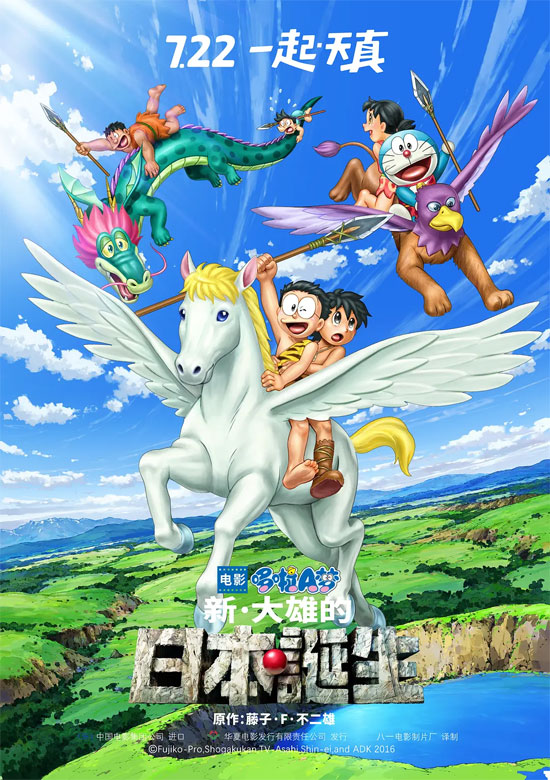
This 1989 work remains just as moving and imaginative today after its restoration. The magic of “Doraemon” lies in how familiar and endearing it feels, even though you know exactly who the characters are and what gadgets they’ll use. You never tire of it—you just want to see what new adventures they’ll have.
Compared to the 26-year-old version, this edition of “Nobita and the Birth of Japan” not only boasts significantly improved visuals and color palette, along with more meticulously refined character designs, but also introduces two key plot additions that elevate the ending—which previously felt somewhat formulaic—to a whole new level.
One is the reimagined, emotionally charged portrayal of Nobita’s separation from his pets. In the 1989 ending, a male space police officer simply lectured Nobita, who briefly hugged Pegasus before chasing after the spaceship. The remake features a female officer, amplifying the emotional weight of her words. As she speaks, the surrounding officers visibly show sorrow, adding nuanced depth. Doraemon provides a more detailed explanation of why the pets cannot stay. This is followed by a heart-wrenching monologue from Nobita. He recounts every detail of daily life with the pets he’s spent the past few days with, making the deep bond between them clearer and more moving. The subsequent tearful chase builds on this emotional foundation, creating a powerful emotional outburst with heightened tension.
The second example highlights the protagonists’ proactive agency in confronting the arch-villain, Giant Zonbi. In the 1989 version, the climactic battle primarily featured the heroes’ escape, with the pets playing minimal roles. The resolution ultimately relied almost entirely on the Interstellar Police. The remake not only adds the clever use of dombra powder to evade the giant elephant and scenes of the pets wreaking havoc in Juzuobi’s base, but also grants Nobita a solo combat sequence. This enriches the struggle between good and evil, making the Intergalactic Police’s eventual arrival a natural and enhancing conclusion rather than a desperate, last-minute gamble.
Regarding the portrayal of the ancient boy Goguru, the film added the crucial prop of a whistle and a brief backstory involving his pet dog, making the character more rounded. This also provided a compelling reason for Nobita, exhausted in the snow, to summon his own pet. More significantly, this whistle serves as a token of friendship between the two boys. This update is brilliant!
This is how I interpret the new film’s heightened emphasis on human-pet bonds. The original never explored Nobita’s relationship with his mother, whereas this sequel delves deeper into the emotional ties between children and parents. Shizuka’s line—”Mom makes me practice piano every day, it’s so stressful”—speaks for countless children. Simultaneously, Nobita’s mother’s panic upon discovering his absence reveals not only her suppression—erasing the sky horse Nobita drew on the back of his exam paper—but also a mother’s tender care for her son. Isn’t this akin to Nobita’s own devotion? He painstakingly raised his pets, cherishing them as his own children. By highlighting the emotional growth Nobita gains from raising pets, the film underscores the challenges every family faces in raising children. Ultimately, it transforms the protagonists’ escapist actions into a heartfelt return to reality.
Compared to its predecessor, this revamped version not only clarifies the narrative but also deepens the emotional layers, making it a masterpiece that resonates more profoundly with audiences.
Please specify:Anime Phone Cases » Doraemon: Nobita and the Birth of Japan 2016 Animation Film Review: From Escape to Return